December jobs report shows slower hiring and lower unemployment
Calculated Risk called the December employment report weak after 50,000 jobs were added and prior months were revised lower.
By Sofia Marchetti · Columnist
· 3 min read
The December jobs report pointed to a cooler labor market, with job growth coming in below expectations and prior months looking weaker after revisions. For everyday investors, that matters because employment and wage data help show whether households have enough income to keep spending, which can feed through to company sales and market expectations.
Calculated Risk said the report showed 50,000 jobs added in December, while the unemployment rate fell to 4.4%. The same analysis said October and November payroll figures were revised down by a combined 76,000 jobs, making the latest report weaker than the headline number alone suggests.
Payroll revisions matter because the first estimate is based on incomplete survey responses and gets updated as more information comes in. A downward revision means earlier job growth was overstated in the initial readings.
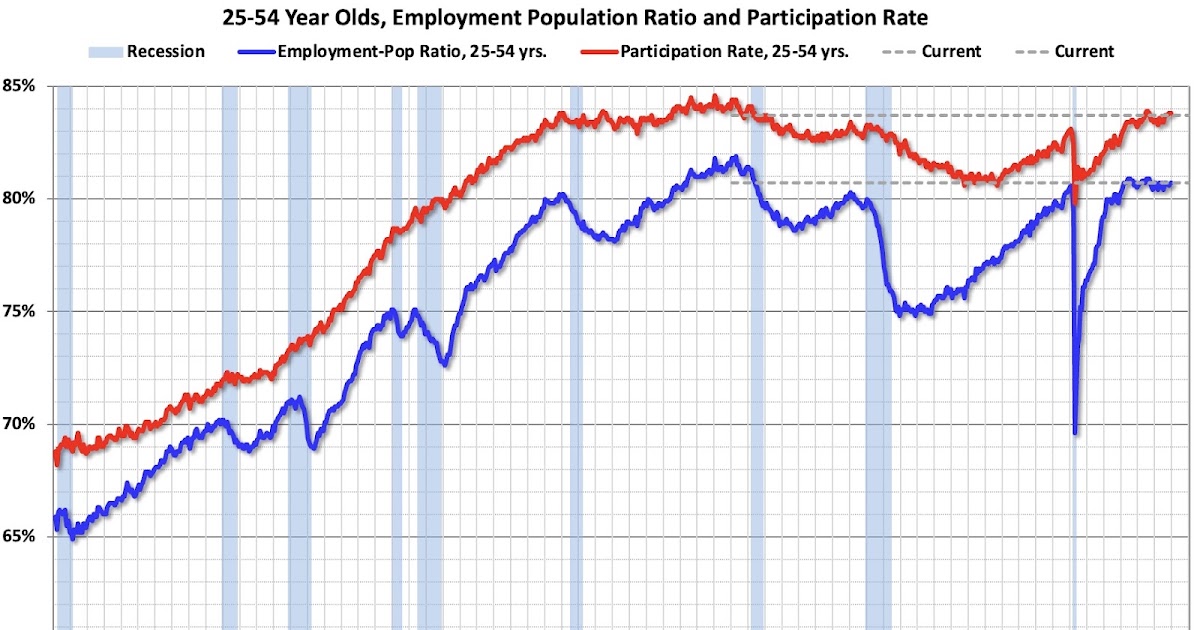
Prime-age employment stayed near recent highs
Calculated Risk focused on the 25-to-54 age group, often called the prime working-age population, because it is less distorted by retirement, schooling and other demographic shifts than the full adult population.
The prime-age labor force participation rate, which measures the share of people in that age range who are working or actively looking for work, was unchanged at 83.8% in December, according to the analysis. The prime-age employment-population ratio, which measures the share of that age group that is employed, rose to 80.7% from 80.6% in November.
Calculated Risk said both measures have eased slightly from recent peaks but remain close to their highest levels of this millennium.
Wage growth ticked up but is below its 2022 peak
Average hourly earnings for private-sector workers rose 3.8% from a year earlier in December, up from 3.6% in November, according to the Current Employment Statistics data cited by Calculated Risk.
Wage growth has slowed from its March 2022 peak of 5.9% year over year, the analysis said. Calculated Risk also noted that wage data were distorted early in the pandemic, when many lower-paid workers lost jobs, temporarily lifting average pay levels before that effect later reversed.
For investors, wages are a two-sided signal. Faster pay growth can support consumer spending, while also affecting companies’ labor costs. The December data showed wage growth still positive, but below the pace reached in 2022.
Underemployment remains elevated
The Bureau of Labor Statistics said 5.3 million people were working part time for economic reasons in December, little changed for the month but up by 980,000 over the year. These workers wanted full-time jobs but were part time because their hours were cut or they could not find full-time roles, according to the BLS.
Calculated Risk said the number fell to 5.34 million in December from 5.49 million in November. Even with that monthly decline, the figure remains well above pre-pandemic levels and near the highest readings since mid-2021, according to the analysis.
Those workers are included in U-6, an alternative unemployment measure that captures unemployed people, some people loosely attached to the labor force and people working part time for economic reasons. U-6 fell to 8.4% in December from 8.7% in November, Calculated Risk said. That is below the April 2020 record of 22.9% but above the 7.0% level recorded in February 2020.
Long-term unemployment edged higher
The BLS reported 1.95 million workers had been unemployed for more than 26 weeks and still wanted a job, up from 1.91 million in November, according to Calculated Risk. That figure is below the post-pandemic high of 4.171 million, but above the recent low of 1.056 million and above pre-pandemic levels.
Calculated Risk summarized the December report as another weak reading, citing the below-expectation job gain, the 76,000 downward revision to the prior two months and signs of strain in broader labor-market measures.
This story draws on original reporting from Calculated Risk.