KashKick survey points to side-income pressure before school shopping
KashKick users favored online surveys and tasks over gig-work options as families face a tighter back-to-school budget season.
By Priya Nair · Economy Reporter
· 3 min read
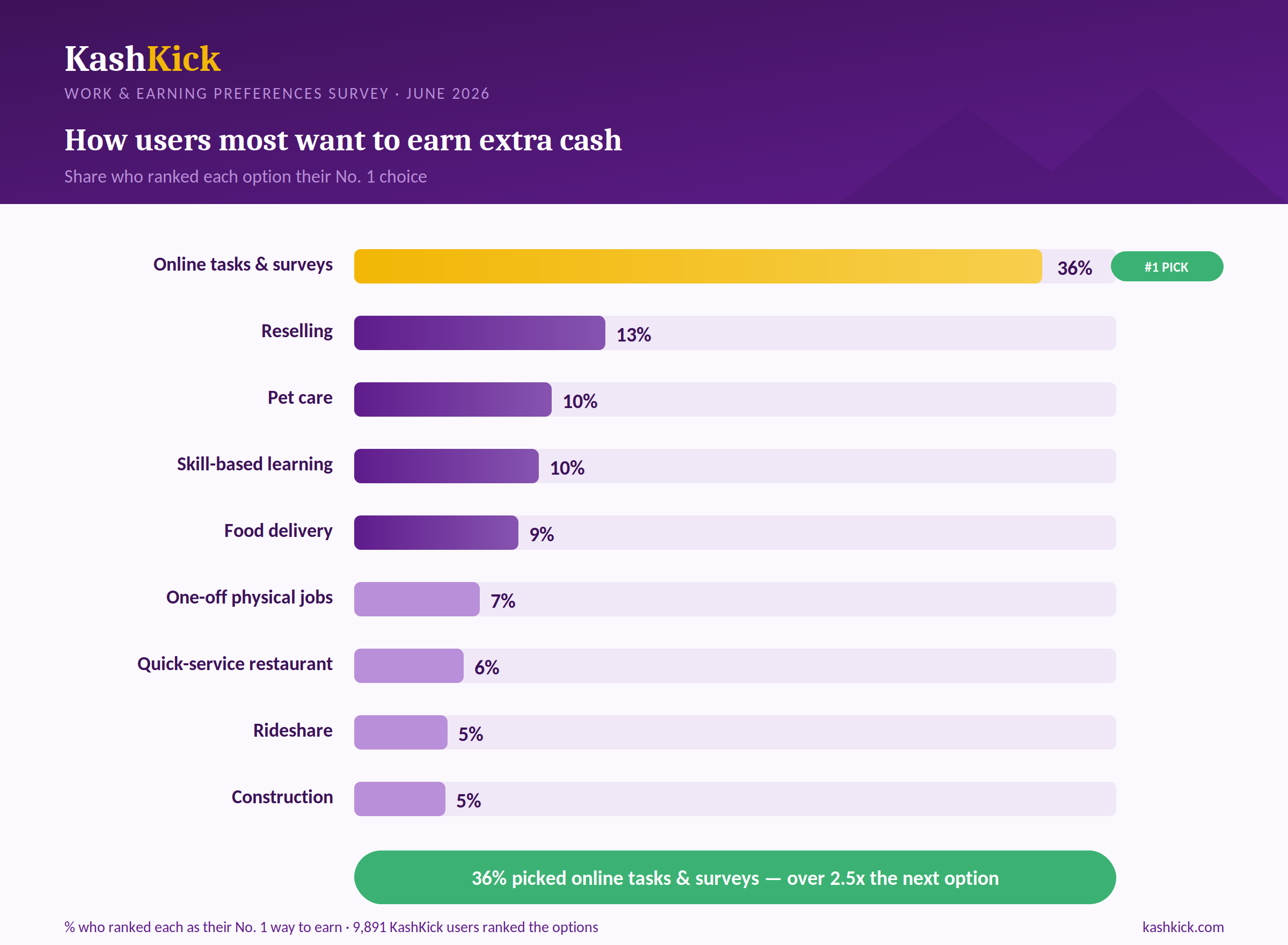
Back-to-school bills are putting side income back on the household budget agenda, and KashKick users are showing a clear preference for flexible work that can be done from home. New survey data from KashKick found that online tasks, surveys and data entry ranked ahead of reselling, food delivery, pet care and rideshare driving as users’ top way to earn extra cash.
The rewards platform, which pays users through PayPal, Venmo and gift cards, fielded its Work and Earning Preferences Survey in June 2026. Among surveyed users, 36% picked online tasks, surveys and data entry as their first choice for extra income. Reselling was the next closest option at 13%.
The category also led on KashKick’s weighted score, which gives credit for how respondents ranked each option rather than counting only first-place votes. Online tasks, surveys and data entry scored 6.82 out of 9 across nine categories.
That preference says something about the current consumer mood. Side hustles that require a car, a fixed schedule or inventory can be harder to fit around school, caregiving and full-time work. By contrast, survey and task-based earning products sit in the broader rewards and gig-income category, where the appeal is usually low setup friction and schedule control.
KashKick said 83% of users surveyed were actively or occasionally searching for new ways to make extra money, while 69% described side income as important or very important. Asked what mattered most, 54% cited a flexible schedule and 47% pointed to the ability to work from home.
“People want to earn on their own terms, without a car, without inventory, without a schedule set by someone else,” Katie Nelson, KashKick’s head of market research, said in the announcement. She said flexibility and remote access are the features users most associate with online tasks and surveys.
School shopping is testing household budgets
The survey lands during a back-to-school season in which families are still spending, but looking harder for value. JLL’s 2026 Back-to-School Report, based on a survey of 1,022 U.S. parents, found planned spending of $489 per child, up 11.7% from a year earlier. Even so, discretionary items made up 56% of the average budget, down from 60%, marking a second straight annual decline in that share.
JLL also found that more than 90% of parents planned to shop in stores, 68.7% named saving money as a top priority, and dollar stores entered its top 10 retail destinations for the first time. Deloitte reported that 57% of parents expected the economy to worsen over the next six months, its weakest reading since 2020. NerdWallet found that one-quarter of shoppers planned to cut back to make room for necessities such as housing, groceries and utilities.
That pressure is showing up in bargain hunting as well. Snipp’s 2026 back-to-school survey found that 74% of shoppers were putting more effort into finding deals, discounts, cash back and rewards than they did last year.
For households managing higher seasonal costs, online task and survey side-income options fit into a practical personal-finance pattern: people are not only trying to spend less, they are looking for ways to add small, flexible income streams without taking on a traditional second job.