Mike Khouw’s Tesla options trade puts Cybercab optimism to the test
Mike Khouw outlined a three-leg Tesla options position tied to Cybercab optimism, with risks above $425 and below $330.
By Jordan Bell · Startups & Deals Reporter
· 3 min read
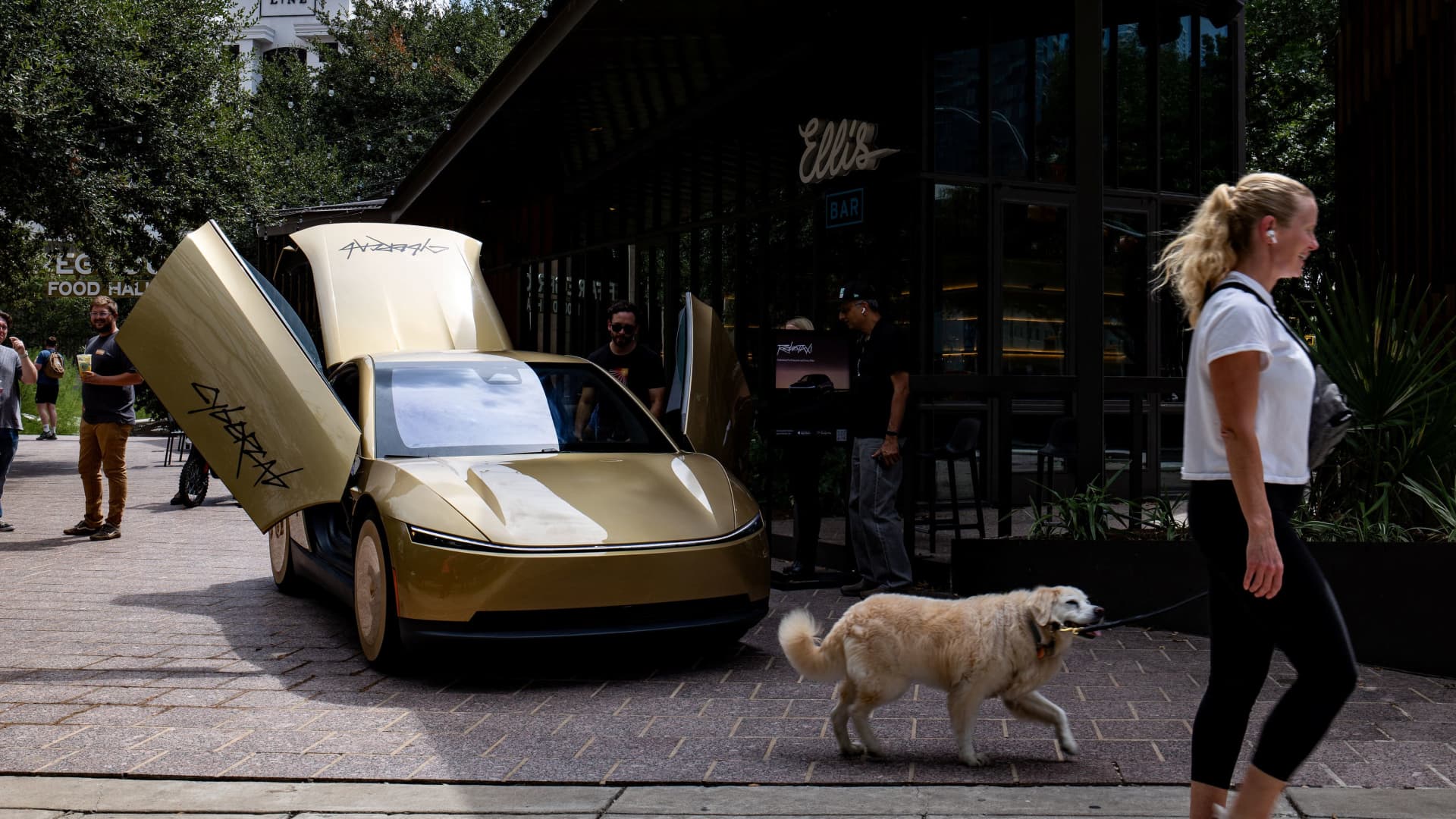
Mike Khouw’s Tesla options trade pairs a December call with two nearer-term short options, a bullish view on Tesla’s Cybercab rollout that also carries meaningful risk if the stock makes a sharp move. Khouw wrote in CNBC that the rollout could change how investors value Tesla, while cautioning that the launch was limited and involved a small unsupervised fleet.
The strategy is Khouw’s stated market view, not a forecast or investment recommendation. Its mechanics matter because the premium collected from selling options reduces the upfront cost of the longer-dated call, but it creates obligations on both sides of Tesla’s trading range.
What is Mike Khouw’s Tesla options trade?
Khouw’s proposed position has three parts, according to CNBC:
- Buy a Tesla December $390 call for $32.50.
- Sell an Oct. 23 weekly $425 call for $9.50.
- Sell an Oct. 23 weekly $330 put for $7.30.
He listed the position’s stated net debit as $15.70. CNBC’s discussion elsewhere put the December $390 call cost at $32.40, a 10-cent difference from the trade summary.
A call gives its holder the right to buy stock at a preset strike price before expiration. The December $390 call is the part of the position designed to benefit if Tesla moves higher over a longer period. The two October options sold together are called a short strangle: one call above the market and one put below it.
Khouw said selling the October $425 call and $330 put brought in $16.80 of premium, intended to counter the time decay in the December call. Time decay, often called theta, is the tendency for an option to lose value as its expiration date approaches, assuming other factors do not change.
How does the trade behave by Oct. 23?
Khouw’s central scenario was Tesla trading roughly between $330 and $425 through the Oct. 23 expiration. In that range, the short options could expire without value, leaving the December call in place at a lower effective cost.
He identified a move toward $390 to $410 as his base case. He also said he could roll the short options, meaning close them and open replacement positions with different strikes or later expirations, depending on where Tesla shares are trading.
A sharp rally above $425 before Oct. 23 complicates the short call. Khouw said the position could require the trader to buy back that call, roll it to a higher strike and later expiration, or allow assignment. Assignment on a short call can create an obligation to deliver shares at the strike price.
The downside risk sits below $330. A short put can require its seller to buy Tesla shares at the $330 strike if assigned. Khouw noted that selling puts can tie up substantial cash in an account. The December call would still remain after an assignment, offering upside exposure if Tesla later rebounded, provided it was held.
Why Cybercab is central to Khouw’s thesis
Khouw said he had seen Cybercabs around Palo Alto, California, and described a visible, steering-wheel-free rollout as a possible catalyst for investors to reassess Tesla. He noted that he did not personally verify the reported absence of steering wheels and pedals.
He also flagged limits to that thesis. Khouw wrote that Waymo had scale and trip volume Tesla had yet to match, and characterized Cybercab as a two-seat vehicle without cargo space. In his view, the economics depend on utilization and regulatory permission expanding quickly. Those points reflect Khouw’s commentary, rather than independent confirmation of Tesla’s deployment or regulatory status.
This story draws on original reporting from CNBC.