UN maritime agency pauses Hormuz evacuations after ship attack near Oman
The IMO said it is checking safety guarantees after a Singapore-flagged Evergreen vessel was struck near Oman.
By Sofia Marchetti · Columnist
· 3 min read
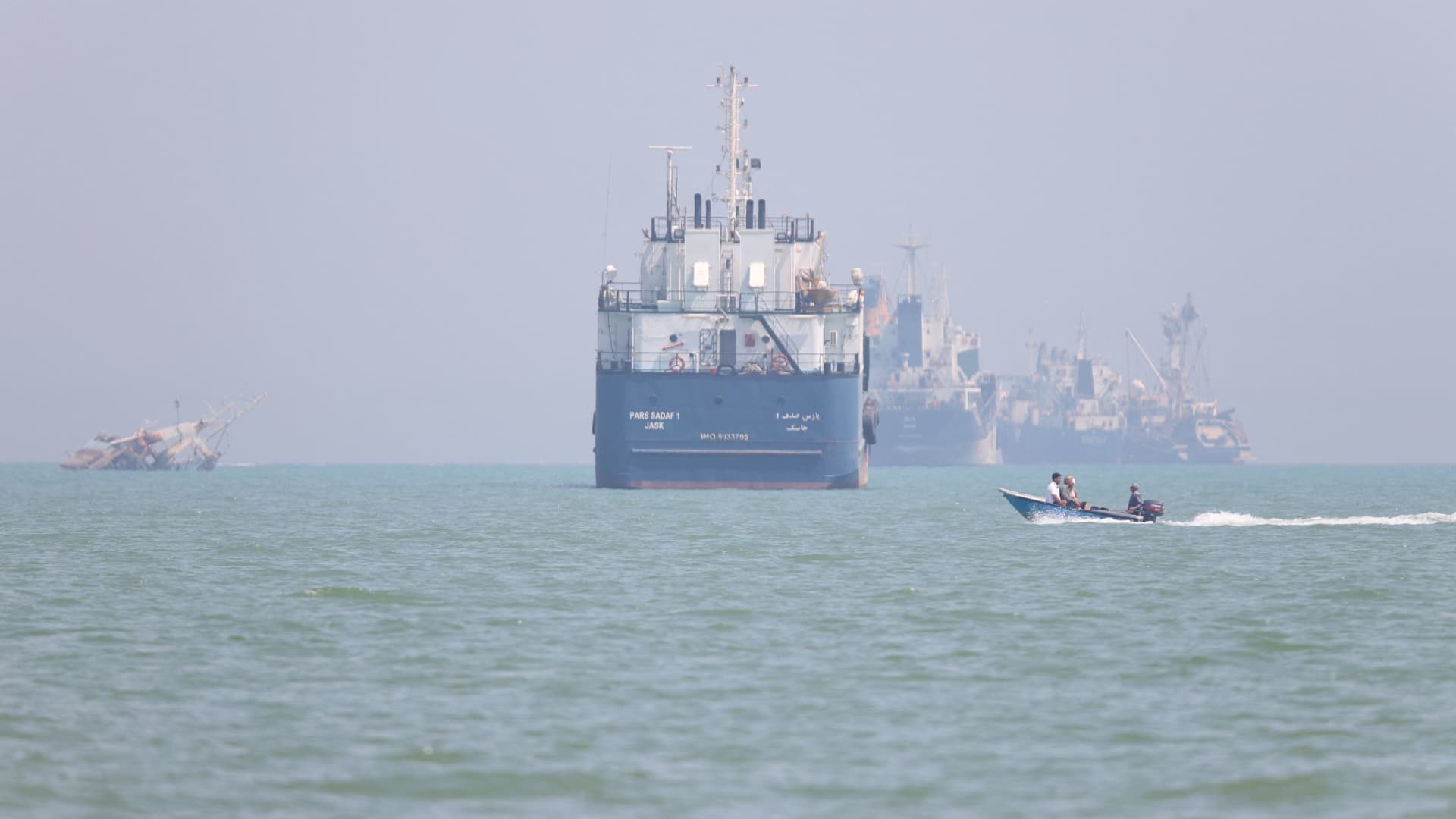
The United Nations’ maritime agency has put a Gulf ship evacuation effort on hold after a container vessel was hit near Oman, adding fresh uncertainty around one of the world’s most important energy routes. For everyday investors, the concern is straightforward: disruptions in the Strait of Hormuz can affect shipping confidence, energy flows and market risk.
The International Maritime Organization, a specialized UN agency, said Secretary-General Arsenio Dominguez paused the plan so officials could confirm that safety assurances still apply to vessels on its evacuation list and to others in the area.
The move followed an attack Thursday in the Gulf of Oman, where a container ship was struck by an unidentified projectile near the Omani coast, according to the IMO and reporting cited by CNBC. A U.S. official told MS Now that Iran was responsible for the attack.
Asked about the incident, a U.S. official said authorities were aware of the reports and were examining them. The official added that President Donald Trump has said Iran cannot interfere with free movement through the strait.
What the evacuation plan was meant to do
The IMO launched the evacuation initiative Tuesday to help hundreds of ships and thousands of seafarers leave the Middle East Gulf. The plan allowed ships to use either a northern route through Iranian waters or a southern route through Omani waters with U.S. oversight, according to the IMO.
The Strait of Hormuz is a narrow waterway linking the Gulf with the Gulf of Oman and the wider Indian Ocean. In market terms, it matters because it is described by CNBC as a vital energy waterway, so military risk there can quickly become a concern for oil, shipping and insurance markets.
Shipowners had been trying to move vessels through the strait after the U.S. and Iran reached an interim peace agreement that paused hostilities for 60 days while talks toward a permanent deal continued, CNBC reported.
Traffic has improved from wartime lows but remains below levels seen before the conflict, according to the report. Lloyd’s List Intelligence said 125 vessels passed through the strait in the week after the ceasefire, the busiest week for transits since the war began in late February.
Iran objects to the southern route
Iran’s military warned ships Wednesday not to use the IMO-approved southern route, CNBC reported. Tehran said any new Strait of Hormuz transit route created without its approval was “unacceptable and dangerous.”
At least two vessels turned around while trying to leave the Middle East Gulf, according to Lloyd’s List, after Iran insisted that ships use routes approved by Tehran. Lloyd’s reported that both vessels had been using the southern route nearest the Omani coast.
The ship hit near Oman was Singapore-flagged and owned by Evergreen, Lloyd’s reported. Dominguez said in the IMO statement that the vessel was not traveling under the agency’s evacuation framework.
Evergreen, Singapore’s Ministry of Trade and Industry and Singapore’s Ministry of Foreign Affairs did not respond to CNBC’s requests for comment.
This story draws on original reporting from CNBC.