2% inflation target gets fresh scrutiny as Fed faces sticky prices
Cardiff University research argues firms change pricing behavior near 2%, making inflation harder for central banks to control.
By Priya Nair · Economy Reporter
· 3 min read
The 2% inflation target is back in focus as the Federal Reserve faces price growth that remains above its goal. For retail investors, the debate matters because inflation targets shape interest-rate decisions, and interest rates flow through to stock valuations, bond yields, mortgages and business costs.
Research by Engin Kara of Cardiff University offers a defense of the 2% level. Using UK consumer price data, Kara argues that businesses start behaving differently once price increases move above roughly 1.9%, a shift that can make inflation more self-reinforcing and harder for central banks to cool.
That challenges a common argument in market commentary: that a 3% target may fit today’s economy better than 2%. Klement on Investing has argued that aging populations and slower workforce growth in the US and Western Europe could add about 0.5 percentage points to average annual inflation over the next decade. It also argues that the fading boost from globalization and outsourcing to lower-cost producers could add another 0.5 percentage points.
Put together, that view says structural inflation could run about one percentage point higher than it did over the past 20 to 30 years. Klement on Investing also argues that businesses and stock markets have historically been able to handle inflation between 0% and 4%, while inflation above 4% to 5% tends to hurt companies as consumer demand weakens and firms struggle to pass higher costs on to customers.
Why is the 2% inflation target important?
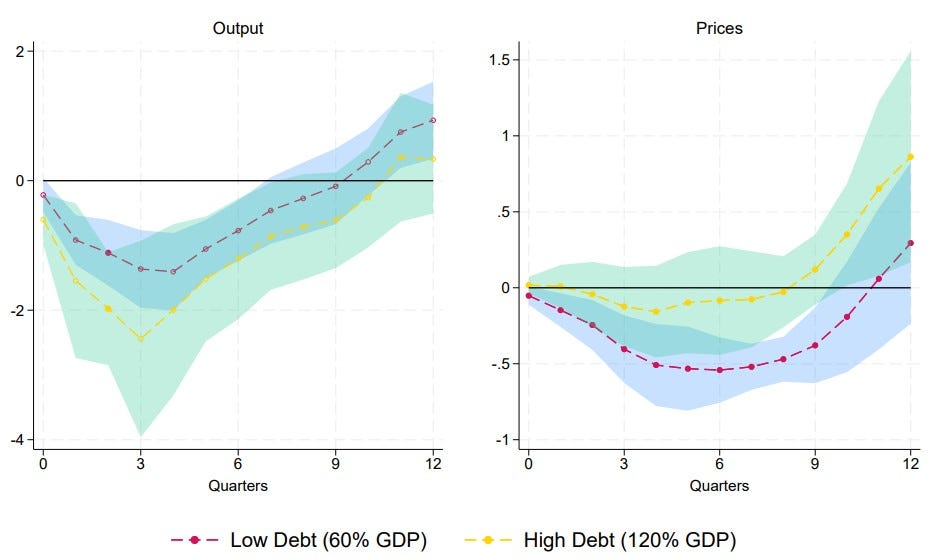
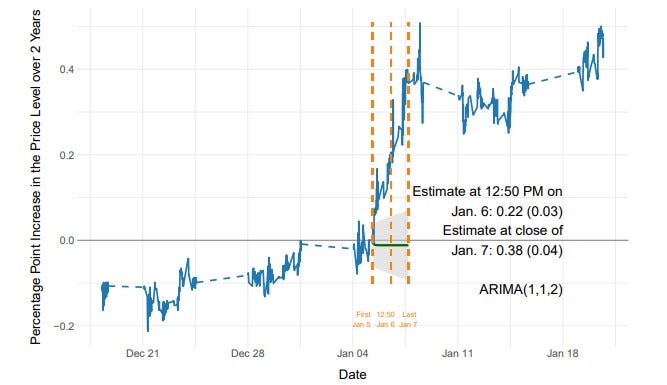
An inflation target is the rate of price growth a central bank tries to maintain over time. If inflation stays above that level, central banks may keep interest rates higher for longer to slow demand, which can affect corporate profits, borrowing costs and asset prices.
Kara’s research focuses on how companies set prices when they see competitors raising theirs. The study uses microdata covering price changes for about 340,000 consumer products sold in the UK from 2003 through 2021.
The business decision is straightforward. If higher costs look persistent across the market, a company that waits too long to raise prices risks protecting sales at the cost of weaker margins. If the price pressure looks temporary, holding prices steady can become an advantage once input costs fall again.
Kara finds that companies tend to ignore small competitor price increases, treating them as specific to a rival’s strategy or costs. Once competitor price rises move above the typical annual increase, which Kara places at about 1.9% for many UK industries, firms appear more likely to read those moves as evidence of broader and lasting cost pressure.
That can create a feedback loop. As more firms respond by raising their own prices, overall consumer inflation can pick up further. Kara argues that this behavior points to a “natural rate of inflation” near 2% in the UK, above which the economy becomes more vulnerable to self-reinforcing price increases.
The second implication is about central-bank power. Kara argues that when companies focus more on matching competitors’ price moves, they respond less to monetary policy incentives. In that setting, the Bank of England may need larger interest-rate changes to break the inflation loop.
There are open questions. Klement on Investing notes that Kara’s data covers a period when UK inflation was generally low and the Bank of England was targeting 2%. The analysis also stops before the 2022 to 2023 inflation surge, leaving unanswered whether firms would behave differently under a 3% target or during a higher-inflation regime.
This story draws on original reporting from Klement on Investing.