Do deficits cause inflation? It depends on demand, financing and Fed policy
Bigger deficits can add to price pressure, but the outcome depends on economic capacity, borrowing, monetary policy and supply shocks.
By Priya Nair · Economy Reporter
· 3 min read
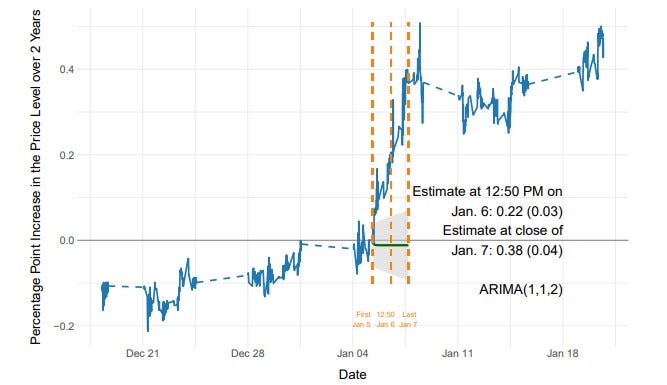
Do deficits cause inflation? Bigger budget deficits can raise inflation pressure, but they do not produce a fixed or automatic increase in consumer prices. For investors, the key is whether extra government demand arrives when the economy has limited room to produce more, and whether the Federal Reserve counters that pressure with higher interest rates.
A deficit is the gap in a given year between government spending and revenue. Public debt is the accumulated borrowing left by past deficits. The Congressional Research Service defines expansionary fiscal policy as a larger deficit caused by higher spending, lower tax revenue, or both.
How can deficits push inflation higher?
When a government spends more or collects less tax, households, businesses or public agencies can have more money to spend. That can lift aggregate demand, meaning economy-wide demand for goods and services. If production, workers and supply chains cannot expand fast enough, sellers may raise prices.
That risk is usually greater when the economy is already growing strongly than during a downturn. CRS says deficit-funded stimulus can support economic activity when growth is weakening, but it can also bring short-run tradeoffs, including higher inflation and pressure on investment and other spending that is sensitive to interest rates. Persistent stimulus during an expansion can also crowd out private investment, CRS says.
The financing and policy response also matter. The government can borrow to cover a deficit, while higher taxes can reduce the deficit. In a 2005 review, the Philadelphia Fed said the degree to which monetary policy helps balance the government budget is central to judging inflation effects. Milton Friedman similarly argued in a 1981 opinion column that the direct link is strongest when deficits are financed through money creation.
A central bank can respond to stronger inflation pressure by raising interest rates. That can restrain spending, but it also raises borrowing costs across the economy. The Yale Budget Lab says a Federal Reserve response to higher debt can increase interest costs for consumers while benefiting savers.
What does the recent evidence show?
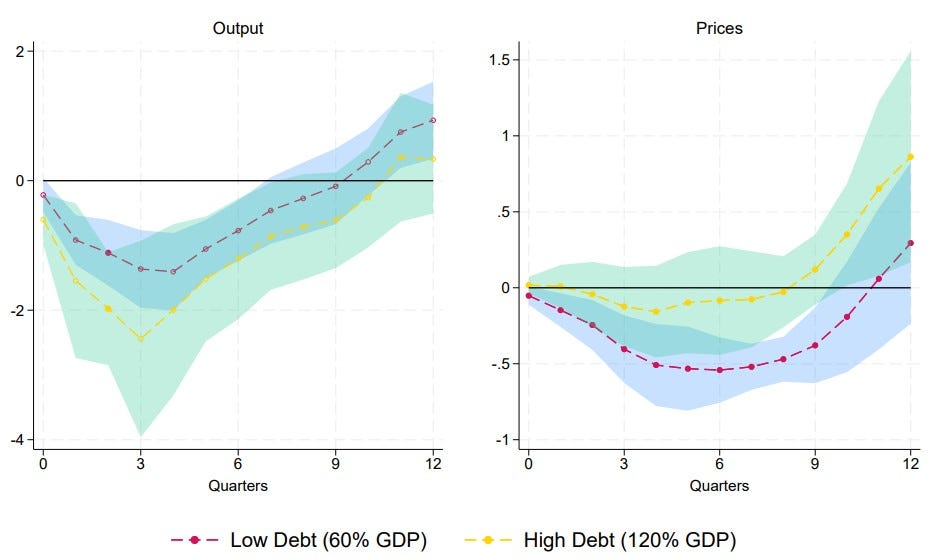
The pandemic offers an example with more than one cause. A Yale Budget Lab review cites a comparative study estimating that additional U.S. fiscal actions in 2020 and 2021, through their effect on demand, accounted for 3 percentage points of inflation by the end of 2021. The same review says supply-side problems were also major inflation drivers and interacted with the fiscal impulse.
That does not make every deficit inflationary. Deficits can rise because of recessions, when tax receipts fall and government support increases. Inflation or deflation can also affect budget balances, making a simple correlation an unreliable test of cause and effect. The Philadelphia Fed's review found little evidence of a broad deficit-inflation relationship among developed countries, unlike the pattern it described in some less-developed economies.
What should investors watch?
- Scale and duration: Is the fiscal expansion temporary, or likely to persist?
- Capacity: Can supply and employment rise to meet additional demand?
- Policy response: Will the Federal Reserve offset pressure through tighter monetary policy?
- Credibility: Do households and markets expect fiscal and monetary institutions to keep inflation contained?
Those conditions matter more than the deficit headline alone. CRS also says economists have not reached consensus on whether a debt-related economic tipping point exists or where it would be.
This story draws on original reporting from Klement on Investing.