AI graduate jobs data points to a tougher start for young workers
A US Census Bureau analysis finds job declines for 22-to-24-year-olds in industries most exposed to AI since late 2022.
By Sofia Marchetti · Columnist
· 3 min read
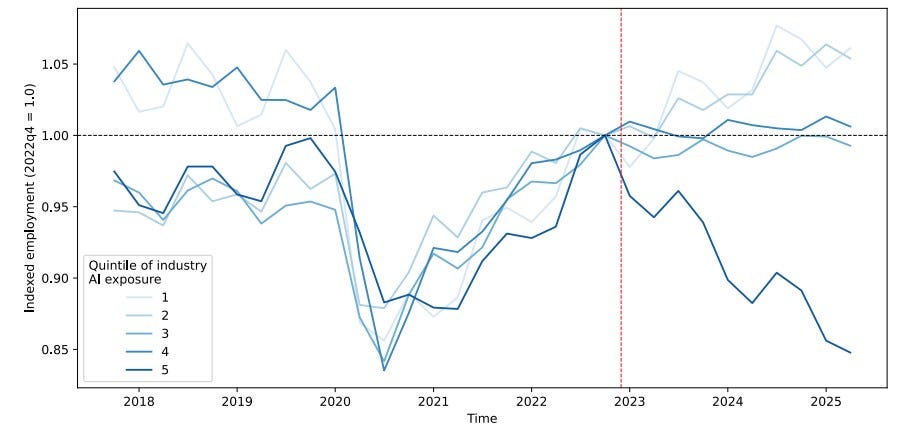
AI graduate jobs are showing early signs of pressure in the sectors most exposed to automation, according to an analysis by Lee Tucker of the US Census Bureau. For retail investors watching the AI boom, the data adds a labor-market angle: AI may be reshaping hiring in tech, finance and professional services before it shows up as broad job losses.
Tucker tracked employment among US citizens across industries and age groups since the arrival of ChatGPT-era AI tools. The pattern he found is uneven. Employment for people aged 22 to 24 fell in the industries ranked as most exposed to AI, while employment rose in industries considered less affected by AI.
AI exposure, in this context, means how likely the work in an industry is to be disrupted by artificial intelligence tools. The most exposed group includes information technology, finance, insurance and professional services such as law, human resources and accounting. Less exposed industries cited in the analysis include agriculture, construction and tourism.
Is AI hurting graduate jobs?
Tucker’s analysis points to weaker employment for recent college-age workers in AI-exposed industries, but it does not show the same decline for more experienced workers. That suggests the pressure is concentrated at the entry-level end of the labor market, where employers may be changing how they staff junior roles.
The age split matters. In industries most disrupted by AI, Tucker found that younger workers saw employment decline, while older and more experienced workers did not see the same drop. That lines up with a concern many graduates already feel: the first rung of the career ladder may be getting harder to reach in white-collar fields.
A closer look by industry showed the biggest pressure among 22-to-24-year-olds in technology, financial services and professional services, according to Tucker’s charts. Agriculture also appeared among the weaker industries, though the analysis noted that agriculture has been losing employment over a much longer period, so that drop may reflect a broader trend rather than AI alone.
The finding does not settle the larger debate over whether AI will destroy jobs or create new ones. The broader argument cited alongside Tucker’s work is Jevons’ Paradox, the idea that making a technology more efficient can increase total demand for it rather than reduce activity. Applied to AI, that view says cheaper, more productive work could eventually create new roles even as it changes or removes others.
For now, Tucker’s data suggests the benefits and costs are not landing evenly. Young workers entering AI-sensitive fields appear to be under more pressure than experienced employees in those same fields.
Tucker also cautioned that AI may not be the only force behind the employment shifts. Some of the trends began during the pandemic and may have been sped up by AI rather than caused by it from scratch.
The takeaway is narrow but useful: early evidence from the US Census Bureau analysis shows recent graduates are having a harder time in the industries most exposed to AI. For investors, workers and students, that makes entry-level hiring one of the clearest places to watch as companies keep adopting AI tools.
This story draws on original reporting from Klement on Investing.