BIS study finds rate hikes can lift private loan defaults
A BIS paper says higher policy rates have a modest average effect, but weak starting conditions can make defaults rise faster.
By Sofia Marchetti · Columnist
· 3 min read
Higher interest rates can feed into private credit losses, and a Bank for International Settlements study puts a number on the risk. For everyday investors, the key point is that the average effect looks small, but it can get more noticeable when borrowers already face heavy debt, floating-rate loans or a weaker economy.
Central banks in the U.S. and Europe are weighing rate increases as inflation stays elevated, according to the analysis. A policy rate is the benchmark interest rate set by a central bank, and it influences what banks, companies and households pay to borrow. When that rate rises, debt becomes more expensive to service.
The BIS, often called the central bank for central banks, examined how increases in policy rates show up in loan default rates. A default happens when a borrower fails to make required payments. The study offers a rough guide for investors by comparing different economic and interest-rate conditions before a hiking cycle begins.
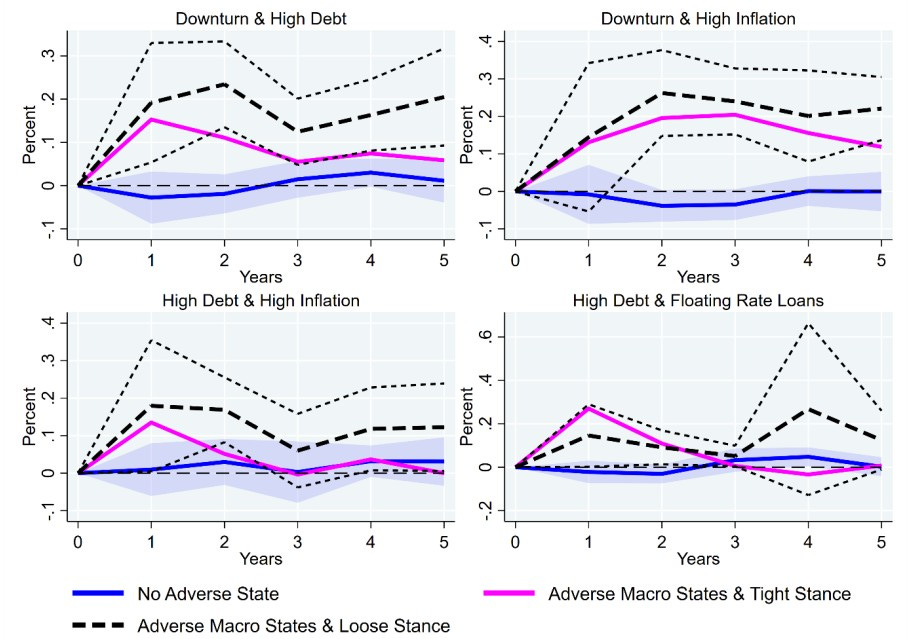
According to the BIS paper by Fandl et al. (2026), a one percentage point increase in central bank rates is associated, on average, with a 0.1 percentage point increase in default rates for private market loans. That is a small move in isolation, but current private loan default rates are already low: 1.3% in the U.S. and 1.4% in Europe, according to the analysis.
Why the starting point matters
The study finds that the effect of rate hikes changes depending on the economy before central banks start tightening. Its charts compare a baseline case with scenarios where adverse conditions are already present. Those conditions include high debt levels, high inflation, economic weakness and a larger share of loans carrying floating rates.
A floating-rate loan has an interest cost that adjusts as market rates move. That makes borrowers more exposed when central banks raise rates. A fixed-rate loan, by contrast, locks in the interest rate for a period of time, so the borrower does not feel the same immediate payment shock.
The BIS study also distinguishes between looser and tighter monetary policy before the rate increase. Monetary policy refers to central bank decisions on rates and money conditions. The analysis says rate increases are easier for loan markets to absorb when the economy is strong before the hiking cycle starts.
The paper’s confidence intervals, shown around its estimates, indicate the statistical range around the central estimate. In plain English, the study is not saying every one percentage point rate hike produces the exact same default response. It is showing the average pattern and how the pattern changes when the starting conditions are worse.
What the study implies now
The analysis argues that current conditions look closer to a scenario with high debt and a large amount of floating-rate borrowing. It also says the U.S. faces the added issue of high inflation, while Europe faces the challenge of a slowing economy without inflation being described as too high.
Under that kind of setup, the BIS figures suggest a one percentage point increase in policy rates could raise private loan default rates by about 0.3 percentage points in the first year, according to the analysis. The piece notes that money markets currently price that scale of increase for the eurozone, but not for the U.S.
Relative to today’s default rates, the analysis describes that 0.3 percentage point move as a potential increase of about one-third in private loan market defaults. The takeaway is not that a credit crack-up is guaranteed. The BIS study instead shows why the same rate hike can have very different consequences depending on debt levels, loan structure and the health of the economy before rates rise.
The BIS working paper is available here.
This story draws on original reporting from Klement on Investing.