Japan long-term investing debate gets fresh look from Ben Carlson
Ben Carlson says Japan’s bubble remains the hardest test case for buy-and-hold investors, but not a clean rejection of the strategy.
By Sofia Marchetti · Columnist
· 3 min read
The Japan long-term investing debate is getting a fresh airing from investment writer Ben Carlson, who says the country’s boom-and-bust history is the market example readers ask him about most often. For everyday investors, the question is direct: if a major stock market can soar, collapse and then disappoint for decades, how much faith should anyone put in holding stocks for the long run?
Carlson, writing at A Wealth of Common Sense, said the phrase “now show Japan” has followed him for years as someone who argues for long-term investing. He said that challenge helped inspire his book Risk & Reward, published by Harriman House.
According to Carlson, Japan came up more than any other subject in interviews for the book. Readers and interviewers, he said, repeatedly asked whether U.S. markets could be in a similar bubble, whether Japan is the exception that weakens the case for long-term stock investing, and whether the same kind of outcome could happen elsewhere.
Does Japan disprove long-term investing?
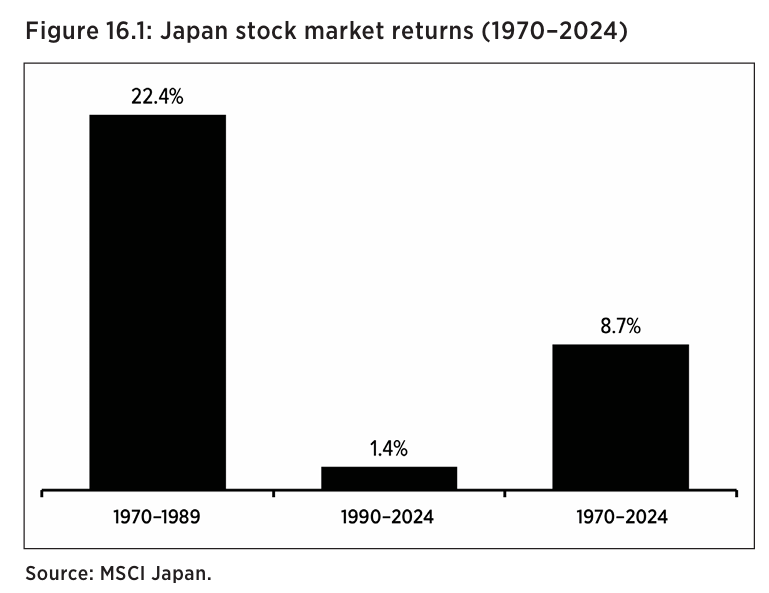
Carlson’s answer is that Japan does not neatly disprove long-term investing, though it shows how painful valuation extremes can become. Long-term investing means holding assets over many years rather than trying to trade every short-term swing; Carlson argues that Japan’s long-run record needs context because returns were heavily concentrated before the long slump that followed.
In the piece, Carlson described Japan’s late-20th-century boom as one of the most striking financial asset bubbles in history. He pointed to charts from Risk & Reward showing rapid gains during the boom years, elevated valuations and a longer-run view of Japanese market returns.
Valuation is the price investors are willing to pay for a stream of future profits, assets or cash flows. High valuations do not guarantee a crash, but they can leave investors with lower future returns if prices already reflect very optimistic assumptions.
Carlson said the key chart in his discussion shows that long-term investing “did work” in Japan, in his view. His explanation is that gains were so front-loaded in the 1970s and 1980s that later decades produced weak results as those earlier excesses were worked off.
Why Carlson focused on Japan in Risk & Reward
Carlson said his original plan for Risk & Reward was to pair each market risk with a chapter on context and ways investors might protect themselves. Japan became a two-chapter case study, and he described those chapters as his favorite parts of the book to write.
He also said there are relatively few books focused on what he views as the largest financial asset bubble in history. His Japan chapters, he wrote, were intended to give readers a clearer sense of what happened, while the full book includes more data, stories and explanations.
For retail investors, the practical takeaway from Carlson’s argument is not that Japan can be ignored. It is that a single national market, bought at extreme valuations, can produce a very different experience from a broad, diversified portfolio. Carlson linked readers to his earlier writing on international diversification for more context.
This story draws on original reporting from A Wealth of Common Sense.