Seinfeld’s ‘find fascination’ advice lands amid reading slump
Bill Gurley’s book quotes Jerry Seinfeld urging graduates to seek fascination as reading data show fewer Americans picking up books.
By Priya Nair · Economy Reporter
· 3 min read
Seinfeld’s “find fascination” advice is getting a fresh look through Bill Gurley’s book Runnin’ Down a Dream, and it lands at a useful moment for investors trying to build real knowledge instead of chasing quick takes. Gurley quotes Jerry Seinfeld telling a commencement audience to worry less about “passion” and pay more attention to what keeps them curious.
According to the passage Gurley cites, Seinfeld pushed back on the familiar graduation advice to find one great passion. “I say, the hell with passion,” Seinfeld said, before offering a calmer substitute: “Find fascination.” He added that fascination is “way better than passion” because “it’s not so sweaty.”
That distinction matters for self-directed investors because markets reward patience, context and curiosity. A recent investing essay built around Gurley’s passage argues that fascination can grow from reading, especially in finance, where markets reflect people, incentives, behavior and emotion as much as numbers on a screen.
What did Seinfeld mean by find fascination?
Seinfeld’s point, as quoted by Gurley, is that people do not need one dramatic calling before they can start building a career or craft. Fascination is a more practical signal: if a subject keeps pulling your attention, it can lead you into deeper learning over time.
The investing writer described that path through finance. After an internship became an entry-level analyst job, the writer turned to books including One Up on Wall Street, The Intelligent Investor, The Warren Buffett Way and Poor Charlie’s Almanack. The writer said reading market history, investor biographies and accounts of financial crises helped build a working education before personal investing experience had accumulated.
The same essay argues that finance careers depend on a mix of communication, sales, analysis and process. Reading, the writer said, became the biggest career accelerator, helping with writing, speaking and thinking about markets.
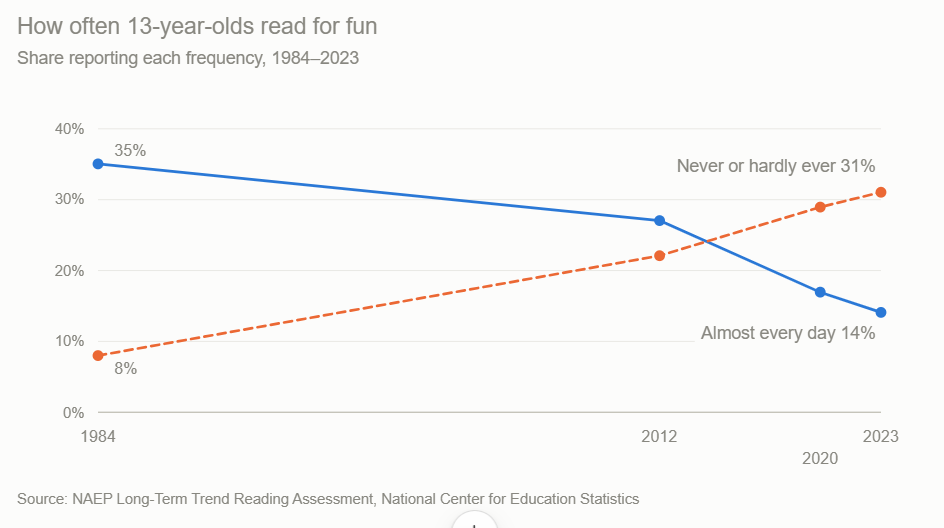
How much has reading declined?
The concern is that fewer Americans are making time for that kind of slow learning. The Atlantic’s “The End of Reading is Here” cited data from the National Endowment for the Arts showing that fewer than half of U.S. adults said they had read any kind of book in 2022. The same survey found that 38% had read a novel or short story.
The Atlantic also cited a study of 236,000 responses to the American Time Use Survey. That study found that the share of Americans who read for pleasure on a given day fell to 16% in 2023 from 28% in 2004. The measure included books, magazines, newspapers, audiobooks and e-books.
The Atlantic reported another striking comparison: 57% of Americans placed a bet last year, making gambling a more common leisure activity than reading a book.
Podcasts, YouTube and large language models, or AI systems trained to generate text, give people more ways to learn than past generations had. The investing essay’s argument is that books still do something different: they force sustained attention, build context and help readers connect ideas across markets, history, psychology and storytelling.
This story draws on original reporting from A Wealth of Common Sense.