South Korea margin loans show the risk inside the AI stock boom
Reuters profiled young traders hit by forced liquidations as AI-linked shares swung and regulators raised leveraged ETF requirements.
By Sofia Marchetti · Columnist
· 3 min read
South Korea margin loans have become a flashpoint in one of the world’s hottest AI stock trades, after a sharp pullback hit traders who borrowed heavily to buy shares. For everyday investors, the episode shows how leverage can turn a normal selloff after a big rally into forced selling.
The pressure follows a fast rise in South Korean equities tied to artificial intelligence. Market commentary on Ask the Compound said SK Hynix and Samsung, which together account for roughly half of South Korea’s stock market, have been central to the move. The same discussion said the South Korean stock market is up more than 130% over the past 12 months, even after falling as much as 25% over roughly the past month.
What happened to South Korea margin loans?
Margin debt in South Korea has climbed to record levels, according to ChosunBiz, as investors used borrowed money and leveraged exchange-traded funds to increase their stock exposure. ChosunBiz reported that regulators tripled margin requirements for leveraged ETFs to curb the practice.
A margin loan lets an investor borrow from a broker to buy more securities than their cash balance would otherwise allow. Leverage magnifies gains when prices rise, but it also magnifies losses; if an account falls below required levels, the broker can sell holdings to protect the loan.
Reuters recently profiled Lee Seung-ho, a 24-year-old university student in Seoul, as one example of the risks. According to Reuters, Lee built a stock trading account worth nearly 300 million won, or $202,515, from 20 million won he had saved during mandatory military service by using a 500% margin loan through his trading app.
Reuters reported that violent swings in South Korean stocks led to forced liquidations by Lee’s brokerage in May, wiping out his gains within four weeks. Lee told Reuters the stress left him feeling that he “could not breathe.”
Lee also told Reuters he planned to use margin loans again once he had enough capital. Asked why he would take on more debt after the loss, he said stocks are volatile and that upward volatility can create wealth quickly; with five-times leverage, he said, he could build wealth five times faster than others.
Why leverage changes a bull-market selloff
A selloff after a large rally can be painful for any investor, but leverage changes the math. A trader who owns stocks without debt can choose whether to hold, sell or rebalance. A trader using borrowed money may lose that choice if the broker demands more collateral or liquidates positions.
That is the risk behind the phrase “forced seller.” It means the investor is no longer deciding based only on long-term conviction or portfolio goals; the loan agreement can force sales when prices are already down.
The South Korea example also highlights concentration risk, which means too much of a market or portfolio depends on a small group of stocks. Ask the Compound noted that SK Hynix and Samsung make up about 50% of South Korea’s equity market, tying broad market performance closely to the AI semiconductor trade.
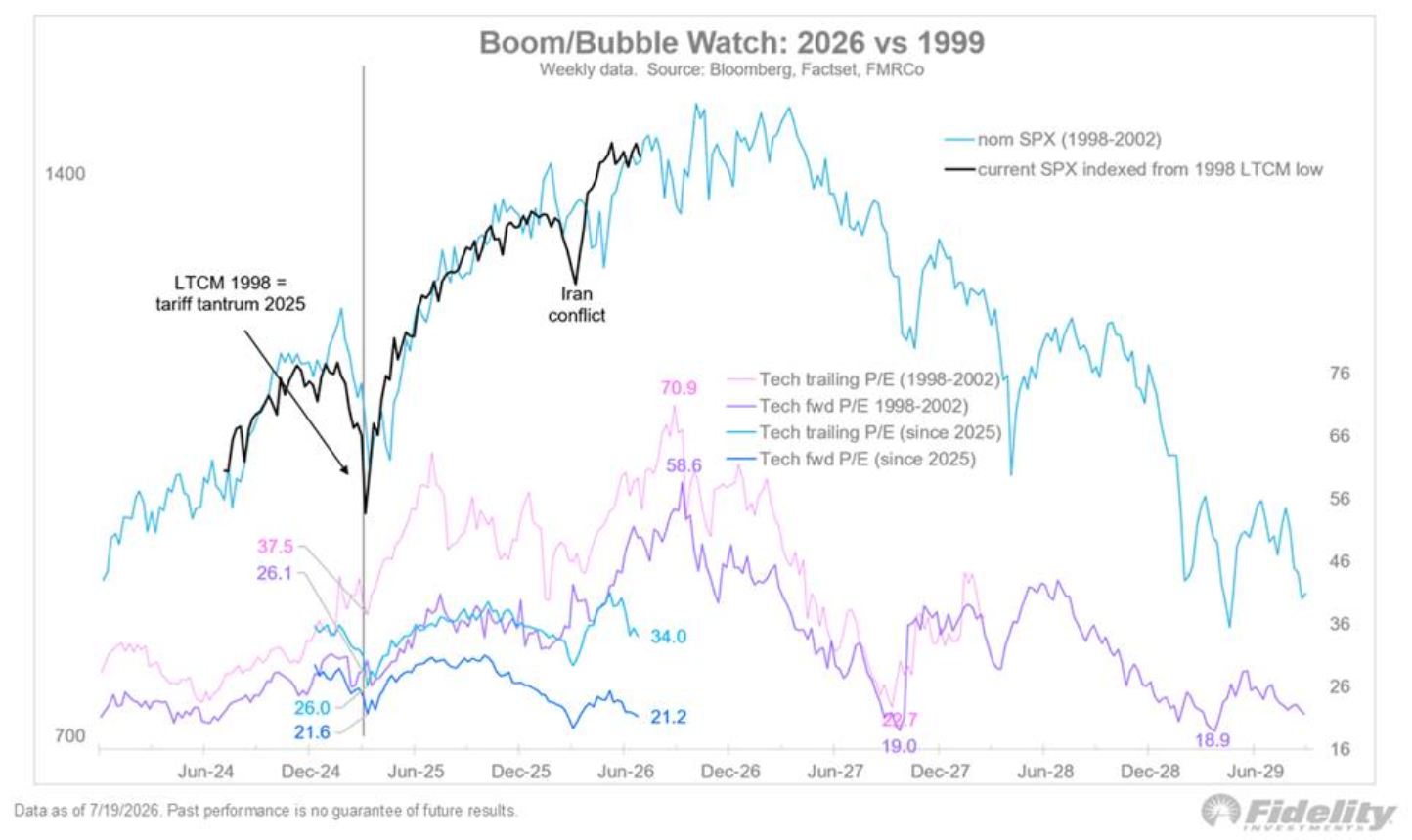
Fidelity’s Jurrien Timmer, who joined Ask the Compound for the discussion, framed the broader challenge as balancing the desire to profit from a boom with the fear of losses when the cycle turns. The timing of that turn is uncertain, but the mechanics of leverage are clear: borrowed exposure can make both outcomes arrive faster.
This story draws on original reporting from A Wealth of Common Sense.