Stock market drawdowns expose pain beneath a near-record index
A Wealth of Common Sense says the U.S. market is near records, but Netflix, Nike and former pandemic winners show pain beneath the index.
By Priya Nair · Economy Reporter
· 3 min read
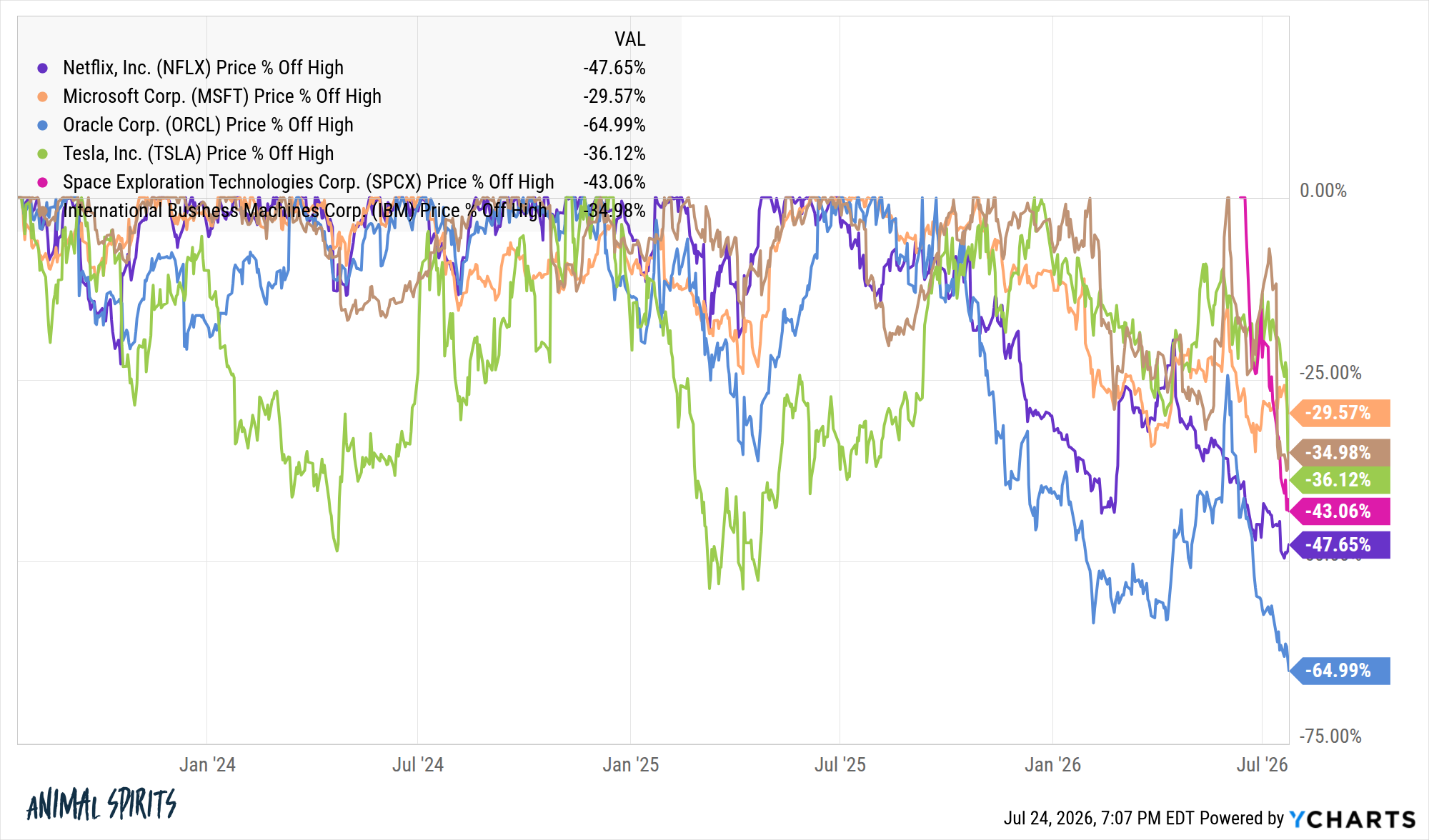
Stock market drawdowns are getting harder to ignore even as the broader U.S. market sits close to record levels, according to A Wealth of Common Sense. The blog said the market is up almost 10% this year and nearly 20% over the past year, yet many familiar stocks remain under heavy pressure.
A drawdown is the decline from a stock’s previous high to a lower point. For retail investors, that matters because an index can look healthy while individual holdings inside or around that market can be down far more than the headline number suggests.
A Wealth of Common Sense pointed to weakness across several groups: large technology names, apparel brands and former pandemic winners. The post cited charts showing declines in names such as Netflix, Microsoft, Oracle, Tesla and IBM, along with apparel companies including Nike, Gap, Under Armour, Lululemon and VF Corp.
Why are some stocks in drawdown while the market is near records?
Major indexes are weighted toward the largest companies, so strength in a handful of leaders can mask trouble elsewhere. A stock can also fall for company-specific reasons, such as changing consumer tastes, slower growth or mistakes by management, even when the overall market is rising.
The post used Nike as one example of how sentiment can shift around a once-dominant brand. A Wealth of Common Sense said changing tastes and company errors have helped explain why the market has cooled on the stock.
The same analysis also highlighted the reversal in companies that surged during the pandemic as investors tried to price in a rapidly changing economy. The list included Peloton, Teladoc, Zoom, DocuSign, Wayfair and Moderna, which A Wealth of Common Sense described as part of the other side of that earlier boom.
Netflix shows the challenge of buying beaten-down stocks
Netflix was the central case study. A Wealth of Common Sense said the stock has returned about 30% a year over nearly 25 years as a public company, a long-term record that few public companies can match.
That return came with repeated severe selloffs. According to the post, Netflix has seen drawdowns of 63%, 76%, 44%, 56%, 82% and 76%, and is now down around 50% from a prior high.
The post framed Netflix in two competing ways. One view is that past crashes in the stock created attractive entry points for investors who could tolerate volatility. The other is that Netflix may be shifting from a high-growth company into a more mature business, which could change how investors value it.
That tension is the core risk in bottom-fishing, a term for buying stocks after sharp declines in the hope that the market has overreacted. A low price can create future gains if the business recovers, but some stocks do not regain their old highs.
A Wealth of Common Sense said the discussion continued on this week’s Animal Spirits video, including Netflix and bottom-fishing. For individual investors, the broader point is that a strong index does not remove single-stock risk, especially when popular trades such as artificial intelligence draw capital away from lagging parts of the market.
This story draws on original reporting from A Wealth of Common Sense.