AI demand lifts Japan’s Toto, Nittobo and Ajinomoto beyond chips
Three Japanese companies outside chipmaking have rallied as their materials and components feed into the AI semiconductor supply chain.
By Dev Ramirez · Crypto Correspondent
· 3 min read
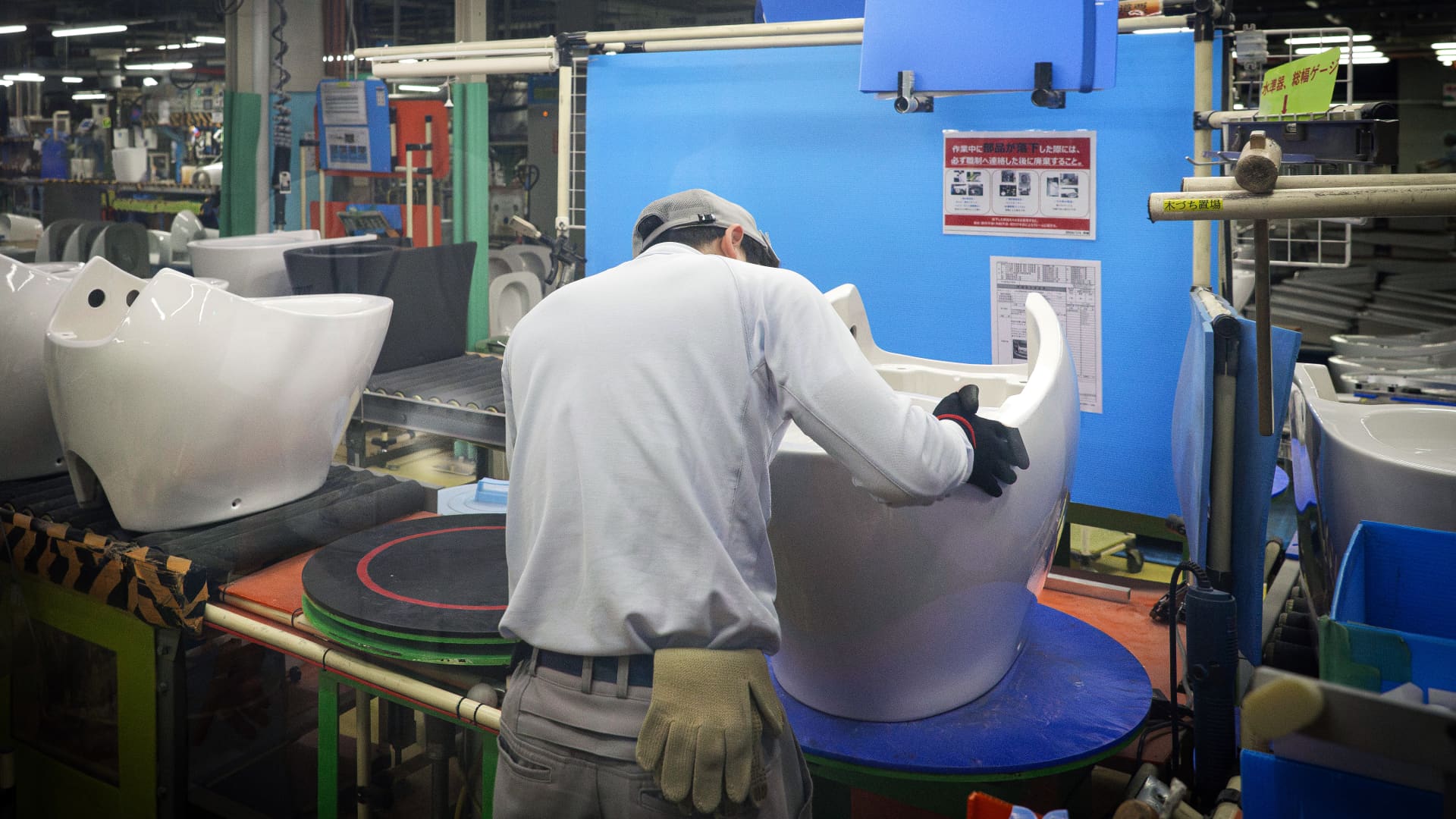
AI investing is reaching well beyond the companies that design chips or run data centers. In Japan, shares of Toto, Nittobo and Ajinomoto have climbed this year as investors connect their less obvious businesses to the semiconductor supply chain, according to CNBC.
Toto is widely known for premium toilets, Nittobo for textiles and glass fiber, and Ajinomoto for MSG seasoning. CNBC reported that their shares have gained 78%, 63% and 61%, respectively, this year, helped by growth in business lines tied to artificial intelligence demand.
The link is materials and manufacturing. AI chips need advanced production tools and packaging, meaning the layers and components that help chips connect, move data and manage performance. That has created openings for companies whose core technologies were developed far from consumer tech.
Toto’s ceramics business gets a chip boost
Toto said in its full-year results for the year ended March 31 that sales and profits fell in its main housing equipment business. Growth in advanced ceramics offset that weakness and helped push the overall company higher.
The company’s advanced ceramics segment posted a 34% increase in annual revenue and a 42% rise in operating profit, according to its results. The unit makes ceramic electrostatic chucks, components used inside semiconductor manufacturing equipment to hold silicon wafers in place during etching, a process that removes material from the wafer to form chip patterns.
Toto said its ceramic technology helps improve manufacturing yield for advanced chips. Yield means the share of chips produced successfully, a key metric because fewer defects can lower costs for manufacturers.
In an email to CNBC, Toto said it does not see one business segment as better than the other. The company said its advanced ceramics business is growing quickly, but had long periods of losses over its 40-year history. Toto also told CNBC it has “absolutely no plans” to move away from housing equipment, which it described as a stable base while the chip sector remains volatile.
Nittobo’s glass fiber moves deeper into electronics
Nittobo said electronic materials are already a main business for the company. Its T-glass product, introduced in 1984, is used in printed circuit boards and electronic components, according to the company.
In its results, Nittobo said demand linked to AI servers and strong sales of Special Glass lifted sales and profit in its electronic materials segment. Net sales in that unit rose 20.4% year over year, while operating profit increased 39.7%.
CNBC calculated that electronic materials accounted for about 91% of Nittobo’s net sales increase in the latest financial year. The segment’s profit rose by 5.5 billion yen, or about $34 million, exceeding the company’s total operating profit increase of 4.4 billion yen.
Nittobo told CNBC that T-glass and other electronic materials are “the pillar” of its growth for the next decade. The company also said AI semiconductor demand is affecting how it allocates capital spending, research and development, and staffing.
Ajinomoto’s ABF film connects food science to chips
Ajinomoto’s AI link comes through Ajinomoto Build-up Film, or ABF, an insulating material used in semiconductor packaging for high-performance computers and data-center servers. Semiconductor packaging refers to the structure around a chip that protects it and connects it to the rest of a device.
Ajinomoto says a byproduct from MSG manufacturing helped lead to technologies behind ABF. The product went on sale in 1999 and is used in high-performance semiconductors, including CPUs, according to the company’s website.
Ajinomoto does not report ABF as a separate segment. In its full-year results, the company said its “Healthcare and Others” segment, which includes ABF, posted revenue growth of about 4% and a 45.1% increase in business profit, partly because of higher revenue from electronic materials.
The company said in investor materials that it expects continued growth centered on ABF products in high-value-added and cutting-edge fields. CNBC said Ajinomoto did not respond to a request for comment.
This story draws on original reporting from CNBC.


