NY Fed inflation expectations rise to 3.9% for the next year
The New York Fed’s September survey found higher near-term inflation and spending expectations, while five-year inflation views held steady.
By Priya Nair · Economy Reporter
· 2 min read
NY Fed inflation expectations for the coming year rose to 3.9% in September, the highest reading since May 2023. The result points to households anticipating faster price increases in the near term, while their five-year outlook did not move, according to the Federal Reserve Bank of New York.
The New York Fed released its September 2026 Survey of Consumer Expectations on Oct. 7. It surveyed a rotating, nationally representative internet panel of about 1,300 household heads from Sept. 1 through Sept. 30.
Median one-year inflation expectations increased 0.3 percentage point from 3.6% in August. Expectations three years ahead rose 0.1 point to 3.3%, while the five-year figure stayed at 3.0%.
What did the NY Fed inflation expectations survey find?
Respondents’ views varied more widely in September. The New York Fed said its measure of disagreement, the gap between the 75th and 25th percentiles of responses, increased at one-, three- and five-year horizons. Reported uncertainty increased at the one- and three-year horizons and declined at the five-year horizon.
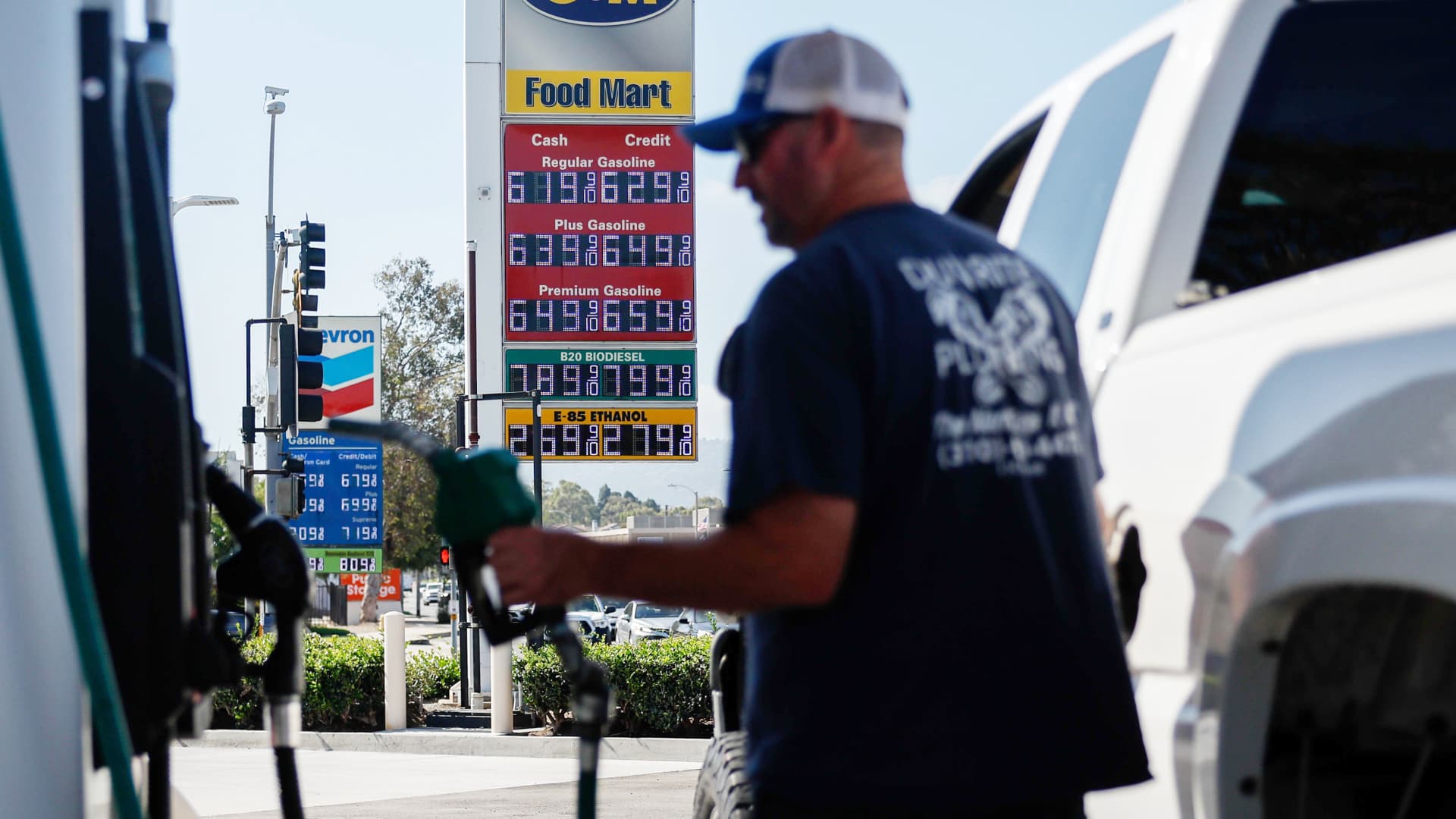
Consumers also reported higher expected price increases over the next year for several everyday categories. Expected gas-price growth rose 0.2 percentage point to 4.8%, food-price growth rose 0.2 point to 5.5%, and medical-care costs rose 0.1 point to 9.2%. Expected rent growth increased 0.2 point to 6.8%, while expected college-education costs jumped 1.4 points to 7.5%.
Expected home-price growth was unchanged at 3.0%, below its 12-month trailing average of 3.1%, the New York Fed said.
Why is expected spending higher than expected inflation?
The survey separately asks about nominal household spending growth, which refers to expected dollar spending rather than an inflation reading. That measure rose 0.3 percentage point to 5.5%, its highest level since May 2023 and above its 12-month trailing average of 5.0%.
Expected household-income growth edged up 0.1 point to 3.1%, its highest reading since February 2025. At the same time, expected earnings growth over the next year fell 0.3 point to 2.6%.
The household-finance results were also mixed. The New York Fed said more respondents reported that credit was harder to obtain than a year earlier, and perceptions of current and future financial conditions worsened. The perceived chance of missing a minimum debt payment in the next three months, however, fell 1 point to 12.2%.
Several labor-market measures improved. The average perceived probability that the unemployment rate would be higher in a year declined 0.5 point to 43.9%. The perceived chance of losing a job over the next 12 months fell to 13.5%, while the reported probability of finding a job after losing one rose to 46.1%.
The survey records households’ expectations and uncertainty. It does not measure realized inflation or serve as an official Federal Reserve economic forecast.
This story draws on original reporting from CNBC.