AI spending boom lifts Goldman Sachs and JPMorgan to record revenue
Goldman Sachs and JPMorgan posted record quarterly revenue as AI-linked trading, deals and financing spread beyond tech stocks.
By Maya Okafor · Markets Writer
· 3 min read
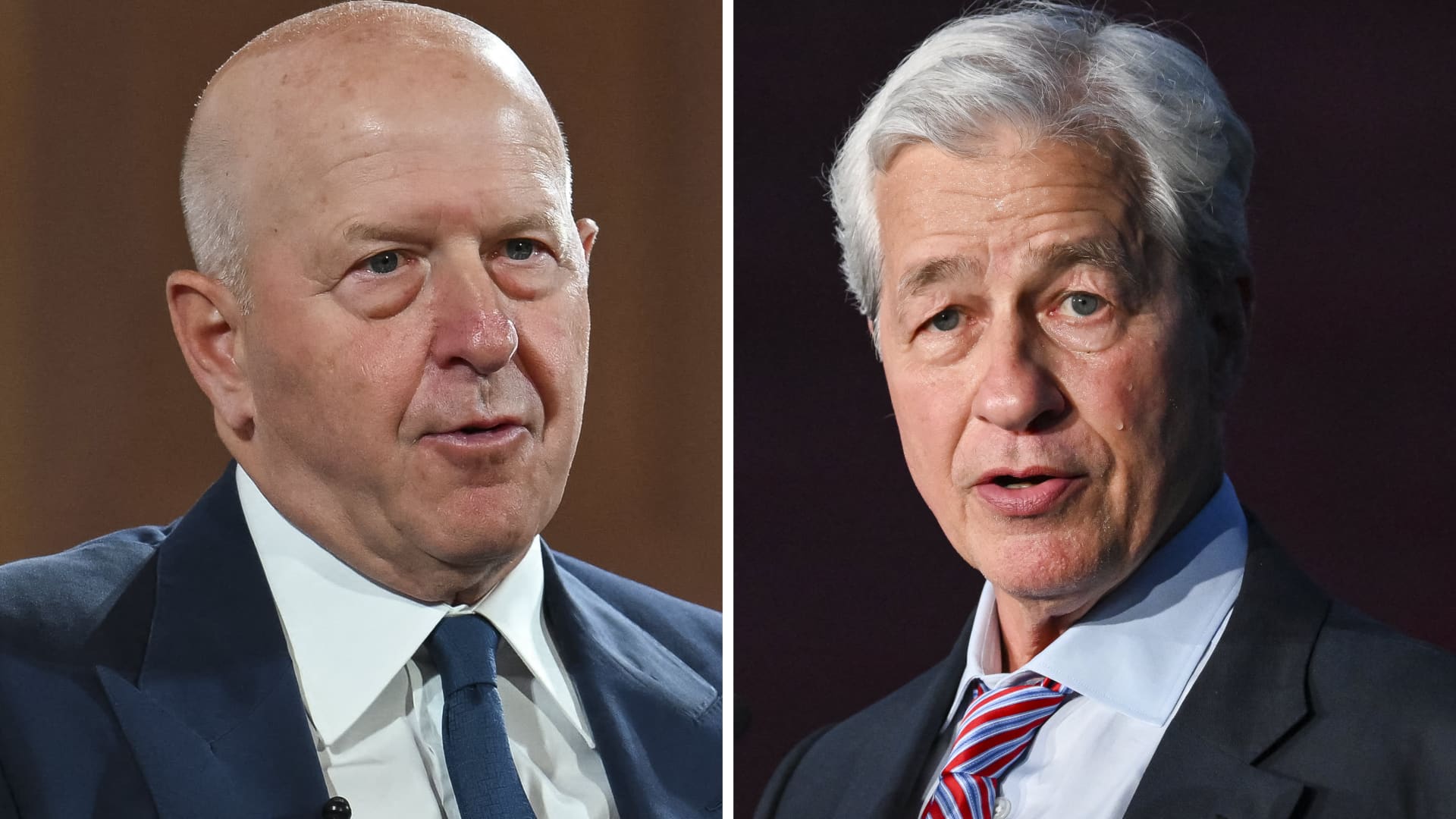
Goldman Sachs and JPMorgan Chase turned the AI boom into record quarterly revenue, showing retail investors that the trade is spreading beyond chipmakers and software giants. The banks are benefiting because AI requires capital: companies need money for data centers, power projects, stock sales, debt deals and acquisitions.
Goldman said quarterly revenue rose 39% to $20.3 billion, while JPMorgan reported a 27% increase to $58 billion, according to company earnings releases. CNBC reported that both figures were quarterly records.
JPMorgan Chief Financial Officer Jeremy Barnum told reporters that AI is “everywhere in financial markets,” pointing to active initial public offerings, index rebalancing and Asian market activity. An initial public offering, or IPO, is the first sale of a company’s shares to public investors.
Goldman shares rose 8% in afternoon trading Tuesday, while JPMorgan gained 2%.
How AI turns into bank revenue
The link between artificial intelligence and bank earnings is practical. Building AI systems takes physical infrastructure, including data centers and electricity supply. Companies raise money to fund those projects, and banks collect fees for arranging debt, equity sales and mergers.
Goldman CEO David Solomon told analysts the economy is in an AI “capex super cycle.” Capex means capital expenditures, or money a company spends on long-term physical assets such as facilities, equipment and infrastructure.
Solomon said demand for financing now stretches across regions, industries and financing tools. He also told analysts Goldman is preparing for a three-to-five-year investment cycle that remains in its early stages.
Goldman’s investment banking revenue climbed 55% to $3.4 billion, while JPMorgan’s rose 30% to $3.3 billion. Together, CNBC reported, that was $1 billion above analyst expectations. Bank of America also benefited, with investment banking fees up 50% to $2.1 billion.
CNBC reported that Goldman was lead adviser during the quarter on the SpaceX IPO and Alphabet’s $90 billion equity issuance, and advised Dominion Energy on its sale to NextEra Energy. CNBC tied those transactions to the broader AI investment cycle.
Trading desks got a lift
The biggest upside showed up in equities trading, the business of helping clients trade stocks and related market products. JPMorgan’s equities trading revenue rose 86% to $6 billion. Goldman’s increased 72% to $7.42 billion. CNBC reported the combined total beat analyst expectations by $4.4 billion.
Bank of America’s equity trading revenue rose 70% to $3.6 billion. Soofian Zuberi, president and co-head of Global Markets at Bank of America, told CNBC that investors looked for AI exposure outside the United States and directed more money into Asian markets, including South Korea, Taiwan and Japan.
Zuberi said American clients, including foundations, endowments and family offices, have been allocating more money to Asia as they search for companies tied to the AI buildout.
Wells Fargo banking analyst Mike Mayo told CNBC the AI investment boom reached a “tipping point” in the second quarter. Mayo said Goldman, JPMorgan and Morgan Stanley are the largest Wall Street beneficiaries of the trend, and he raised his price targets for Goldman and JPMorgan after their results. Morgan Stanley is scheduled to report earnings Wednesday.
Banks are also beginning to use AI inside their own operations. Zuberi told CNBC the technology is helping banking firms streamline processes, while banks are helping finance the data centers that AI requires.
This story draws on original reporting from CNBC.


