Anduril AI weapons plan keeps humans in charge, CEO Brian Schimpf says
Anduril CEO Brian Schimpf told CNBC the defense startup sees AI as a supervised tool for weapons and faster manufacturing.
By Maya Okafor · Markets Writer
· 3 min read
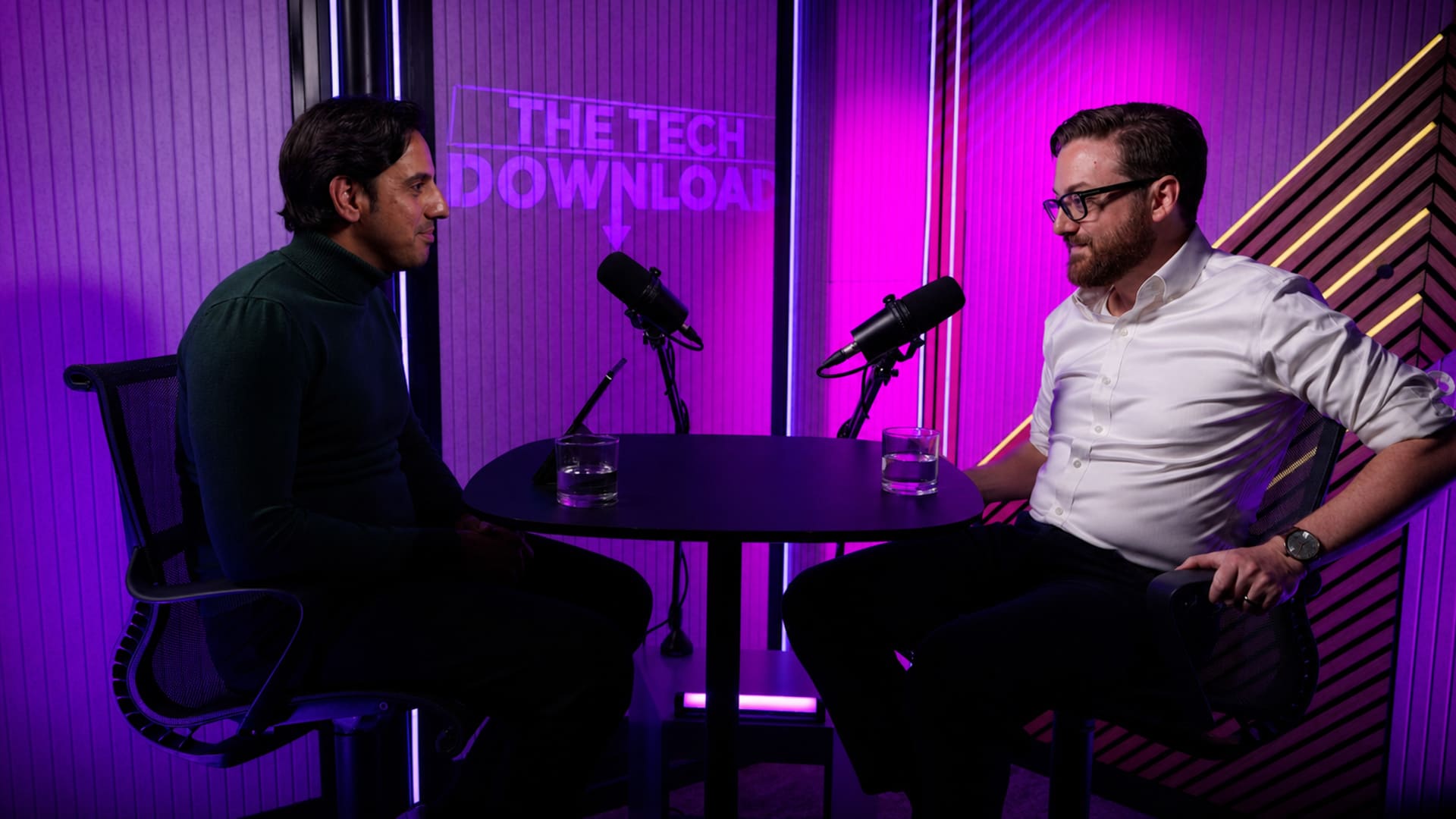
Anduril AI weapons are meant to keep humans involved in military decisions, CEO Brian Schimpf said in an interview with CNBC’s Arjun Kharpal. The comments give retail investors another look at how AI is moving beyond chatbots and chips into defense budgets, government contracts and the companies trying to challenge long-running Pentagon suppliers.
CNBC reported that Anduril is part of a group of defense startups trying to compete with established contractors that have long dominated the sector. Those incumbents have built complex military systems through procurement programs that can take years, or even decades, to deliver, according to CNBC.
Schimpf discussed autonomous weapons, manufacturing and government contracts on CNBC’s The Tech Download podcast. Autonomous weapons are systems that can perform some targeting or operating functions without a person controlling every step. Schimpf pushed back on the idea that Anduril is pursuing weapons that act with no human oversight.
What did Anduril say about AI weapons?
Schimpf told CNBC that the “insane version” of autonomous weapons is not what military officials want. “Nobody wants the insane version of this. Like, nobody in the military is talking about it. Nobody thinks it’s a good idea,” he said.
He argued that autonomy in weapons is not a future-only concept. Schimpf cited torpedoes and anti-radiation missiles as examples of existing weapons that can detect and engage certain target signatures without a person making every small decision in real time, according to CNBC.
Schimpf also said he sees opposition to AI in weapons as creating a worse outcome. He described the view that weapons should not use AI as “just a deeply unethical view, where you’re saying, oh, actually, we should have dumber weapons,” adding, “That seems like a strictly worse world to live in.”
At the same time, Schimpf said Anduril’s approach relies on people supervising decisions. “The fundamental thing is we have principles around how we think this should work ... which is very much around human supervision of decision making,” he told CNBC.
How is Anduril trying to build weapons faster?
Schimpf said Anduril wants defense companies to control more of the design process, use commercial supply chains and manufacture at the pace associated with the technology industry. That differs from the specialized supplier networks that have traditionally shaped defense production, CNBC reported.
The manufacturing push matters because Anduril has a Pentagon deal to provide 1,000 missiles, according to CNBC. That order would require the company to increase production from almost nothing.
Schimpf told CNBC that Anduril’s ability to build quickly is tied to how much attention it has paid to supply chains. “The amount that we’re producing very, very quickly is, I think, enabled by the fact that we’ve thought about the scalability of supply chain so much,” he said.
For investors watching the defense and AI sectors, Anduril’s pitch reflects a broader shift: startups are trying to bring software-style speed and AI tools into a market that has usually moved through slower government buying cycles. CNBC reported that the company is positioning itself as one of the challengers to the traditional defense contractors, while Schimpf framed AI as a way to support human decision-making rather than remove people from the loop.
This story draws on original reporting from CNBC.