Andy Burnham set to become UK prime minister as markets weigh policy shift
Burnham becomes Britain’s seventh prime minister in 10 years, with investors focused on taxes, spending and North Sea energy policy.
By Maya Okafor · Markets Writer
· 4 min read
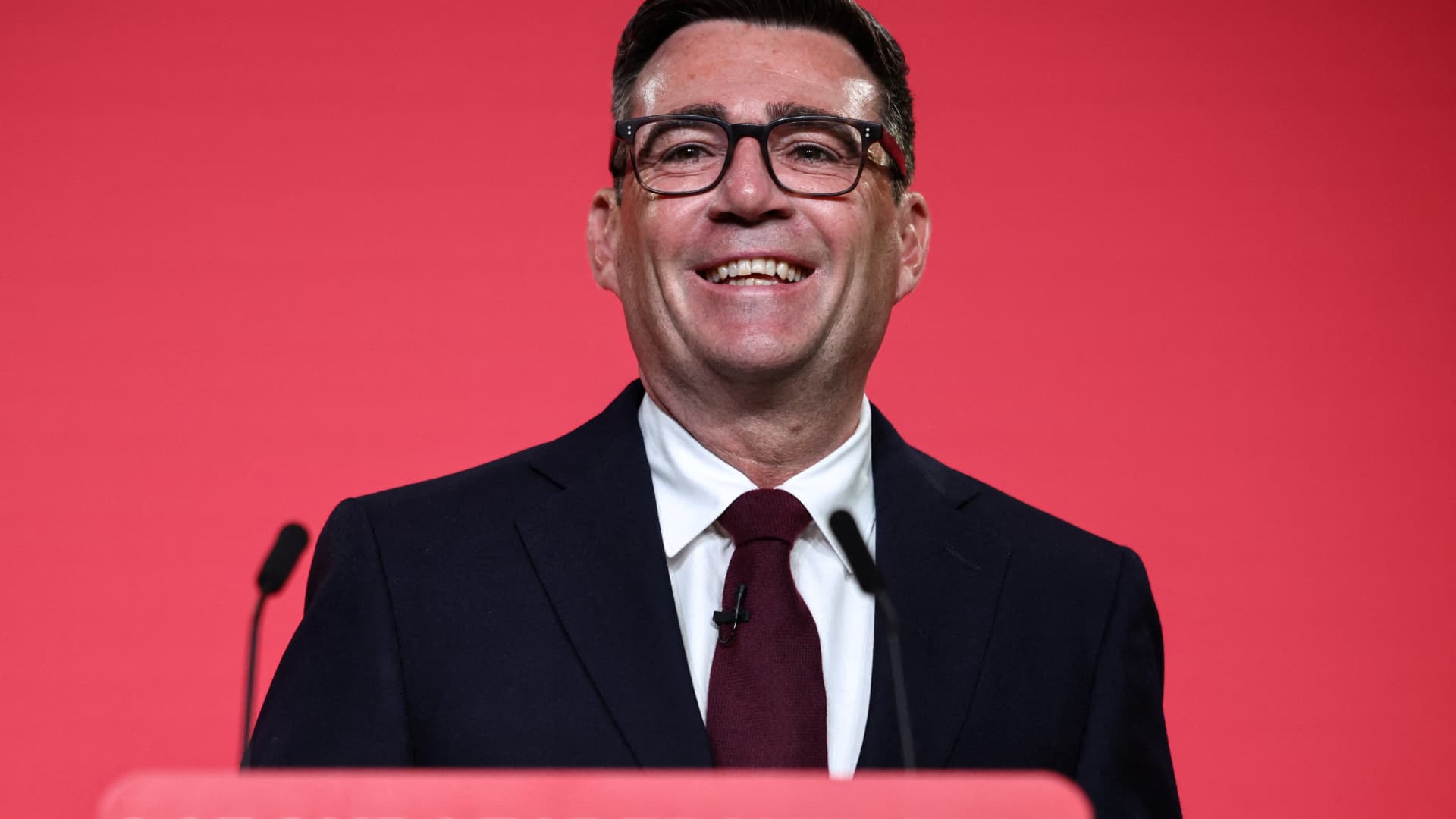
Andy Burnham is set to take over as U.K. prime minister on Monday, putting Britain’s economic policy back under the market microscope. For everyday investors, the immediate question is how his government will handle borrowing, taxes, energy and public services, all of which can move U.K. bonds, the pound and domestic stocks.
King Charles will formally ask Burnham to form a government at Buckingham Palace before Burnham is appointed, according to CNBC. Burnham is expected to give his first speech as prime minister later Monday, when he will outline his plans for the country.
Burnham will be Britain’s seventh prime minister in a decade. He became leader of the governing Labour Party after Prime Minister Keir Starmer said last month he would step down, CNBC reported. Starmer’s position had weakened after policy reversals, controversy over staffing appointments and a poor Labour showing in local elections led to pressure from inside his party.
Burnham faced no challengers in the Labour leadership race. Under Labour Party rules, only sitting members of Parliament can run for the leadership, and Burnham returned to Parliament only weeks ago after winning a by-election in Makerfield in northern England, according to CNBC.
Before returning to Westminster, Burnham served for nearly a decade as mayor of Greater Manchester. He had previously been a Labour member of Parliament and held cabinet roles under former prime ministers Tony Blair and Gordon Brown. After being confirmed as Labour leader on Friday, Burnham told supporters: “I am ready.”
Energy policy has already drawn attention beyond the U.K. President Donald Trump praised Burnham’s plan to speed up oil and gas exploration in North Sea fields that already have licenses. In a post on Truth Social over the weekend, Trump called North Sea oil “invaluable” and said it could move Britain from a “Poverty Stricken Disaster” to “one of the Richest Countries anywhere in the World!”
Markets are also watching Burnham’s fiscal stance. Gilts, the name for U.K. government bonds, had shown earlier concern about the possibility of Burnham replacing Starmer, CNBC reported. Bond investors had appeared broadly comfortable with Starmer and finance minister Rachel Reeves because of their pledge to limit public borrowing and spending.
Bond markets care about that because governments borrow by selling debt. If investors think a government may borrow more, they may demand higher yields, meaning a higher return, to hold that debt. Higher gilt yields can feed into borrowing costs across the economy, including loans and mortgages.
In a note last week, Rachel Vahey, head of public policy at AJ Bell, said Burnham’s full policy direction was still unclear, but there were signs of where he may go. Vahey said talk that the autumn Budget could be widened to include a departmental spending review suggests Burnham’s first Budget could carry major consequences for personal finances.
Vahey said Burnham has pledged to stick to Labour’s manifesto commitments, including a promise not to raise income tax. She also said that does not rule out longer-term plans that could move away from those pledges. According to Vahey, there has been speculation that Burnham may look at inheritance tax and council tax changes, as well as tighter public control of services such as energy, transport and water.
Andrew Wishart, senior U.K. economist at Berenberg, told CNBC’s “Europe Early Edition” on Friday that markets now seem “fairly relaxed about the Burnham agenda.” He added that investors remain concerned that if Burnham’s current proposals fall short, the government could choose higher public spending, a move Wishart said would unsettle markets and hurt the U.K. economic outlook.
Wishart said Berenberg expects Burnham to keep the fiscal rules set under Reeves, though many policy details remain unknown. He identified nationalization and housebuilding as key uncertainties, especially how they would be paid for and whether funding would require more gilt issuance or an infrastructure bank.
This story draws on original reporting from CNBC.


