APEC open-source AI statement backs models with stronger security
The U.S., China and other APEC economies supported open-source AI, while calling for data protection, IP rights and security controls.
By Maya Okafor · Markets Writer
· 3 min read
The APEC open-source AI statement released in Chengdu, China, gives political backing to free-to-use AI models while tying that support to stronger safeguards. For investors watching the AI race, the move matters because open models can spread faster and cost less to use, but government security demands may influence which platforms companies and public agencies trust.
The 21 APEC member economies, including the U.S. and China, issued what they called the “Chengdu statement” on artificial intelligence on Thursday. The statement called for support of open-source AI development and emphasized “security, data protection and intellectual property rights,” according to APEC.
APEC also said member economies supported models and projects that use “strong security assurance” during development and deployment. That language places open-source AI inside a more controlled policy frame, as governments look more closely at how powerful AI systems are built, shared and used.
What did APEC say about open-source AI?
APEC backed cooperation around open-source AI while saying that security, privacy and intellectual property should be respected. Open-source AI models are systems that can be downloaded and used freely, unlike closed models that companies control and typically charge customers to access.
The statement lands as the U.S. and China are both seeking tighter control over domestic AI capabilities, CNBC reported, citing growing reports on policy moves in both countries. China has become a major force in open-source AI, with models from companies such as DeepSeek and GLM 5.2 available to download and use for free.
That approach differs from some U.S. AI companies. Anthropic, for example, offers closed, paid AI models rather than open-source versions, according to CNBC.
Winston Ma, an adjunct professor of law at New York University, told CNBC that the Chengdu statement’s focus on open-source ecosystems and computing infrastructure shows the Asia-Pacific region shifting toward open-weight systems linked with state-backed energy, telecom and digital infrastructure. Open-weight systems generally make model weights available, which can let outside developers run or adapt the model.
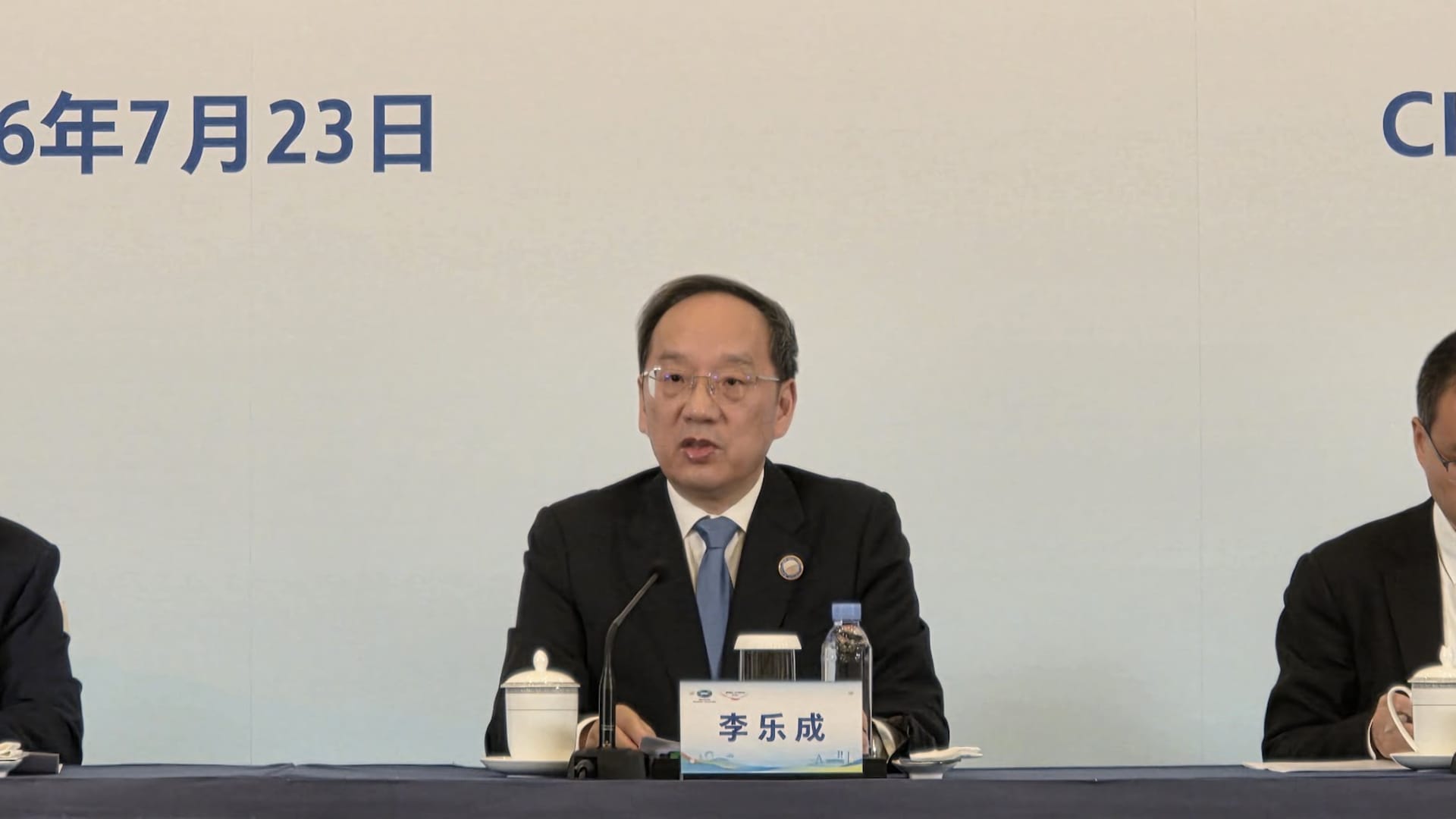
Li Lecheng, China’s minister of industry and information technology, chaired the leaders’ meeting on Thursday. Li said the APEC AI statement was the first at the ministerial level to include cooperation on open source, according to CNBC.
Li also said the member economies recognized AI risks and encouraged more discussion among governments, companies and universities. He pointed to cybersecurity, supply chain resilience and online scams as areas where information-sharing was needed.
Why security language matters for AI companies
Wei Sun, principal analyst for artificial intelligence at Counterpoint Research, told CNBC that getting 21 economies, including both China and the U.S., to support trusted open-source AI was meaningful. She said the phrase “strong security assurance” gives governments that are cautious about security a way to support open models while still requiring testing, transparency, data protection and deployment controls.
Sun said the discussion is shifting away from a simple open-versus-closed split and toward which players can build an open AI ecosystem that governments and businesses trust enough to use.
APEC’s business advisers also warned that the next technology challenge is already approaching. Janet De Silva, chair of the APEC Business Advisory Council’s digital and innovation working group, urged ministers on Thursday to prepare for the quantum computing era and said trusted encryption would be needed to protect the financial system, according to CNBC.
This story draws on original reporting from CNBC.