Bessent says China AI models could face U.S. sanctions over IP claims
Treasury Secretary Scott Bessent said Washington will examine whether Chinese AI systems used outputs from U.S. models without permission.
By Maya Okafor · Markets Writer
· 3 min read
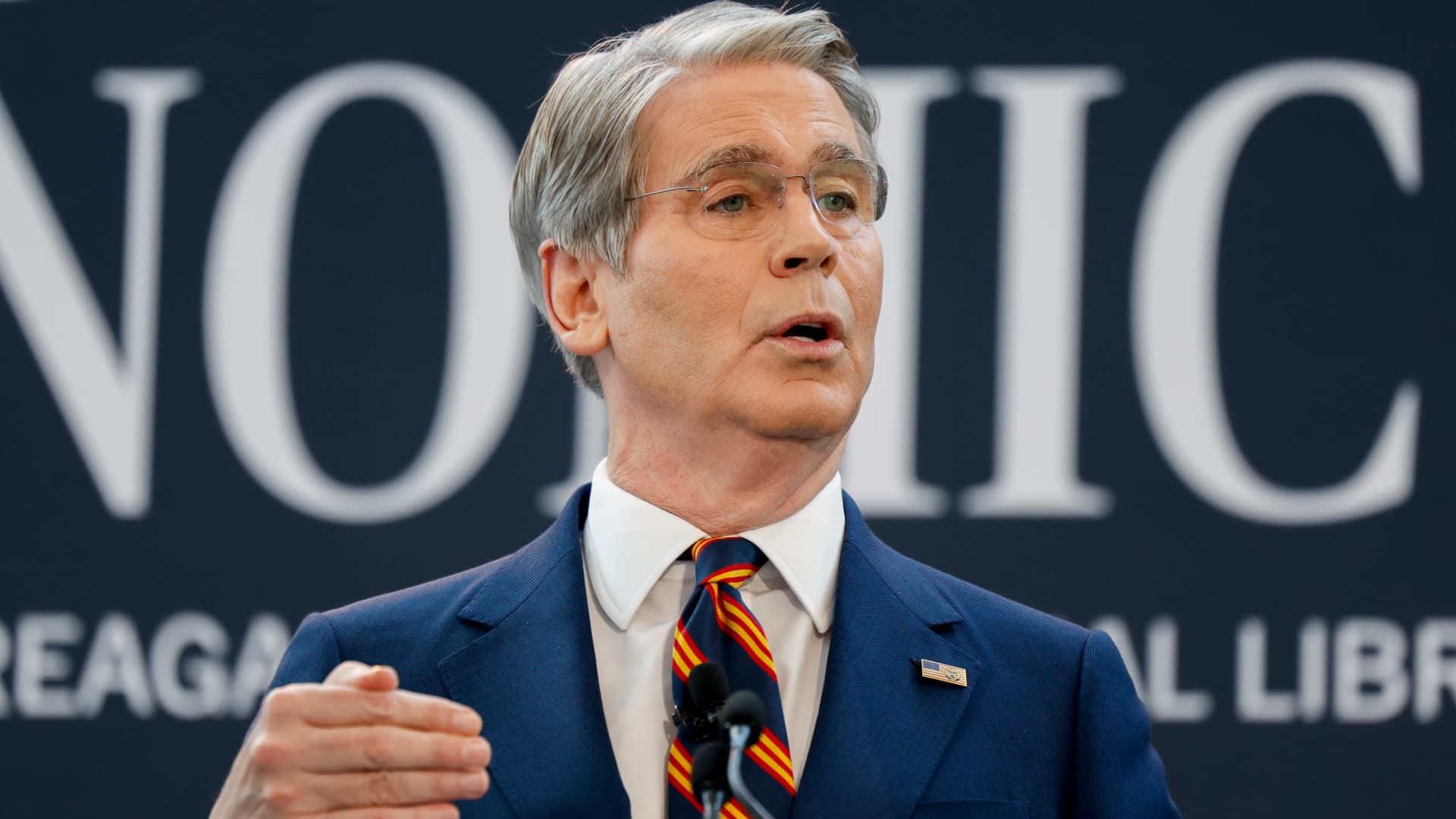
U.S. Treasury Secretary Scott Bessent said the Trump administration is preparing to examine whether Chinese artificial intelligence models were built using American systems without permission. For everyday investors, the issue adds a new policy risk to the AI race, where regulation, sanctions and intellectual property fights can shape the value of tech companies as much as product launches do.
Bessent told Fox Business on Tuesday that the U.S. government does not support intellectual property theft and could use sanctions if it finds that foreign AI models improperly relied on U.S. technology.
“If we see, especially that overseas models are stealing from our great companies, we have the ability to sanction them because of this theft,” Bessent said on Fox Business.
The concern centers on a training method Bessent described as distillation. In AI, distillation is a process where a smaller or weaker model is trained using the outputs of a more advanced model. Companies use versions of the technique for legitimate model development, but U.S. officials and some AI executives have raised concerns that foreign competitors could use it to copy the capabilities of leading American systems.
Bessent said U.S. officials are seeing signs that Chinese AI products may have been trained on American large language models, a term for AI systems trained on large amounts of text to generate and analyze language.
“We are finding watermarks of our U.S. large language models on many of the Chinese models, and that’s unacceptable,” Bessent said Tuesday. “We’re going to be looking at that in the coming days or weeks.”
Chinese AI competition is getting closer
The comments come as Chinese open-weight AI models gain attention against leading U.S. offerings from companies including OpenAI and Anthropic, CNBC reported. Open-weight models can be easier for developers to study and adapt than fully closed systems, making them a potential accelerator for competition.
CNBC reported that Moonshot AI, a Chinese startup, released Kimi K3 earlier this month and that the model surpassed OpenAI and Anthropic products on some industry benchmarks. Benchmarks are standardized tests used to compare model performance, though they do not capture every real-world use case.
Anthropic has already made a formal allegation involving distillation. In a letter sent last month to the U.S. Senate Committee on Banking, Housing, and Urban Affairs, the company accused Chinese tech company Alibaba of carrying out what Anthropic called “the largest known distillation attack” against it to date.
Reuters reported Tuesday that the U.S. and China are planning to hold discussions on AI in September. Bessent will represent the U.S. in those talks, according to the Reuters report.
AI copyright fights cut both ways
The U.S. claims sit inside a broader legal fight over how AI companies obtain and use training data. Anthropic and OpenAI, two of the American companies at the center of the AI boom, have faced their own accusations over intellectual property.
Anthropic agreed in September to pay $1.5 billion to settle a class-action lawsuit brought by authors who alleged that the company illegally downloaded books from pirated databases. The New York Times sued OpenAI and Microsoft in 2023, alleging that the companies used its intellectual property to train AI models in violation of copyright law.
Those cases show why AI policy has become a market issue. Model quality, access to data, government restrictions and legal exposure can all affect which companies gain an edge as AI spending expands across the tech sector.
This story draws on original reporting from CNBC.


