Bezos-backed CuspAI raises $450 million for AI materials search
The British startup is teaming with Nvidia and other groups to speed up discovery of new materials for chips, energy and manufacturing.
By Jordan Bell · Startups & Deals Reporter
· 3 min read
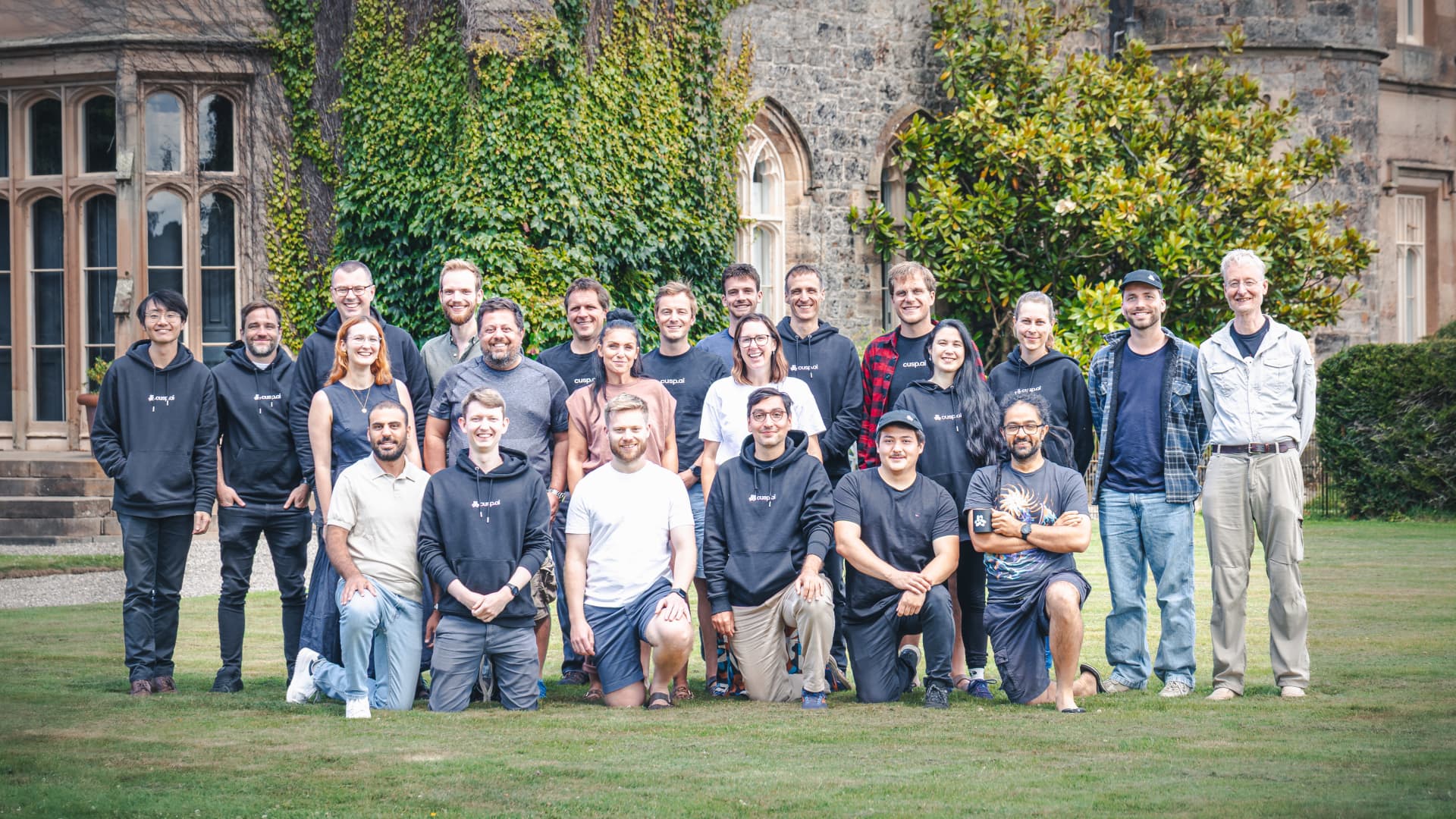
CuspAI, a British startup using artificial intelligence to search for new industrial materials, has raised $450 million and announced a partnership network that includes Nvidia. For investors tracking the AI buildout, the deal points to a broader shift: AI companies are trying to move beyond chatbots and software into the materials that make chips, clean energy systems and factories work better.
The financing values CuspAI at $2.6 billion, CNBC reported. Kleiner Perkins and NEA led the round, with Jeff Bezos’ Bezos Expeditions among the major participants. Other new investors include Glade Brook Capital Partners, Lux Capital, AMD Ventures and Britain’s Sovereign AI Venture Fund, according to CNBC.
CuspAI’s pitch is that AI can cut down the trial-and-error work behind materials science. The company uses artificial intelligence to model how new materials might perform before researchers spend time and money testing them in a lab. In plain English, it is trying to use software to shrink a very large search problem: there are many possible combinations of atoms and structures, but only a small number may have the properties an industry needs.
Those properties matter in markets investors already follow. Better materials can affect semiconductors, carbon capture, water treatment, advanced manufacturing and energy systems. In chips, for example, materials influence performance, heat, power use and manufacturing processes, which makes the field relevant to companies across the AI supply chain.
A materials network built around AI compute
CuspAI also launched an initiative it calls the AI Materials Foundry, CNBC reported. The company describes it as a network combining data, laboratories, computing power and scientific expertise on CuspAI’s platform.
Nvidia is one of 45 organizations providing computing infrastructure to the effort, according to CNBC. Meta’s Fundamental AI Research Team is also joining the initiative.
Computing infrastructure means the chips, servers and related systems used to run heavy AI workloads. Materials discovery can require large simulations, so access to accelerated computing, systems designed to process AI and scientific workloads faster than conventional computing setups, is central to CuspAI’s approach.
Chad Edwards, CuspAI’s CEO and co-founder, said in a statement that new materials will open new areas across semiconductors, energy and advanced manufacturing as AI affects the physical world. He said the AI Materials Foundry combines Nvidia accelerated computing infrastructure with chemistry and materials expertise to support the next generation of materials discovery.
Josh Coyne, a partner at Kleiner Perkins, said in a statement that many major technology advances depend on materials, citing carbon capture, semiconductors and cleaner water as areas waiting on discoveries. He described CuspAI’s platform as a search engine for that problem.
AI moves into the physical world
CuspAI is part of a group of companies applying AI to engineering and science rather than only consumer or enterprise software. CNBC noted that Bezos’ own company Prometheus, founded in 2025, is building AI for invention and physical engineering and has raised $12 billion at a $41 billion valuation.
CuspAI is also expanding its footprint. The company is opening an office in Singapore and growing teams in the U.K., the Netherlands, Germany, Japan and the U.S., according to CNBC.
The funding does not mean the company has solved materials discovery, and the time from promising simulation to usable industrial material can be long. The confirmed development is that major investors and technology companies are putting more capital and infrastructure behind AI tools aimed at the physical economy, including the chip sector that has driven much of the market’s recent AI focus.
This story draws on original reporting from CNBC.


