Big Tech free cash flow is shrinking, but operating cash still matters
AI infrastructure spending has squeezed cash left after investment, pushing investors to weigh funding capacity against proof of returns.
By Dev Ramirez · Crypto Correspondent
· 3 min read
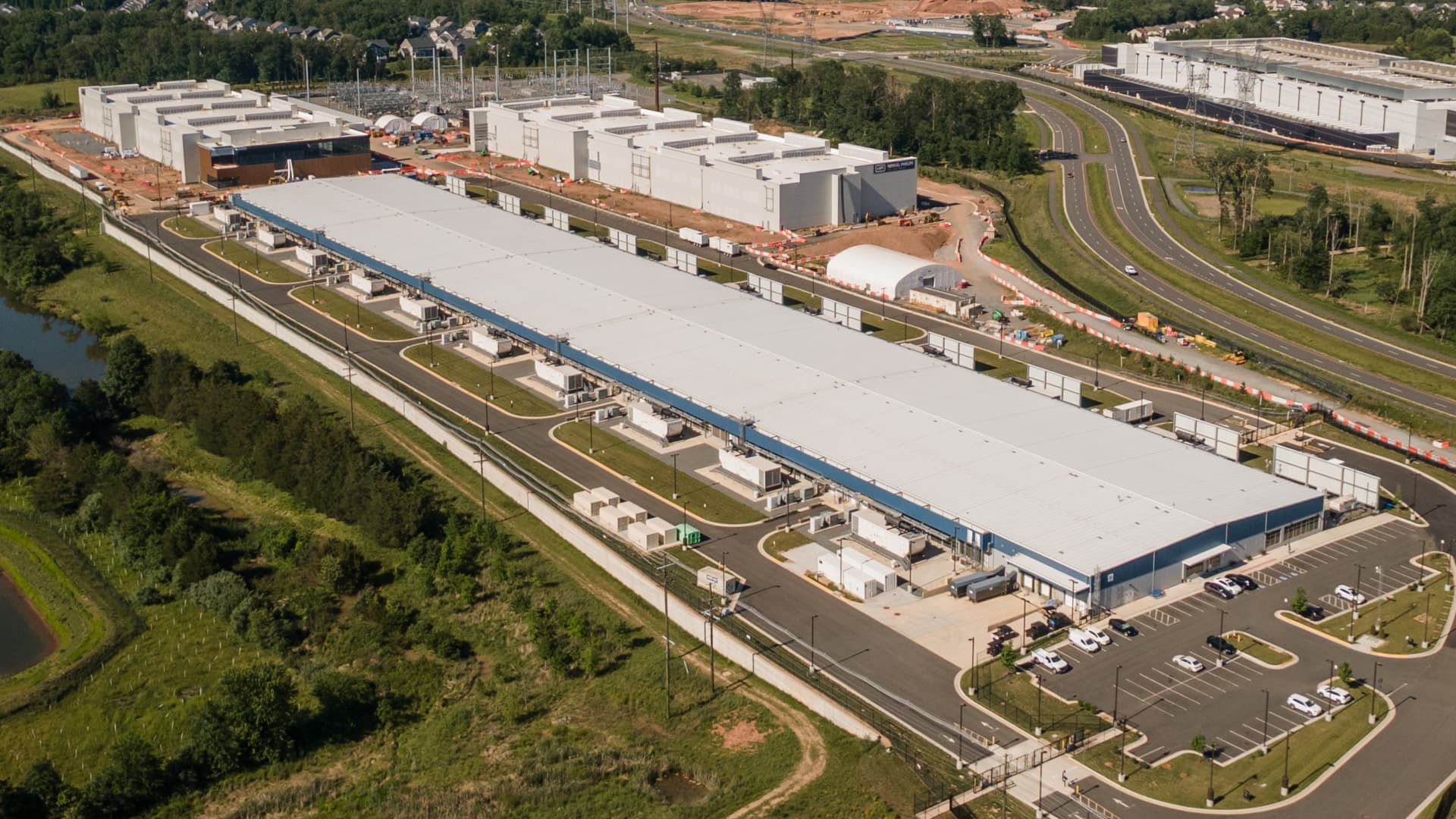
Big Tech free cash flow has come under pressure as Alphabet, Amazon, Meta and Microsoft pour more money into AI infrastructure. That deserves investor attention, but the cash left after spending is only one part of the picture: the companies’ ability to generate cash from their core businesses, and eventually earn a return on data centers and servers, matters just as much.
CNBC reported that Alphabet and Amazon posted negative free cash flow in the June quarter, while Meta and Microsoft recorded year-over-year declines. The immediate cause was higher capital expenditure, or capex, on AI infrastructure. Microsoft nevertheless kept nearly $20 billion of free cash flow in the quarter, CNBC reported.
What does Big Tech free cash flow tell investors?
Free cash flow is the money remaining after a business covers operating costs and capital investment, such as property, data centers and servers. It is a useful measure of financial flexibility because it can fund reinvestment, debt repayment, dividends and share repurchases.
A sustained drop can limit those choices. Companies can fill a shortfall by borrowing or issuing shares, but debt brings interest costs and balance-sheet pressure, while new shares dilute existing holders’ ownership. For readers tracking shareholder payouts, dividends are payments decided by a company’s board, rather than guaranteed claims on future cash.
Still, weak free cash flow does not by itself show that the core business is weakening. Operating cash flow measures cash generated by day-to-day operations before the capital outlay. CNBC reported June-quarter operating cash flow rose about 40% from a year earlier at Alphabet and Amazon, nearly 25% at Meta, and 30% at Microsoft.
That growth is evidence that the companies’ existing businesses are still generating more cash. It does not establish that AI projects will produce an adequate return. The open question is whether revenue from AI and cloud services grows enough to justify the investment, and whether margins and free cash flow improve after the buildout.
Why the spending gap deserves scrutiny
The scale is large. Reuters, citing LSEG consensus estimates, reported that Microsoft, Alphabet, Amazon, Meta and Oracle are expected to add about $340 billion in annual operating cash flow between 2025 and 2027. Their capex is projected to rise by roughly $534 billion, or about $1.57 of added investment for each additional dollar of operating cash flow.
Those are forecasts, not results, and they include all capital spending because the companies do not consistently disclose AI-only investment. Executives have said data centers, servers, networking equipment and other cloud infrastructure are largely being driven by AI demand, Reuters reported.
The details vary by company. Reuters said Microsoft, Alphabet and Meta produced enough free cash flow in their latest fiscal years to cover dividends and buybacks. Oracle, by contrast, spent $55.7 billion on capex in fiscal 2026 against $32 billion in operating cash flow, according to LSEG data cited by Reuters.
A practical way to assess the AI investment cycle is to use two tests: whether operating cash flow can support capex without excessive outside financing, and whether AI and cloud revenue translates into stronger margins and cash generation. Falling free cash flow flags the cost of the buildout. It cannot, on its own, settle whether that cost will pay off.
This story draws on original reporting from CNBC.