Boeing and Airbus plan next single-aisle jets as airlines wait
The planemakers are sketching out future narrow-body aircraft, but customers and investors want current backlogs, deliveries and certifications fixed first.
By Dev Ramirez · Crypto Correspondent
· 3 min read
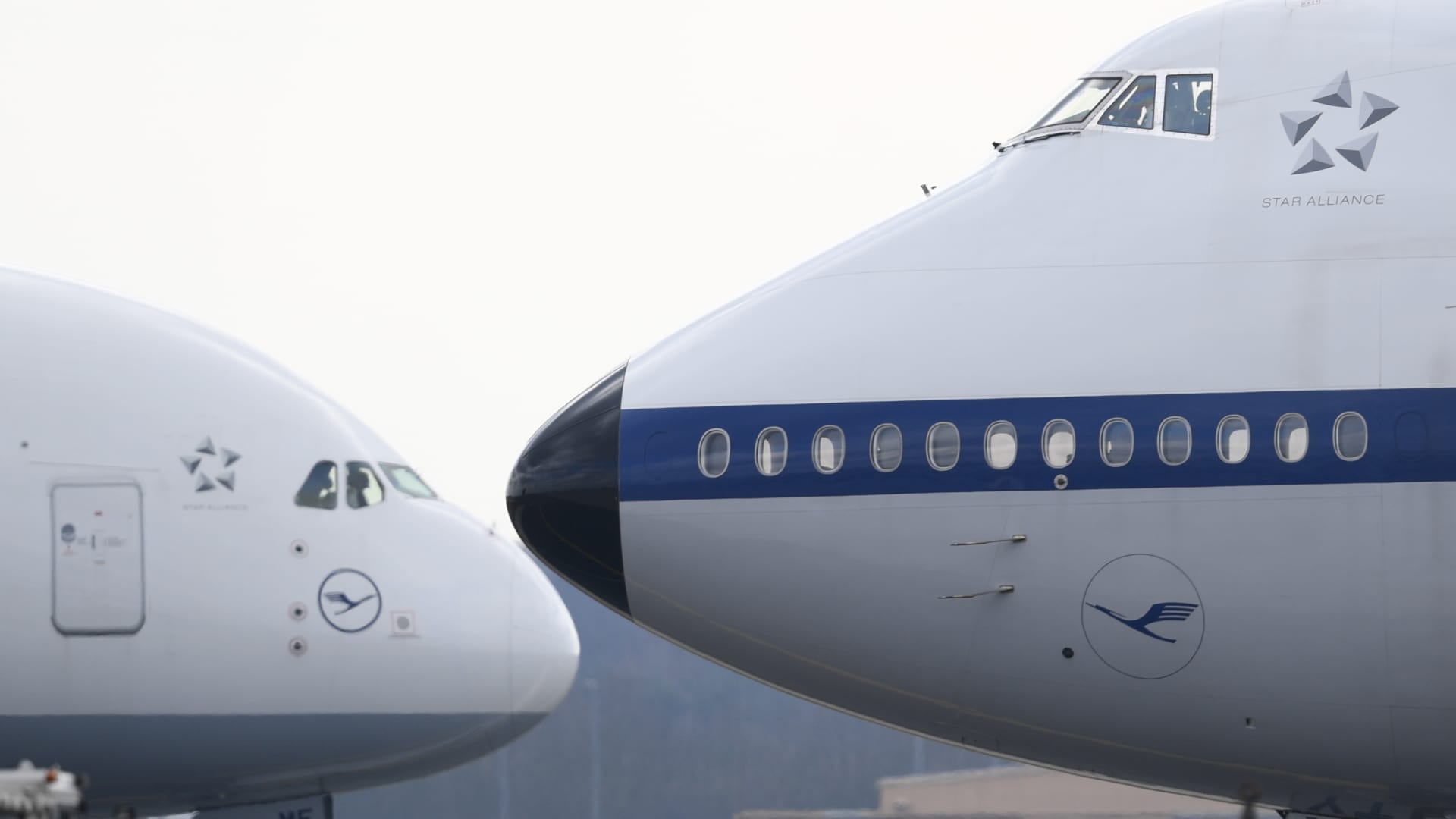
Boeing and Airbus are preparing for the next fight in single-aisle jets, the workhorse planes used on many short and medium routes. For investors, the near-term story is less about a shiny new aircraft and more about whether both companies can deliver the planes airlines already ordered.
Boeing CEO Kelly Ortberg told CNBC that the company needs “a couple more years” before its finances are ready to support a new commercial aircraft program. Airbus CEO Guillaume Faury told CNBC that Airbus is aiming to launch a next-generation single-aisle program around 2030, with the aircraft entering service in the second half of the 2030s.
Those timelines point to a similar reality: neither manufacturer appears ready to rush. A narrow-body, or single-aisle, jet is the type of aircraft that carries one aisle through the cabin, including Boeing’s 737 Max family and Airbus’s A320neo family. These planes make up the core of many airline fleets, so a replacement program would shape competition for years.
Airlines want today’s planes first
Ortberg said Boeing is weighing three requirements before launching another aircraft: the company’s financial readiness, the availability of technology and customer demand. He told CNBC that airline customers are asking Boeing to focus on its current lineup and improve the maturity of existing products before introducing a new model.
That customer message lands as Boeing works through production and quality problems. The company is trying to raise 737 Max output after a series of manufacturing issues, including the January 2024 blowout of a fuselage door plug. A door plug is a panel used where an emergency exit can be installed depending on an airline’s cabin layout.
Airbus is dealing with its own limits. The company has said engine availability, especially from Pratt & Whitney, forced changes to production plans for this year and next, although Faury told CNBC that the situation had stabilized. He said Airbus remains focused on increasing production and delivering aircraft already in its order book while preparing for a future program.
Investors are watching execution
RBC Capital Markets analysts wrote last week that Boeing investors are focused on 737 Max and 787 production, certification of the Max 7 and Max 10, margins and cash generation. Certification is the regulatory approval process that allows an aircraft model to enter service.
RBC said the main investor focus will remain supply chains and delivery schedules. The firm said Airbus investors are also looking for a clearer path to A320 and A350 production targets after stronger second-quarter deliveries supported confidence in Airbus’s full-year goal.
Airbus has a backlog of more than 9,000 aircraft, and demand is still running ahead of available supply. Jefferies analysts said Airbus booked 51 A320neo orders in June, while second-quarter delivery growth came almost entirely from the A320 family. Jefferies said Airbus delivered 190 A320-family aircraft in the second quarter, a volume expected to help earnings. Airbus reports deliveries monthly and is due to publish quarterly results next week.
At Boeing, Jefferies said Sunday that certification work on the 737 Max 7 and Max 10 was 95% and 98% complete, respectively. The firm said the Max 10 had 1,533 aircraft on order, about one-third of Boeing’s 737 backlog. Ortberg told CNBC that FAA certification of the Max 7 is expected “very shortly.”
Boeing has also invested about $1 billion in a fourth 737 Max production line in Everett, Washington, according to the company. That line is intended to help Boeing eventually produce more aircraft than its three existing Renton lines can support.
Airlines are still expanding with current models. Ryanair Chief Financial Officer Neil Sorahan told CNBC that delivery of the last aircraft in its current Boeing 737 Max 8-200 order helped lift its fleet to just under 650 aircraft and increase first-quarter traffic by 6%. He said Ryanair expects passenger numbers to rise about 4% this year to 216 million.
This story draws on original reporting from CNBC.


