Boeing earnings miss as Air Force One charge hits second quarter
Boeing reported an adjusted loss wider than Wall Street expected after a $280 million Air Force One charge, even as revenue beat estimates.
By Jordan Bell · Startups & Deals Reporter
· 3 min read
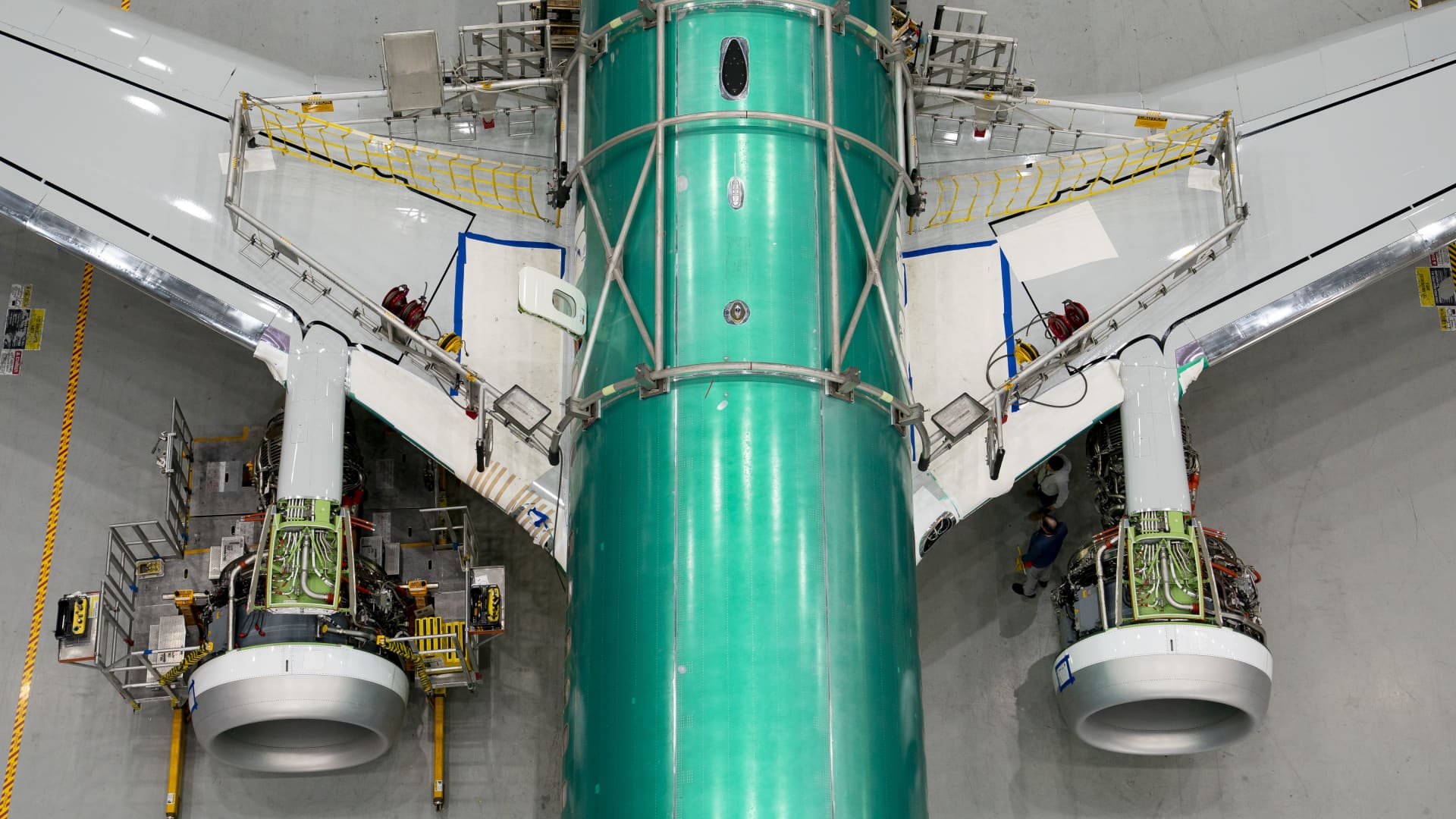
Boeing earnings landed mixed for the second quarter: revenue came in ahead of Wall Street’s target, but the aircraft maker’s adjusted loss was wider than analysts expected. For everyday investors, the takeaway is that Boeing is still selling and delivering more planes, while costly development programs continue to weigh on the bottom line.
Boeing reported revenue of $24.56 billion, up 8% from a year earlier. Analysts surveyed by LSEG had expected $24.25 billion. The company said gains across its businesses helped lift sales, including more commercial aircraft deliveries.
The earnings miss came from profit, not sales. Boeing reported an adjusted loss of 76 cents a share, compared with the 30-cent loss per share analysts surveyed by LSEG expected. Adjusted results exclude certain one-time items, a common way companies try to show operating performance apart from unusual charges.
Why did Boeing earnings miss estimates?
Boeing said it recorded a $280 million loss tied to the delayed Air Force One program, which covers two 747 aircraft being built for the U.S. government as the next generation of presidential planes. The company said the charge reflected increased investment in that aircraft.
Boeing said it still expects the first Air Force One delivery in 2028. CEO Kelly Ortberg told employees in a note that the company is making progress on development programs, while adding, “you’re never done until you’re done.”
The company’s net loss narrowed from the same period last year. Boeing posted a net loss of $428 million, or 67 cents a share, compared with a loss of $612 million, or 92 cents a share, a year earlier.
Cash flow offered a brighter signal. Boeing reported free cash flow of $631 million, compared with analysts’ expectation for a $177 million cash burn and a $200 million cash burn in the second quarter of last year. Free cash flow is the cash a company generates after spending needed to maintain and grow the business, and investors often watch it closely because it can show whether operations are funding themselves.
How is Boeing’s plane production recovering?
Boeing delivered 171 commercial aircraft in the second quarter, up from 150 a year earlier, a 14% increase. The company has been raising output of its 737 Max, its best-selling aircraft, toward 47 planes a month and has said further increases are planned.
Higher deliveries matter because airplane makers typically receive a large share of payment when a jet is handed over to a customer. More deliveries can support revenue and cash flow, assuming production costs and delays do not offset the gains.
Ortberg told employees that two quarters do not define the full year, but said Boeing can improve its competitiveness if it stays focused on safety, quality and on-time performance. He said that would help position the company for a stronger second half.
Investors are also watching certification timelines for delayed aircraft. Boeing’s next likely milestone is certification of the 737 Max 7, the smallest member of the 737 Max family. Boeing executives are expected to face analyst questions about the 737 Max 10 and 777X, the company’s new wide-body aircraft, on a call scheduled for 10:30 a.m. ET.
This story draws on original reporting from CNBC.


