Bradshaw Honey Farms beekeeper keeps family business alive amid losses
David Bradshaw’s California honey farm brought in $1.8 million last year but lost money as bee deaths and costs climbed.
By Jordan Bell · Startups & Deals Reporter
· 3 min read
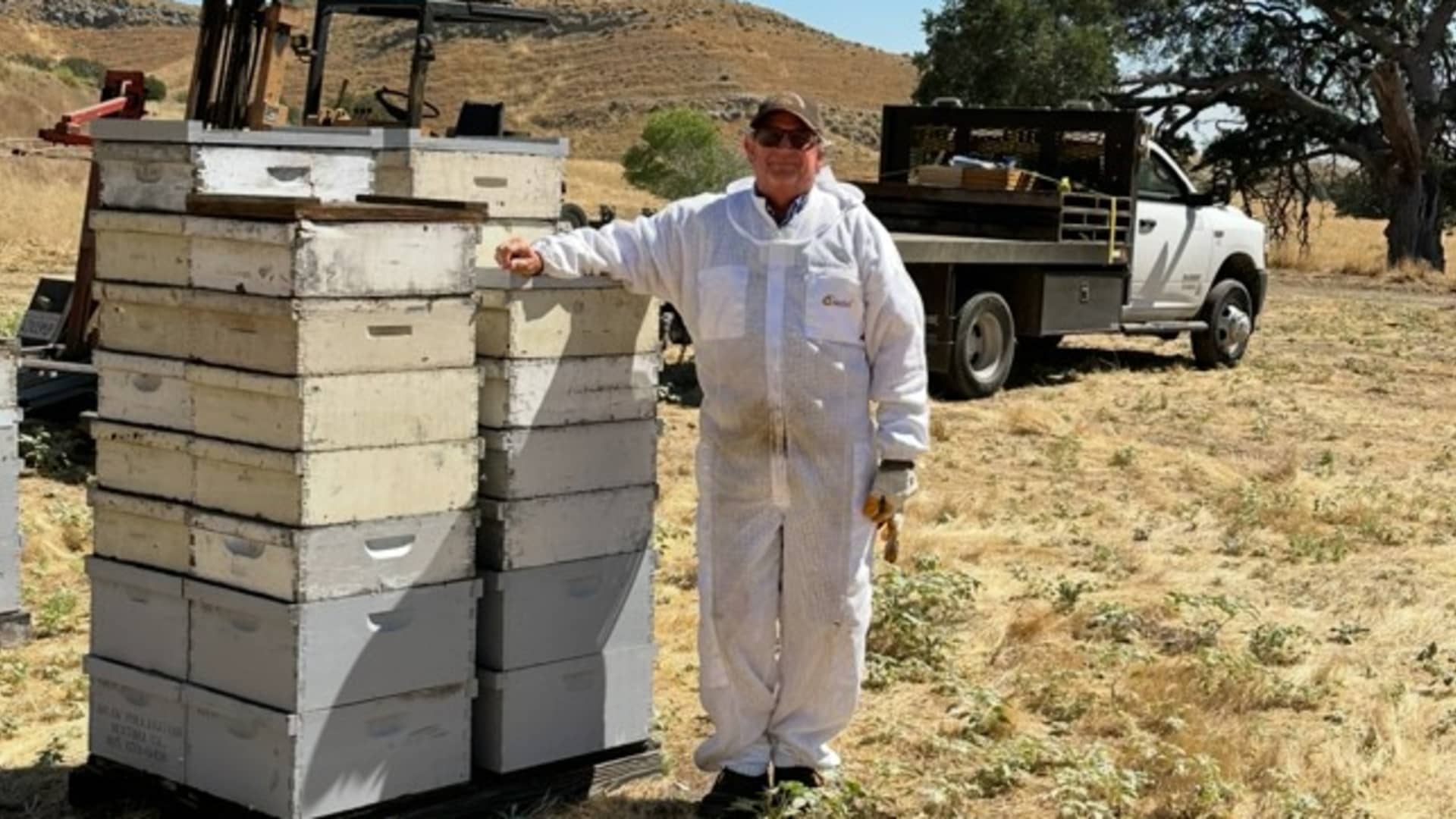
Bradshaw Honey Farms beekeeper David Bradshaw is trying to keep a second-generation California business alive while the economics of honey and pollination get tougher. For retail investors watching food, agriculture and supply chains, his story shows how a small operator can post sizable sales and still struggle when costs, weather and disease hit at the same time.
Bradshaw, 70, owns and runs Bradshaw Honey Farms in Visalia, California, according to CNBC Make It. His father, Howard Bradshaw, started the farm in 1958 from the family’s backyard after working as an aircraft mechanic and keeping bees as a hobby.
The business is still family-run. CNBC Make It reported that Bradshaw’s daughter works full time managing honey bottling, while his son helps when needed. Bradshaw told CNBC Make It that his bees feel like family too, saying, “in a way, I guess my bees are my kids.”
How does Bradshaw Honey Farms make money?
Most of Bradshaw Honey Farms’ revenue now comes from renting bees to farmers for pollination, according to documents reviewed by CNBC Make It. Pollination is the process of moving pollen between flowers so crops can produce fruit, nuts or seeds, and commercial farms often pay beekeepers to place hives near fields and orchards during bloom periods.
Bradshaw’s annual route starts around mid-February with almond orchards, CNBC Make It reported. He then moves bees to help pollinate cherries and prunes, followed by citrus crops such as oranges, lemons and grapefruit in late spring. From summer into early fall, he takes hives to the Sierras, where bees gather pollen and produce honey from native plants.
Honey is now a smaller part of the business. Bradshaw told CNBC Make It that his bees have produced less honey over the past decade, while the U.S. market has seen more lower-priced imported honey. The farm still sells small batches online, along with custom beekeeping equipment and bee food supplements, and it also extracts honey for other local beekeepers.
Bradshaw Honey Farms generated about $1.8 million in gross income last year, according to documents reviewed by CNBC Make It. After expenses, however, the company finished the year with a loss. Bradshaw cited labor, fuel and tariffs on supplies such as honey bottles as pressure points for the farm.
He told CNBC Make It he usually lives on whatever remains after the bills are paid, but in recent years he has had to use his savings. “I’m constantly putting the money back into the business,” he said. “It’s a legacy that I feel responsible for.”
What is hurting the bees?
Weather is one problem. Bradshaw told CNBC Make It that too little rain limits plant growth and reduces pollen, while too much rain can keep bees inside their hives. When bees cannot gather enough food, he supplements their diet with artificial protein and sugar syrup.
Parasitic mites are an even bigger concern. These mites can weaken or kill honeybees and spread diseases, including deformed wing virus, according to the agricultural references cited by CNBC Make It. Bradshaw said his team treats hives to prevent mites, but a virus inside a hive can be devastating.
Bradshaw estimated to CNBC Make It that he lost about 60% of his bee population in 2025, largely because of viral infections linked to mites. A Project Apis m. survey published in April 2025 found that 62% of U.S. commercial honeybee colonies died between June 2024 and February 2025, with beekeepers pointing to parasites, pathogens, pesticide exposure and poor nutrition as leading causes.
Bradshaw said many independent beekeepers are quitting or selling to larger companies because the work has become too difficult. He told CNBC Make It he does not see himself leaving the field, saying he will “probably do it ’til I die.”
This story draws on original reporting from CNBC.


