China car sales slump as costs and subsidy shifts hit demand
Passenger-car sales fell 20.2% in the first half, forcing China’s auto trade group to cut its 2026 outlook.
By Dev Ramirez · Crypto Correspondent
· 3 min read
China’s passenger-car market is shrinking fast after a record 2025, putting pressure on automakers competing for fewer buyers. For investors, the key issue is margin: lower sales, softer prices and higher parts costs can hurt earnings even when headline delivery numbers still look large.
The China Passenger Car Association cut its 2026 retail sales outlook to a 14% decline in June after passenger-vehicle sales dropped 20.2% year over year in the first half. The group now expects full-year deliveries of 20.4 million vehicles, down from 23.7 million in 2025, when sales hit a record. First-half sales stood at 8.7 million units, according to the association.
Xiao Feng, head of Hong Kong and China industrials research at Citic CLSA, told CNBC he expects a steeper full-year decline of 20%. He sees a smaller drop of 5% to 6% for new energy vehicles, or NEVs, a category that includes electric and hybrid cars and vans.
Sino Auto Insights founder Tu Le told CNBC the year remains difficult for automakers as manufacturers fight for sales in a weaker market.
Fuel costs and subsidy changes weigh on buyers
Several pressures are hitting demand at once. Transportation energy costs rose 15.3% in June from a year earlier, according to China’s National Bureau of Statistics. That hurt demand for internal combustion engine vehicles, which run on gasoline or diesel.
Retail sales of internal combustion engine vehicles fell 39% year over year in June, while sales of gasoline-only models dropped 42%, according to the figures cited by CNBC. Those vehicles accounted for 78% of the month’s total decline in passenger-vehicle sales.
Electric-car demand has also cooled after Beijing reduced subsidies that had helped pull shoppers into the market. Feng told CNBC that policy incentives can shift purchases between periods, and that weak sales in 2026 may reflect demand that was brought forward into 2025.
Profit margins are getting squeezed
Automakers are also facing higher production costs. CPCA Secretary General Cui Dongshu said costs tied to batteries, including lithium and memory chips, have risen sharply. Industry sales profit margins fell to 3.4% between January and May 2026, while industry profits dropped 20% from a year earlier, according to Cui.
Vehicle prices added another pressure point. Passenger-car prices fell by more than 1% year over year in June, according to China’s National Bureau of Statistics. Lower prices can help move inventory, but they also leave automakers with less profit per car.
Feng expects the pressure to force consolidation in China’s fragmented EV market, leaving seven or eight major players by 2030. He told CNBC that carmakers in China likely need annual sales of 500,000 units to break even, 1 million for sustainable profit and 2 million to reach full economies of scale.
Scale already varies widely. BYD reported 1.8 million sales in the first half of 2026. Geely reported 1.4 million, while Leapmotor delivered 356,000 vehicles. Volkswagen Group reported 973,000 China deliveries in the same period, down 25.9% year over year, and Toyota reported 579,000 deliveries from January through May.
Exports offer a possible offset
Analysts cited by CNBC expect the market to remain weak in the second half, but Feng said demand could improve in 2027 as vehicle owners replace aging cars and the economy improves.
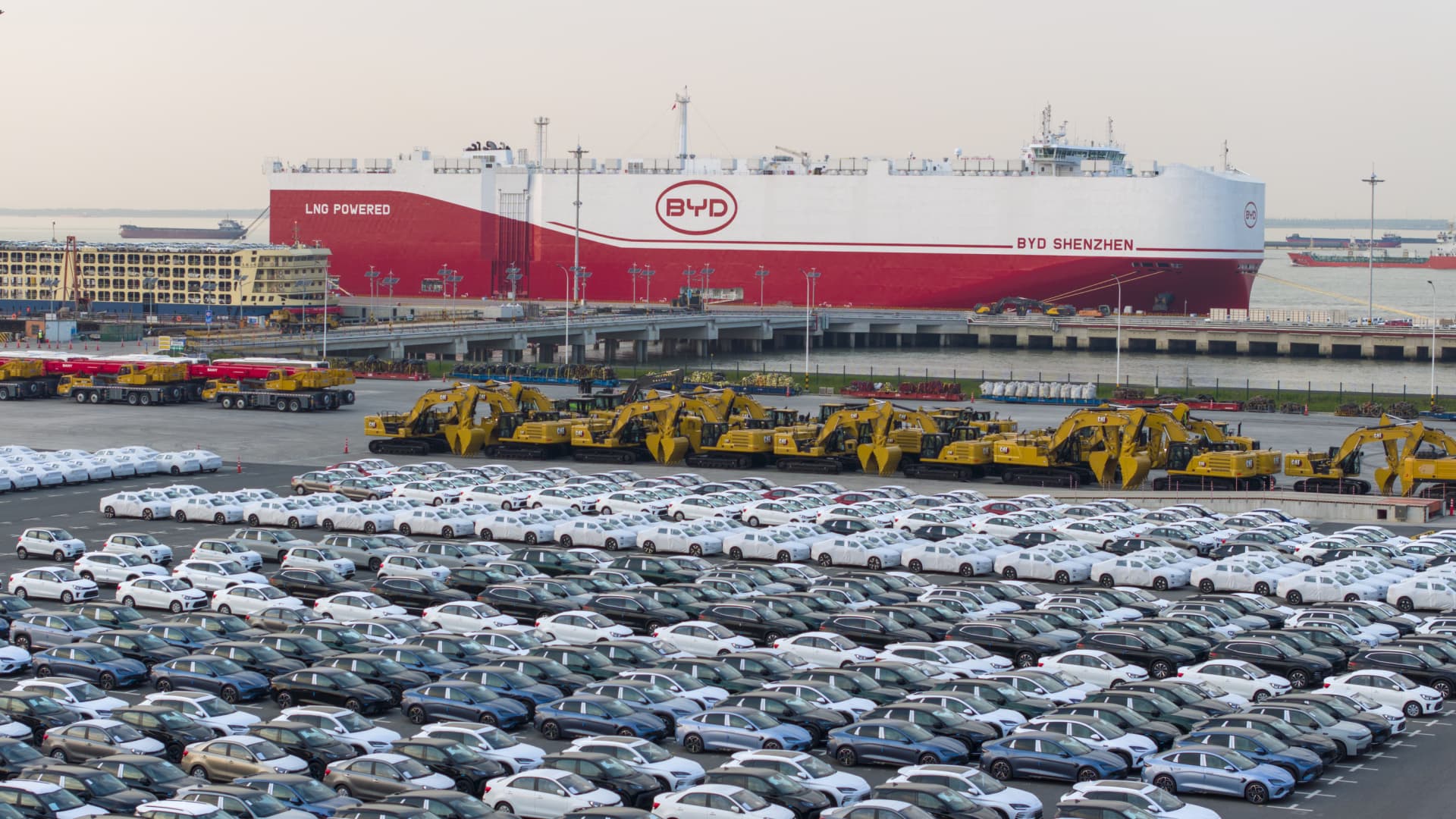
Exports are one bright spot. CPCA said passenger-vehicle exports reached 877,000 units in June, up 11.5% from May and 82.3% from a year earlier. Fengming Lu, assistant professor at the Australian National University, told CNBC that overseas buyers are turning to Chinese-made EVs because of operating costs. Lu also said Middle East conflict, shipping disruptions and higher global fuel prices have helped push some consumers toward electric vehicles.
This story draws on original reporting from CNBC.


