China industrial profits slow as oil price pullback cools June gains
China’s industrial profit growth eased to 15.1% in June as lower energy prices trimmed a key lift to factory earnings.
By Dev Ramirez · Crypto Correspondent
· 3 min read
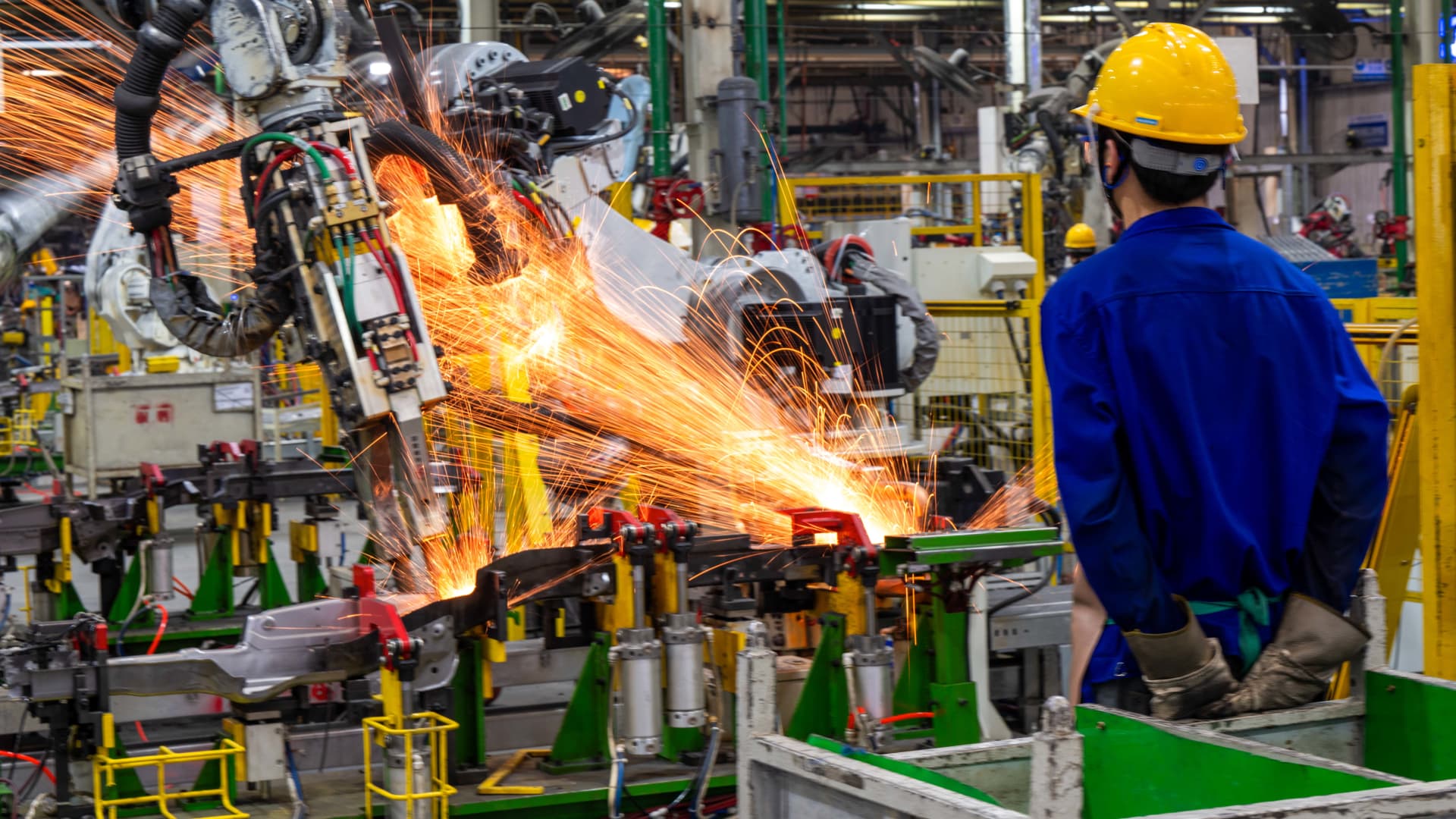
China industrial profits kept rising in June, but the pace slowed again, a signal that one of this year’s better economic bright spots is losing some momentum. For retail investors watching China exposure through stocks, funds or commodities, the report matters because factory earnings help show whether the country’s export and manufacturing engine is still carrying growth.
Industrial profits increased 15.1% in June from a year earlier, the National Bureau of Statistics said Monday. That was a slowdown for the second month in a row after profits rose 21.1% in May, which had been the first deceleration since November.
For the first six months of the year, profits were up 18.7%, according to the bureau. That was slightly below the 18.8% pace reported for January through May.
Why did China industrial profit growth slow in June?
The main drag came from energy prices. Earlier in the year, higher oil and related commodity prices helped lift prices received by manufacturers, supporting corporate earnings. In June, that tailwind weakened as oil, refined fuel and petrochemical prices fell.
Producer prices, which measure what factories charge at the gate before goods reach consumers, declined 0.3% in June from May, according to LSEG data cited in the report. It was the first month-on-month drop since July 2025. LSEG linked the decline to more normal tanker traffic through the Strait of Hormuz, which helped pull energy-linked prices lower.
That matters because China had only recently emerged from nearly three years of factory-gate deflation. Factory-gate deflation means producers are charging less for their goods over time, which can squeeze revenue and profits even when production volumes hold up.
In the second quarter, factory-gate prices rose 3.6% from a year earlier, according to data cited in the report, marking the first positive reading since late 2022. Economists said much of that improvement came from global energy costs rather than stronger demand inside China.
What is still supporting China’s factory earnings?
Industrial company profits have improved sharply this year after barely growing in 2025. The rebound has been helped by stronger chip and equipment manufacturing tied to artificial intelligence investment, according to the report.
The comparison with last year has also made growth rates look better. Industrial earnings fell 3.6% in June 2025 and were down 2.8% in the first half of last year, according to the National Bureau of Statistics data cited in the report.
Exports remain another support. Robin Xing, chief China economist at Morgan Stanley, said growth should remain resilient because of exports, even while domestic demand is weak. Xing pointed to an AI-related investment cycle, where China is a major hardware supplier, and a broader increase in industrial capital spending across Asia.
What are investors watching next in China?
Attention is shifting to the Communist Party’s Politburo meeting, usually held in late July. Top officials use the meeting to assess first-half economic performance and set policy priorities for the rest of the year.
Economists expect leaders to use stronger language on easing after the second-quarter slowdown, according to the report. Expectations for a large stimulus package remain limited because exports have held up and Beijing is still focused on reducing excess factory capacity.
Xing said Morgan Stanley’s base case is a gradual increase in policy support rather than a single large stimulus push. He said the Politburo is likely to make support sound somewhat more urgent, with faster fiscal rollout as a priority.
This story draws on original reporting from CNBC.