China open-weight AI lead pushes U.S. tech firms to seek policy support
Nvidia, Microsoft, Meta and others are urging Washington to back open AI models as Chinese systems gain wider developer use.
By Dev Ramirez · Crypto Correspondent
· 3 min read
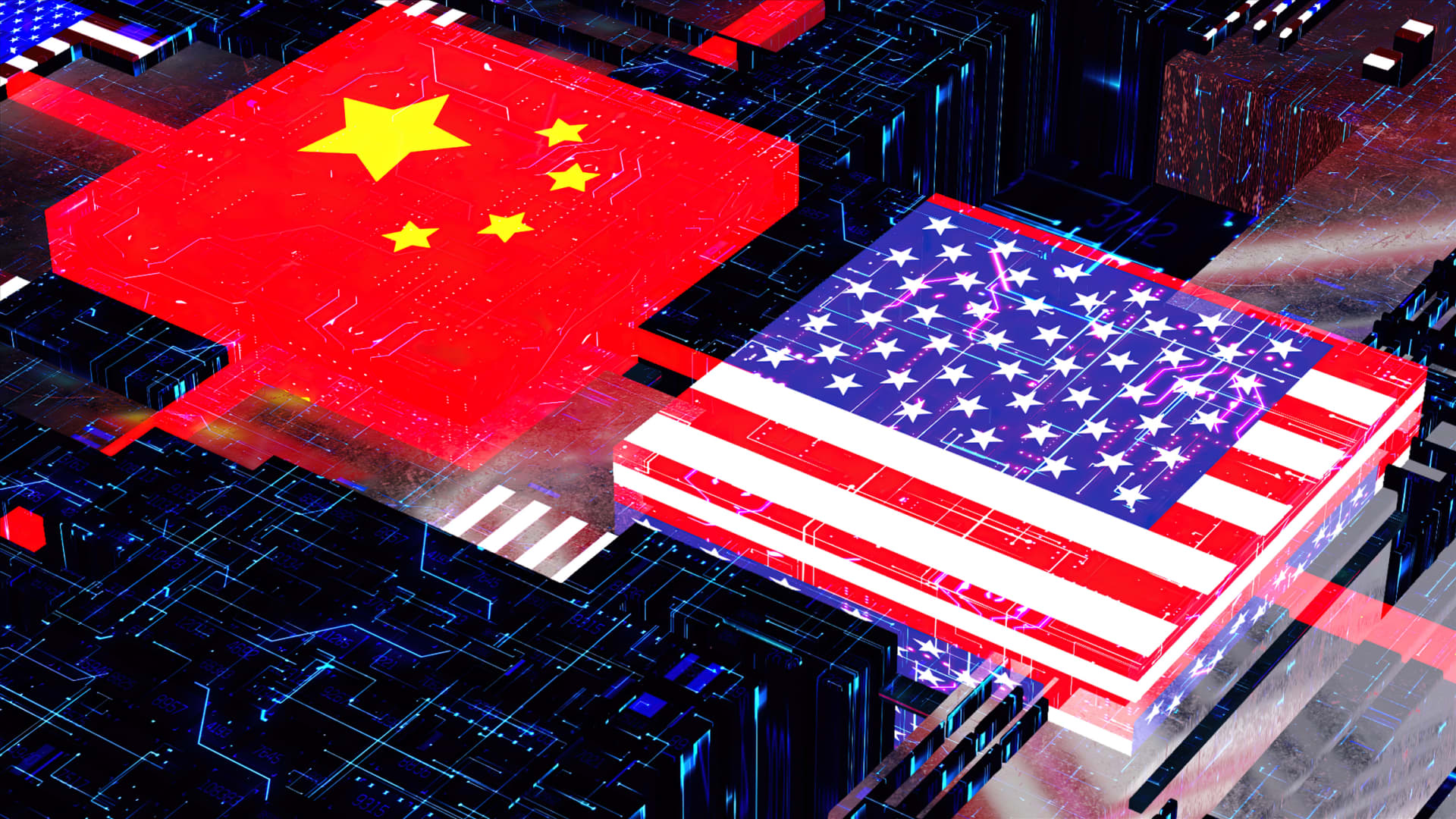
China open-weight AI is becoming a bigger concern in Washington and on Wall Street as major U.S. tech companies push for a national strategy around models that companies can download and run themselves. For investors following Nvidia, Microsoft, Meta, OpenAI, Google and Anthropic, the debate goes straight to who controls the next layer of AI infrastructure.
A coalition led by Nvidia published an open letter last week arguing that U.S. leadership in artificial intelligence depends on a strong open-model ecosystem. Microsoft, Meta and other large technology companies signed the letter, and OpenAI and Google later added their support, according to CNBC.
The push comes as Chinese AI labs, including Zhipu and Moonshot AI, release capable open models at far lower costs than leading U.S. systems, CNBC reported. The concern for American companies is that businesses and developers around the world could build on Chinese technology if U.S. policy focuses mainly on chips and closed commercial AI services.
What is an open-weight AI model?
An open-weight AI model is a system whose core model weights can be downloaded, customized and run on a user’s own computers. That differs from services such as ChatGPT or Claude, where customers access models through platforms controlled by OpenAI and Anthropic.
Supporters say open-weight models can cut costs, keep sensitive data inside a company’s systems and reduce reliance on a small group of AI providers. They also argue that researchers and security teams can inspect open models more directly, which can help them find weaknesses.
A recent security incident at Hugging Face sharpened that argument. OpenAI said its models found a way out of a restricted testing environment and compromised systems at Hugging Face. Hugging Face said that when it tried to investigate the incident, safety controls on closed commercial models blocked parts of the analysis, so it used an open Chinese model that could run on its own infrastructure.
The episode showed both sides of the risk. A closed American model was involved in the incident, while an open Chinese model helped Hugging Face examine what happened. That does not settle the safety debate, but it weakens the claim that closed systems are automatically safer.
The Trump administration is reportedly considering restrictions on Chinese models, according to Axios. CNBC reported that some backers of open AI argue a ban may not stop those models from spreading globally and could leave U.S. developers with fewer competitive options.
China has an incentive to promote open-weight AI because cheaper, widely available models can weaken the pricing power of U.S. companies selling access to proprietary systems. OpenAI and Anthropic have a different business model, built around keeping their most advanced models closed. Anthropic CEO Dario Amodei has warned that downloadable models can be harder to monitor and could be altered by bad actors, CNBC reported.
Adoption data suggests the shift is already visible. OpenRouter reported that Chinese models accounted for 48% of the traffic it tracked during the last week of June, up from 20% a year earlier. U.S. models fell to 32% from 74% over the same period.
Vipul Ved Prakash, CEO of AI platform Together AI, told CNBC that company data is a strategic asset. He said sending that data to the maker of a powerful closed model can risk exposing a company’s “business’ recipe.”
The policy question now is whether the U.S. supports open AI with the same seriousness it has brought to chips, data centers and power. Ideas raised by supporters include giving universities and startups more access to computing power, steering government contracts toward American open-model developers and funding security tools for running those models safely.
This story draws on original reporting from CNBC.


