CME compute futures are planned for Oct. 5, pending regulatory review
CME and Silicon Data plan futures tied to Nvidia GPU rental prices, creating a proposed hedge for AI-computing costs.
By Jordan Bell · Startups & Deals Reporter
· 3 min read
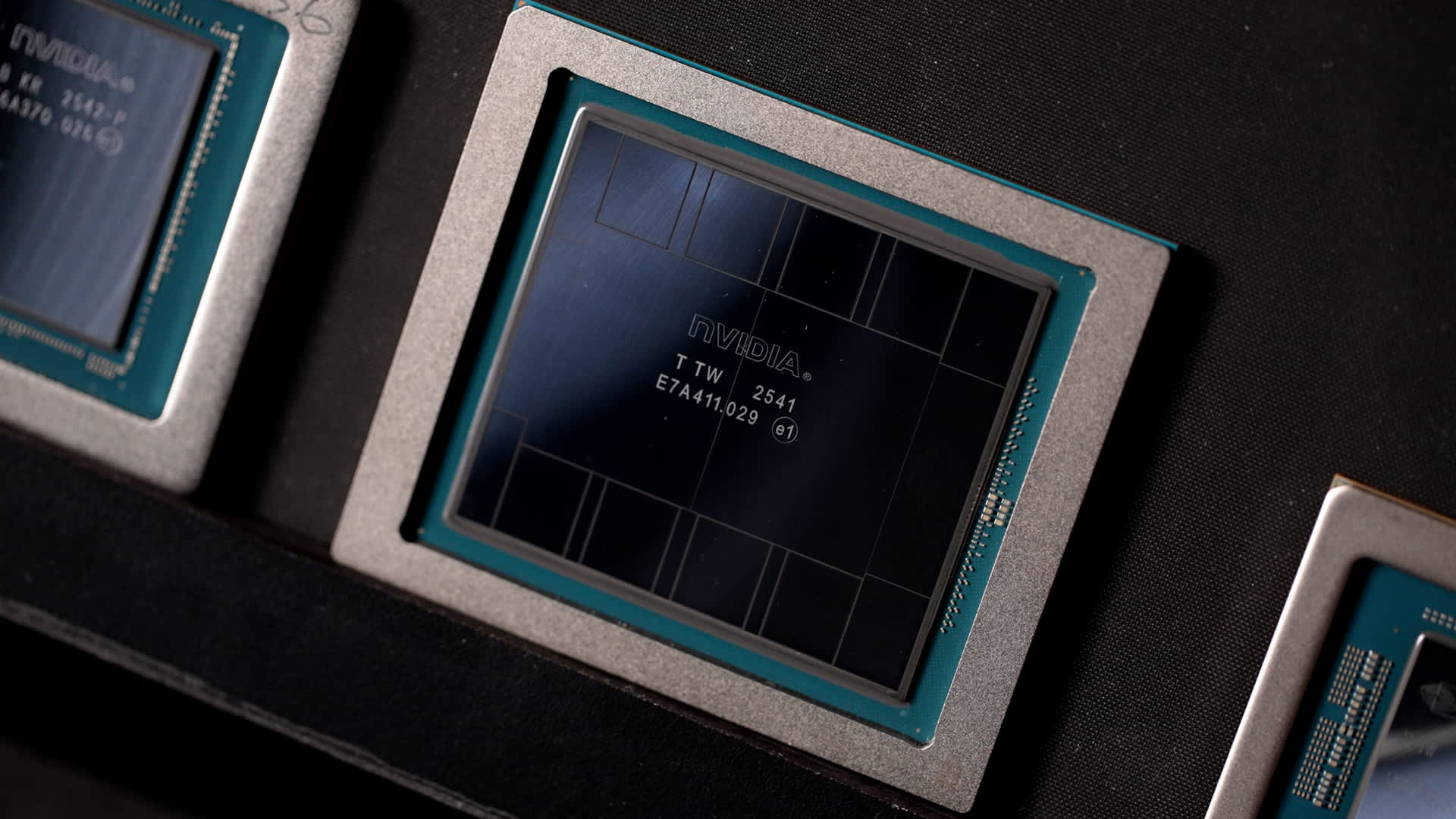
CME compute futures are scheduled to begin on Oct. 5, 2026, but the launch still requires regulatory review. CME Group and GPU-market-data provider Silicon Data plan two contracts tied to the cost of renting the chips used to train and run AI systems.
For investors, the proposal would create a way to take a view on the price of computing capacity without owning a chipmaker, a data center or the GPUs themselves. For companies that rent capacity, the contracts are designed as a tool to manage uncertainty in a cost that can move sharply.
The planned products are Silicon Data H100 Rental Index Futures and Silicon Data B200 Rental Index Futures. They would follow Silicon Data indexes measuring hourly rental prices for Nvidia’s H100 and Blackwell B200 GPUs. Each futures contract represents one month of rent for its respective GPU, according to CME’s Aug. 11 announcement.
How will CME compute futures work?
A futures contract is an agreement whose value rises or falls with an underlying benchmark at a later date. In this case, the benchmark is an index of GPU rental costs, rather than a physical shipment of chips. The proposed contracts would be listed under NYMEX rules, CME said.
That structure could allow an AI developer concerned that GPU rentals may become more expensive to use futures as a hedge, meaning an offsetting position intended to reduce the impact of a price move. A cloud provider or other owner of available GPU capacity could use the market to guard against falling rental prices. Other traders could take directional positions on where indexed rental costs may go.
CME and Silicon Data say a tradable benchmark can bring clearer pricing to a market where comparable GPU capacity can carry different prices. CNBC reported that rental rates can vary by provider, region and contract structure, while many businesses access high-end GPUs through cloud providers instead of owning the hardware.
Why is the benchmark the key issue?
Turning compute into a futures market depends on whether the index adequately represents what customers actually rent. AI compute is less uniform than a barrel of oil or a standardized crop contract. CNBC reported that there are more than 50 configurations of Nvidia’s H100 alone, and rental prices can change with processors, memory, networking, utilization rates and data-center location.
Silicon Data says it normalizes the market’s varying offers to a base H100 case before calculating its index. That design will be consequential: the benchmark is what buyers and sellers would be trading, not ownership of a GPU. A Santa Clara University finance professor told CNBC that the contract specifications, settlement procedures and benchmark construction would likely receive scrutiny before launch.
The contracts could establish a public reference point for AI infrastructure costs if they receive approval and attract enough trading interest. Neither outcome is assured. For now, CME’s announcement is a plan for a new derivatives market, not evidence that compute futures are already trading or that GPU pricing has become a mature commodity market.
This story draws on original reporting from CNBC.


