COMAC C919 international flight marks a step beyond China
Air China flew the C919 from Beijing to Ulaanbaatar, but certification, production and support hurdles remain.
By Dev Ramirez · Crypto Correspondent
· 3 min read
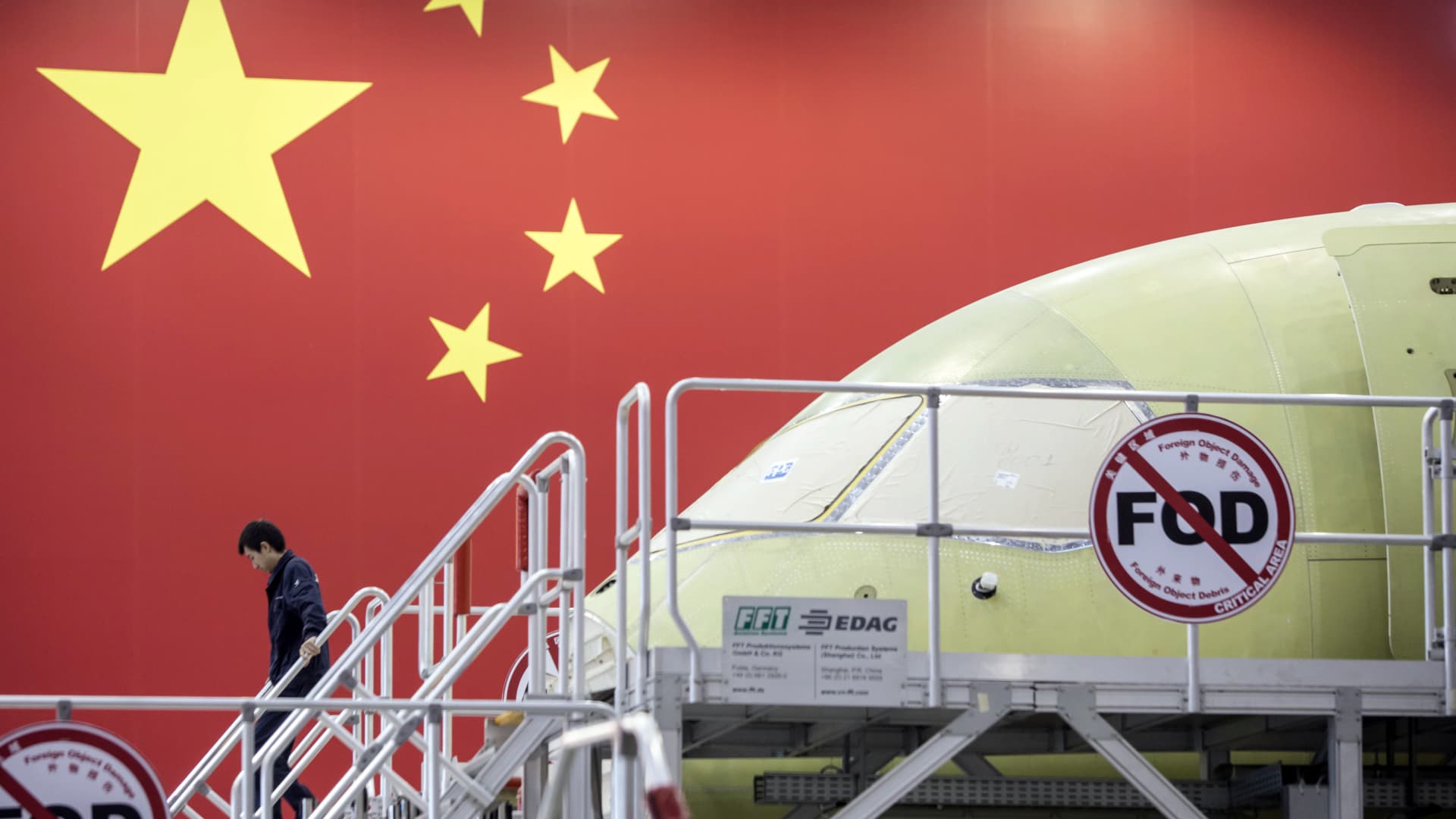
COMAC’s C919 international flight has moved China’s homegrown passenger jet beyond the country’s borders for the first time in scheduled commercial service. Air China operated the flight from Beijing Capital International Airport to Ulaanbaatar, Mongolia, on Aug. 12, a useful operational milestone for a manufacturer trying to gain ground in a market led by Boeing and Airbus.
FlightRadar24 data cited by CNBC showed the aircraft leaving Beijing shortly after 3 p.m. local time. Air China plans to run the Beijing-Ulaanbaatar route daily, CNBC reported.
The flight does not by itself turn the state-owned Commercial Aircraft Corporation of China, or COMAC, into a worldwide rival to the two established plane makers. It does show the C919 operating on a regular cross-border route after entering commercial service on Chinese domestic routes in 2023, according to The Guardian.
Can COMAC challenge Boeing and Airbus?
Over time, China’s large aviation market gives COMAC a base of local airlines and leasing companies from which to build orders and operating experience. The C919 is a single-aisle, narrow-body jet aimed at the same broad part of the market as Boeing’s 737 MAX and Airbus’s A320neo, CNBC reported.
But international service and international market access are different tests. The C919 has not received approval from major U.S. or European aviation regulators, according to CNBC and The Guardian. That limits its ability to sell into many overseas markets.
The jet also relies on foreign-made components. A 2020 analysis by the Center for Strategic and International Studies, cited by The Guardian, found that more than half of the C919’s suppliers were based in the U.S. Such dependencies matter because aircraft production depends on a broad chain of parts and systems arriving on time.
COMAC also faces an execution challenge. It delivered 15 C919s last year, versus a target of 75, according to Air Data News as cited by CNBC. CNBC said COMAC’s output remains much smaller than that of Airbus and Boeing.
China’s own airlines still use the incumbent manufacturers extensively. In May, China confirmed an order for 200 Boeing aircraft along with engines and spare parts, CNBC reported. That purchase illustrates that developing a domestic jet program has not displaced demand for U.S.-made aircraft.
What does the first international service prove?
The Beijing-Ulaanbaatar flight establishes that the C919 can be deployed in scheduled commercial service beyond Chinese territory. The next hurdles are broader regulatory approvals, a faster and dependable production rate, and the long-term service network airlines expect.
Rob Morris, a retired aviation analyst, told CNBC that a manufacturer must show sustained in-service support and dispatch reliability comparable with the established A320 and 737 families. He said that record can only be demonstrated through continuing operations.
For investors watching Boeing, Airbus and their suppliers, COMAC is therefore a developing competitive factor rather than an immediate third global heavyweight. The first international route is evidence of progress, while the aircraft’s certification status, supply chain and delivery pace will determine how far that progress can extend.
This story draws on original reporting from CNBC.