Demis Hassabis’ new role puts Google’s AI priorities in sharper focus
Alphabet moved Demis Hassabis out of daily DeepMind management, creating a role split that investors will read through Google’s AI spending and rivalry.
By Jordan Bell · Startups & Deals Reporter
· 3 min read
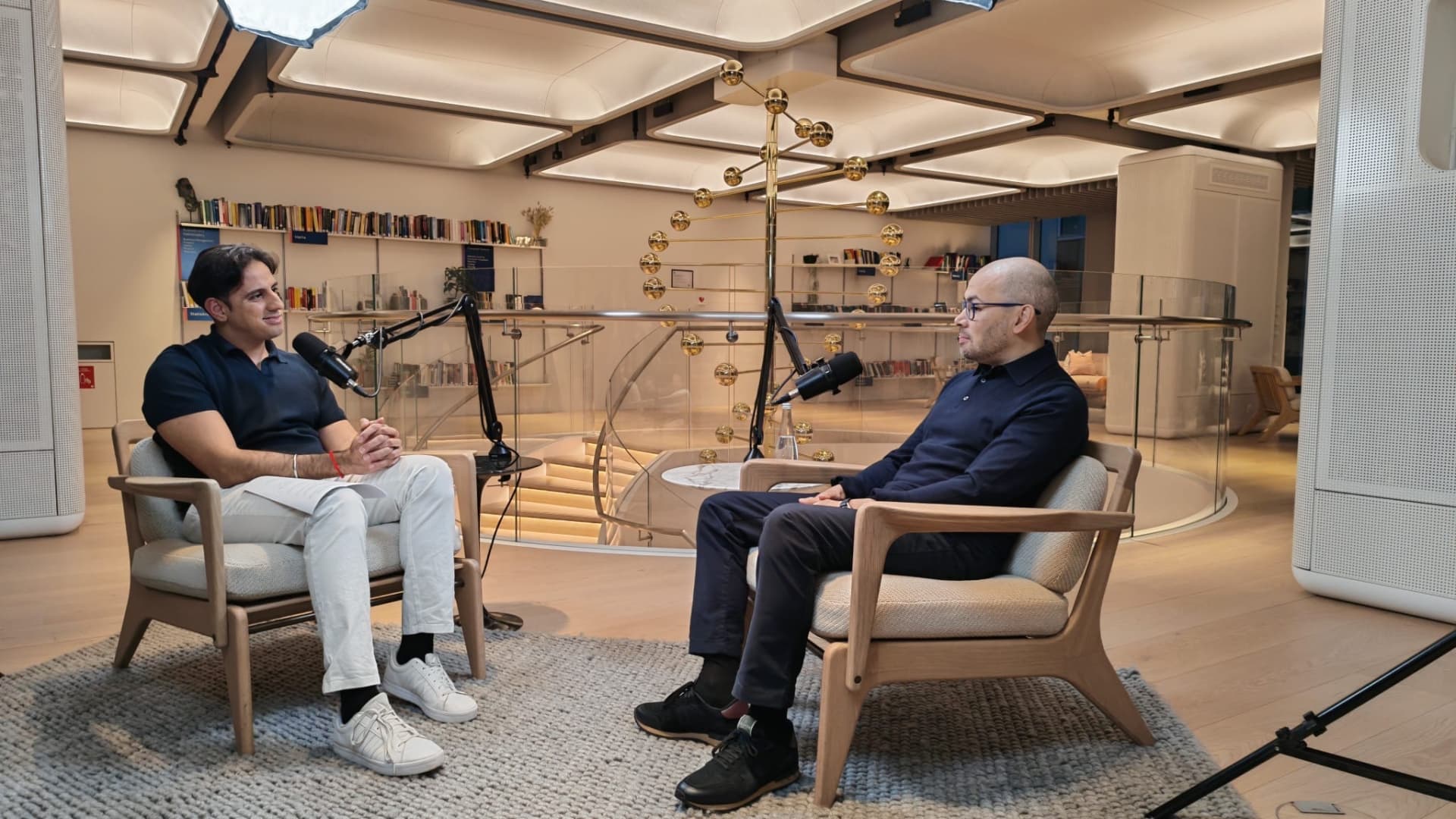
Demis Hassabis’ new role gives Alphabet a more visible split between long-range AI work and Google DeepMind’s daily management. For investors, the change arrives as Google spends heavily on AI infrastructure, faces formidable competitors and tries to turn research into durable business growth.
Alphabet announced on Aug. 5 that Hassabis would become Alphabet’s chief scientist and chair of Google DeepMind, ending his main managerial role at the lab, Reuters reported. Koray Kavukcuoglu, DeepMind’s chief technology officer, is taking on day-to-day responsibilities as senior vice president while continuing as Alphabet’s chief AI architect.
The company did not explain what prompted the changes or why they came together, according to Reuters. That leaves room for interpretation, but the structure can reasonably be read as an attempt to give Hassabis more time for his scientific and safety-focused agenda while an operational leader runs DeepMind’s daily work.
What does Demis Hassabis’ new role mean for Google AI?
Hassabis has said he wants to focus on artificial general intelligence, scientific research and Isomorphic Labs, the AI drug-discovery company he founded and leads, CNBC reported. Artificial general intelligence, or AGI, refers to AI that could handle a broad range of cognitive tasks at a human-like level. Reuters reported that Hassabis cited AGI’s perceived proximity as the reason for changing roles.
That remit fits a career centered on scientific applications. CNBC reported that Hassabis has called AI the “ultimate tool for science” and said Google’s computing resources enabled DeepMind’s work. Its achievements include AlphaGo, which beat a leading Go player, and AlphaFold, software used to predict protein structures.
He also remains focused on safeguards. In July, Hassabis proposed a U.S.-led, industry-funded body to test frontier AI models before release, Axios reported. The proposal is not government policy, but it shows the issues he says should accompany faster advances in powerful systems.
Commercial pressure is growing
Google’s nearer-term challenge is to compete and show returns on a costly expansion. Alphabet raised its 2026 capital-expenditure guidance to $195 billion to $205 billion from $180 billion to $190 billion, according to W.Media. It reported $44.9 billion in second-quarter capital spending, with most technical-infrastructure spending directed to servers, data centers and networking equipment.
There is evidence of commercial momentum. W.Media reported Google Cloud revenue of $24.8 billion in the second quarter, up 82% from a year earlier, and a $514 billion backlog at the end of June. Still, Reuters reported that the flagship version of Google’s latest Gemini model had not been released after a planned June launch, fueling concern that Google could lose ground to OpenAI and Anthropic.
Talent is another pressure point. Reuters reported that Jeff Dean, Sanjay Ghemawat, Oriol Vinyals and Quoc Le left Google to start Discovery Loop. Hassabis described the market for AI researchers as “ferociously competitive” in a June Semafor interview, while saying Google continued to attract its share of leading talent.
What investors should watch next
The key question is whether this role split improves outcomes without weakening DeepMind’s research culture. Reuters reported that a source with direct knowledge viewed Kavukcuoglu’s closer involvement with DeepMind and Google Cloud as helpful for commercialization, though Alphabet has not presented that as its reason for the reshuffle.
Investors can now watch for Gemini releases, changes in DeepMind’s work with Google Cloud, talent retention and whether Alphabet’s infrastructure spending continues to translate into Cloud growth. Hassabis remains DeepMind’s chair and is expected to advise Kavukcuoglu, so this is not evidence of a complete separation between research and operational execution. It is a notable effort to manage both priorities at once.
This story draws on original reporting from CNBC.