Deoleo says olive oil market has moved into a steadier phase
The Bertolli owner told CNBC that better rainfall and lower prices are helping stabilize supply and revive household demand.
By Maya Okafor · Markets Writer
· 3 min read
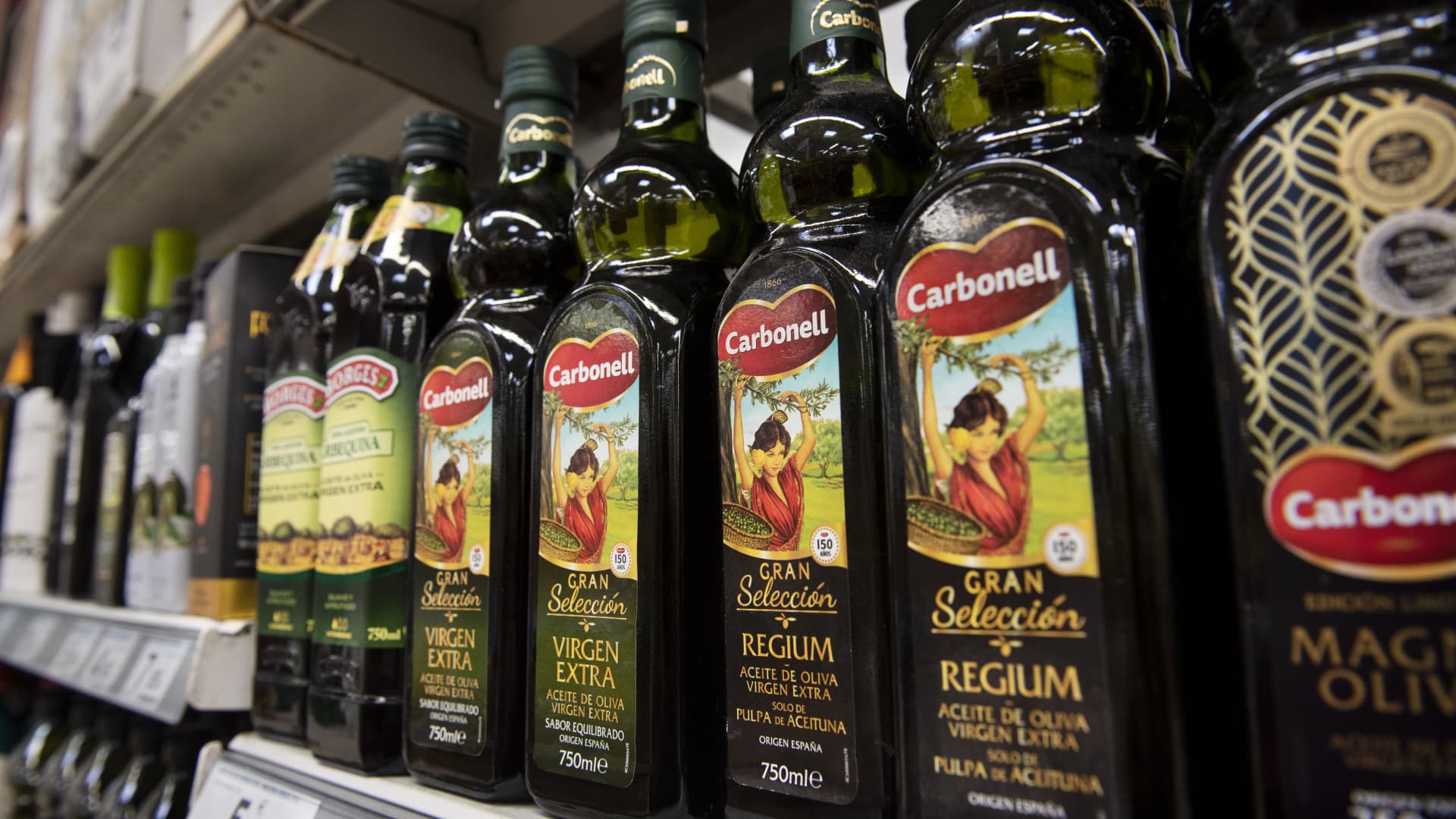
Olive oil’s wild price cycle is easing, according to Deoleo, the Spanish company behind Bertolli and Carbonell. For shoppers and investors watching food inflation, that matters because a steadier harvest can take pressure off prices and make demand easier to read.
Deoleo CEO Cristóbal Valdés told CNBC by email that the difficult market period from 2022 through 2024 is now “definitively behind us.” The company, which CNBC described as the world’s largest olive oil company, said rainfall has improved across major producing countries, including Spain, supporting expectations for a stronger global crop in the coming harvest.
Olive oil pricing is highly sensitive to harvest size. When drought or heat cuts the amount of olives available for pressing, wholesale prices can rise quickly because buyers are competing for a smaller supply. When weather improves and production recovers, supply becomes more predictable, which can help prices cool and bring back consumers who pulled away when bottles became more expensive.
Valdés told CNBC that better supply gives the industry more visibility across the value chain, meaning the chain of growers, processors, brands, retailers and shoppers. He said that steadier backdrop is helping global household demand recover.
Prices have fallen from record levels
Spain is a key price setter for olive oil, alongside Italy and Greece. The European Commission’s latest weekly data showed Spanish extra virgin olive oil, or EVOO, at about 3.9 euros per kilogram, equal to $4.47. Extra virgin olive oil is the highest-grade category, made from olives without chemical refining.
That is well below the record reached in January 2024, when wholesale EVOO prices climbed to 9.3 euros per kilogram, according to CNBC. Deoleo had previously called the 2022 to 2024 stretch one of the hardest periods in the sector’s history, as drought and extreme heat across southern Europe damaged harvests and sent prices sharply higher.
Analysts remain concerned that global olive oil supply can swing sharply from one season to the next, CNBC reported. Climate change, water scarcity, pests and disease continue to affect the crop, even as the current outlook has improved.
U.S. sales get help from lower prices and new packaging
Deoleo also pointed to the U.S. market as a bright spot. Valdés told CNBC that sales volume growth has improved in key markets and that the number of U.S. households buying olive oil has continued to rise across income groups.
Lower prices are one factor. Deoleo also credited a packaging change with helping sales in the United States, where the company is trying to win more share among consumers who may be newer to olive oil.
Valdés told CNBC that innovation aimed at current cooking habits is becoming a main driver, especially among younger shoppers and people trying olive oil for the first time. He cited squeeze bottles as an example, saying the format is driving 40% of category growth in the U.S. The company sells Bertolli’s “Dress and Drizz” bottle in that format.
For consumers, the immediate takeaway is that olive oil prices have moved down from their peak, though weather and crop risks have not disappeared. For investors following packaged food companies and grocery spending, Deoleo’s comments point to a market where supply has improved enough to support demand after a bruising inflation shock.
This story draws on original reporting from CNBC.