Iran claims attacks on U.S. sites as oil rises on wider conflict fears
U.S. forces struck Iran for a sixth straight night, while Tehran claimed attacks on U.S. targets in Syria and Bahrain, keeping pressure on oil markets.
By Theo Nakamura · Staff Writer
· 3 min read
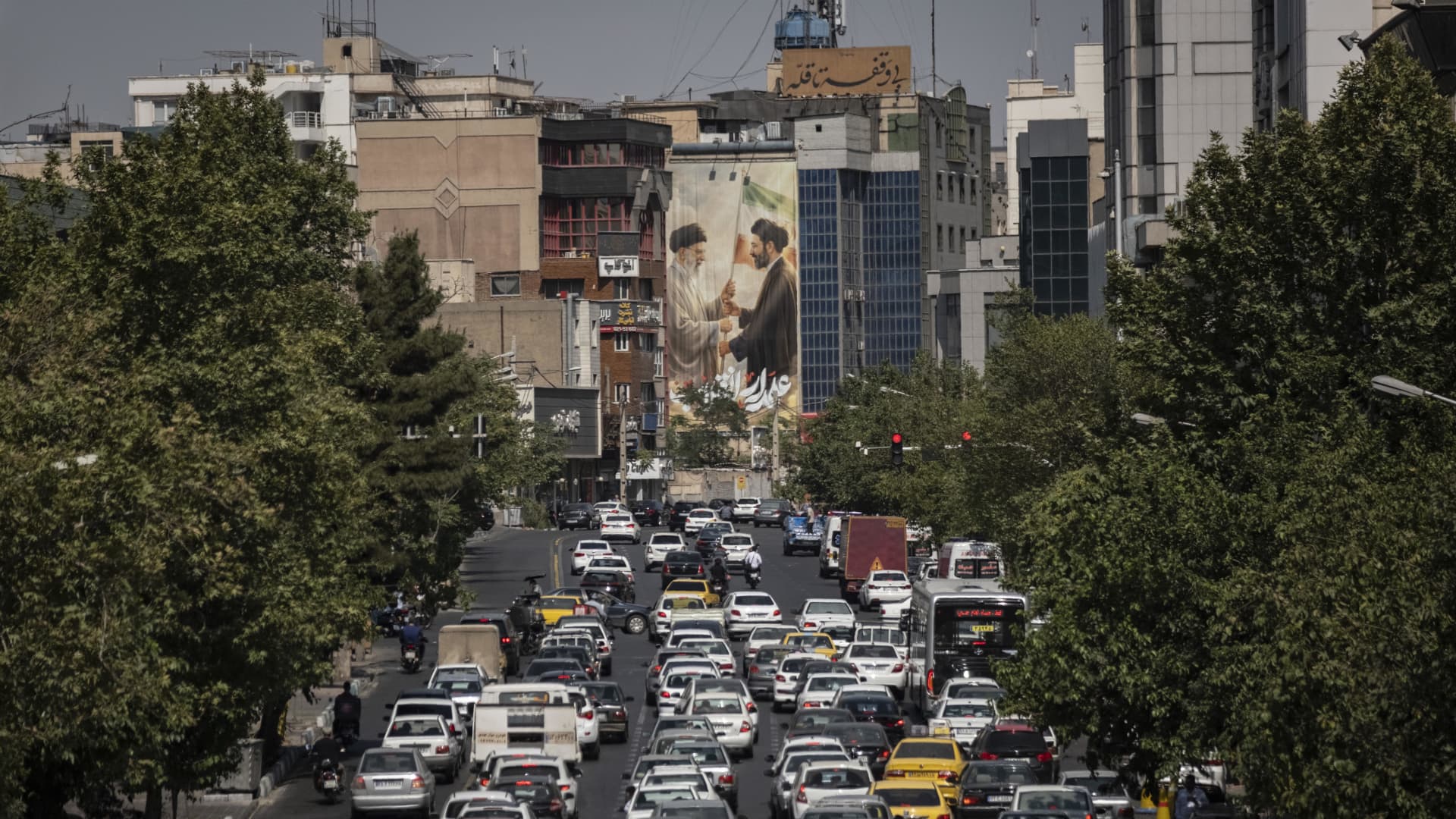
Iran said it targeted U.S. military forces in Syria and Bahrain after another night of American strikes on Iran, adding new pressure to a conflict already moving oil prices. For everyday investors, the market link is straightforward: more fighting near key energy routes can raise fears of supply disruption, which tends to push crude prices higher.
U.S. Central Command said overnight that it had finished a sixth consecutive night of strikes against Iran. The command said the latest operation hit dozens of military targets, including air defenses, logistics infrastructure and maritime capabilities.
Centcom said in a social media post that more than 50,000 U.S. service members were operating across the Middle East and that they remained ready for further action.
Iranian state media said the U.S. attacks killed eight people and injured 20. It also alleged that civilian infrastructure, including bridges, a train station and an airport, had been hit. CNBC said it could not independently verify those claims.
The latest exchanges followed a fragile truce signed by the U.S. and Iran last month. That interim deal was meant to reopen the Strait of Hormuz and halt the fighting. The strait is a key waterway for global oil shipments, so any threat to traffic there can quickly show up in energy prices.
Iran claims strikes beyond its borders
Iran’s Revolutionary Guards said they attacked a U.S. command center in Syria’s al-Tanf region, according to Iranian state media. There was no immediate response from the U.S. military or Syria’s government.
The U.S. military said in February that it had completed the withdrawal of forces from the al-Tanf military base, which is located near Syria’s borders with Iraq and Jordan.
Syria has tried to stay out of the conflict. President Ahmed al-Sharaa said at a Chatham House event in March that Syria would “remain outside” the war unless directly attacked.
Bahrain’s Defence Force said air raid sirens sounded overnight and that it intercepted multiple aerial attacks from Iran. The alert came after Iran said it had targeted U.S. aircraft at Bahrain’s Sakhir airbase.
Other governments in the region also reported Iranian attacks. Kuwait’s Defense Ministry said it was responding to missile and drone strikes from Iran. Jordan and Qatar said they had intercepted Iranian missiles.
Trump says the U.S. is winning
President Donald Trump said in a Thursday prime-time address that the war was going well for the United States. “We are likewise winning big in Iran, and you will see the fruits of that labor very, very shortly,” Trump said.
Trump had threatened to hit Iran’s bridges and power plants next week if Tehran did not return to negotiations.
Oil prices moved higher Friday morning. Brent crude, the international oil benchmark, rose 0.5% to $84.67 a barrel for September delivery after trimming earlier gains. West Texas Intermediate, the main U.S. crude benchmark, climbed 0.9% to $79.66 for August delivery, after settling Thursday at its highest level since June 15.
Both contracts were up more than 11% for the week and were on pace for their strongest weekly gains since late April, according to CNBC. Higher oil prices can feed into gasoline, transport and input costs, which is why energy shocks often matter well beyond energy stocks.
This story draws on original reporting from CNBC.