Dimon flags stock risk as ETF buyers crowd short-term Treasurys
JPMorgan’s CEO warned on stocks and long bonds, while ETF flow data shows investors have already favored short-term Treasury funds.
By Jordan Bell · Startups & Deals Reporter
· 3 min read
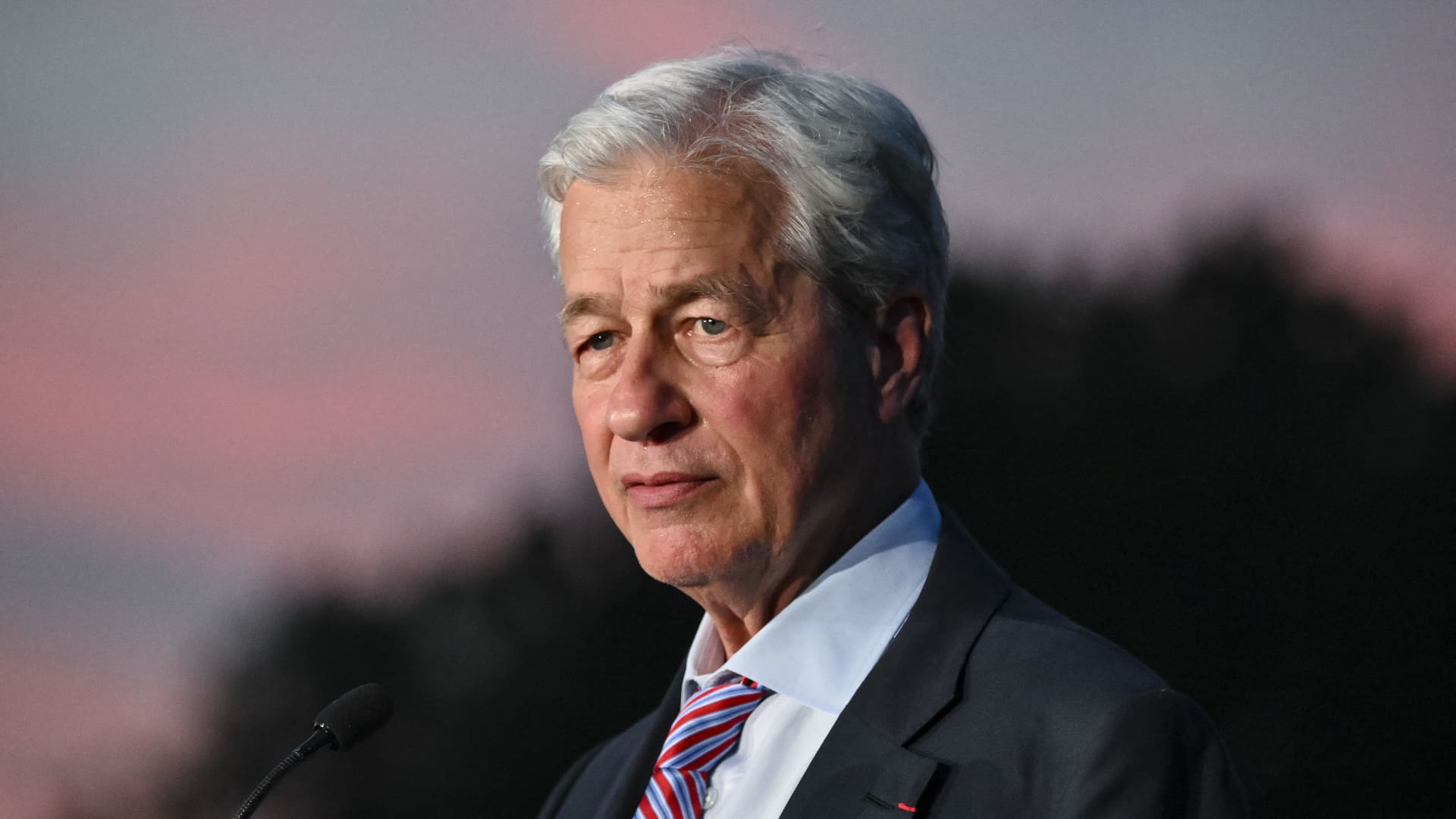
Jamie Dimon is warning investors about both richly priced stocks and long-term government bonds, a mix that complicates the usual playbook for nervous portfolios. ETF flow data shows investors have already acted on the bond side of that warning, sending large sums into short-term Treasury funds.
In a CNBC interview with contributor Wilfred Frost on Monday, the JPMorgan Chase CEO said stock valuations were at levels he would not touch. He also said he would not buy long-dated Treasurys, the U.S. government bonds that mature far in the future.
That second point matters because Treasurys are often used as a “flight to safety,” meaning investors buy them when they want assets viewed as lower risk than stocks. Dimon’s warning was more specific: he was skeptical of longer-term bonds, whose prices can fall when yields rise.
Bond yields and prices move in opposite directions. If a 10-year Treasury yield rises, the price of existing 10-year notes generally falls because newer bonds offer more income. CNBC reported that the 10-year Treasury yield was around 4.6%, while Dimon said the 10-year bond “should probably be at 4% to 4.5%.”
Dimon told CNBC that even if inflation moves closer to the Federal Reserve’s 2% target, he does not see much room for prices of longer-dated government bonds to rise. CNBC also pointed to uncertainty over inflation, the risk of a Federal Reserve rate increase and worries about public spending and deficits as factors weighing on longer-term Treasury prices.
Investors have been showing a clear preference for the short end of the bond market. According to ETFAction.com data cited by CNBC, the iShares 0-3 Month Treasury Bond ETF, ticker SGOV, has drawn $47.5 billion in net inflows this year, more than any other bond ETF.
SGOV holds Treasury bills maturing in three months or less, so it has far less interest-rate risk than funds holding 10-year or longer bonds. The fund is now close to $100 billion in assets, making it the third-largest bond ETF, behind the Vanguard Total Bond Market ETF, ticker BND, and the iShares Core U.S. Aggregate Bond ETF, ticker AGG, according to CNBC.
The move into short-term Treasurys has not stopped investors from buying stocks through ETFs. CNBC reported that equity ETFs continued to attract major inflows this year, even as investors also favored cash-like Treasury exposure.
Over the past year, ETFAction.com data cited by CNBC showed only two fixed-income ETFs ranked among the top 10 ETFs for flows: Vanguard Total Bond Market ETF and SGOV. SGOV ranked fifth overall, behind major broad-market stock funds from Vanguard, iShares and State Street, and it also ranked fifth among all ETFs for June inflows.
The preference for short-term Treasurys has a long-known backer. In Berkshire Hathaway’s 2013 annual letter, Warren Buffett wrote that his estate plan for his wife called for 90% in an S&P 500 index fund and 10% in short-term government bonds, a structure he said would likely serve most long-term investors well.
This story draws on original reporting from CNBC.