Disney parks travel slowdown: domestic demand and cruises lift results
Disney Experiences reached nearly $10 billion in quarterly revenue as domestic park visits, guest spending and new cruise capacity rose.
By Dev Ramirez · Crypto Correspondent
· 3 min read
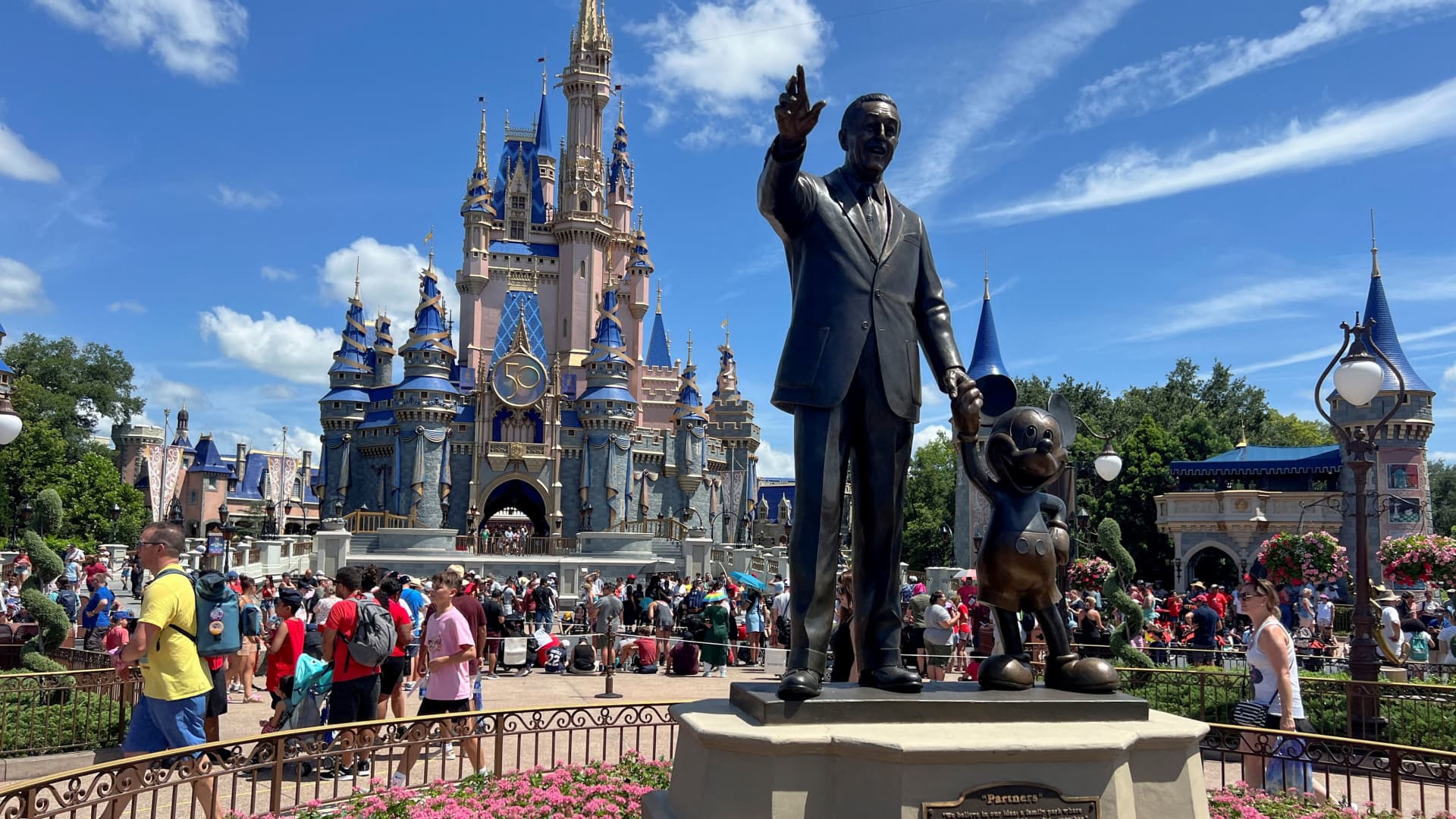
Disney’s latest results show how the company is handling the disney parks travel slowdown: stronger domestic attendance and spending, targeted promotions and expanded cruise capacity helped its Experiences division reach a quarterly revenue record. For investors, the key distinction is that the division includes more than parks, so the nearly $10 billion result also reflects cruises, resorts and consumer products.
Disney Experiences generated nearly $10 billion in fiscal third-quarter revenue, up 10% from a year earlier, according to CNBC. Operating income exceeded $3 billion, a 20% increase. The segment has now posted record revenue for six straight quarters, CNBC reported.
The performance came as international travel to the U.S. weakened. The World Travel & Tourism Council found international travel to the country fell 6%, CNBC reported. Earlier this year, Disney said its U.S. parks faced “international visitation headwinds,” according to Business Insider. National Travel and Tourism Office data cited by Business Insider showed international visitors were down 5.5% through October 2025 from a year earlier.
Why are Disney parks holding up during the travel slowdown?
Disney appears to have offset some foreign-visitor pressure by focusing on domestic guests. Chief Financial Officer Hugh Johnston told CNBC that domestic park attendance increased 3% in the quarter and guest spending rose 4%. He also described attendance at Walt Disney World in Orlando as very strong.
That approach followed an earlier shift in marketing, sales and promotions toward domestic visitors, Johnston said, according to Business Insider. Disney credited its Cool Kids Summer campaign with supporting attendance. The program included character meetings and dance parties geared toward children, air-conditioned spaces and free water-park entry for hotel guests, CNBC reported.
Disneyland in California also used offers aimed at state residents and children. Gavin Doyle, founder of MickeyVisit.com, told CNBC that campaigns focused on families and local residents helped create reasons to visit before a slate of future attractions opens. That is an outside assessment, rather than a company measure of the promotions’ effect.
The company has also refreshed attractions including Buzz Lightyear’s Space Ranger Spin, Big Thunder Mountain Railroad and the Muppets-themed Rock ’n’ Roller Coaster, CNBC reported. The available results do not quantify how much those updates contributed to attendance or spending.
How much did cruises contribute to Disney Experiences growth?
They were a separate contributor. Disney added the Disney Destiny and Disney Adventure to its cruise fleet, increasing stateroom capacity by about 50%, CNBC reported. Resorts-and-vacations revenue rose 17% to $2.77 billion in the quarter, helped by the new capacity.
That split matters when reading the segment’s headline numbers. Parks delivered reported gains in domestic visits and per-guest spending, while cruise expansion added capacity that parks do not provide. Management discussed those operating trends on its earnings call, the company presentation where executives explain recent results to investors and analysts.
Disney’s result also stands apart from nearby competitive data, though it does not prove a broader market-share shift. Comcast had reported weaker theme-park attendance, particularly in Orlando, in the prior month, according to CNBC.
This story draws on original reporting from CNBC.