Dover stock earnings disappoint as shares slide 9%
Dover missed second-quarter revenue estimates, raised guidance and saw its shares sink as CNBC's Investing Club downgraded the stock.
By Maya Okafor · Markets Writer
· 3 min read
Dover stock earnings disappointed investors Thursday after the industrial conglomerate reported second-quarter revenue below Wall Street expectations, even as profit edged past estimates. For retail investors, the move shows how a single operational stumble can matter when a stock has already been priced near its highs.
Dover said revenue for the quarter ended in June rose 6.8% from a year earlier to $2.19 billion. That was short of the $2.21 billion consensus estimate, according to LSEG data cited by CNBC’s Investing Club.
Adjusted earnings per share, a profit measure that strips out certain items, came in at $2.74. That was one cent above analysts’ expectations, according to LSEG. The company also reported 16% growth in total orders and a 24% year-over-year increase in free cash flow to $188 million. Free cash flow is the cash a company generates after covering capital spending, and investors watch it because it can support debt reduction, dividends, buybacks or reinvestment.
The stock fell more than 9% to about $195, CNBC’s Investing Club reported, putting shares at their lowest levels of the year. Dover’s record closing high was $233.31 on Feb. 20, and the stock came close to that level in late June before weakening into the earnings report.
Why did Dover stock fall after earnings?
The pressure came from a revenue miss and a production problem in Dover’s CO2 refrigeration business, according to CNBC’s Investing Club. The Investing Club said the issue hurt organic growth, which measures sales growth excluding factors such as acquisitions and currency moves, and contributed to weakness in Dover’s Climate and Sustainability Technologies segment.
CNBC’s Investing Club said the refrigeration business had previously been a bright spot because grocery stores are adopting natural cooling systems for energy-efficiency benefits. During the second quarter, Dover had problems increasing production while consolidating its manufacturing footprint, the Investing Club reported.
Chief Executive Richard Tobin accepted responsibility for the production problems and indicated they would be addressed in coming quarters, according to CNBC’s Investing Club. The Investing Club also said the issue appeared to be operational rather than demand-driven.
What CNBC’s Investing Club changed on Dover
CNBC’s Investing Club said it downgraded Dover to its 3 rating, which it defines as “sell into strength.” The group said it was not planning to exit the position during Thursday’s drop, but would look for chances to reduce its holding if the stock stabilizes.
Jim Cramer’s Charitable Trust owned 285 Dover shares with an average cost basis of $179.94, according to CNBC’s Investing Club. The Investing Club said it had trimmed the position twice in June, selling shares at about $214 on June 4 and $224 on June 17.
The Investing Club said Dover’s mix of businesses has made the investment case harder in a market that has favored artificial-intelligence infrastructure themes at times and other sectors such as drugmakers, health insurers and banks at others.
Dover has exposure to data centers, space and the energy transition, according to CNBC’s Investing Club. Its products include brazed plate heat exchangers and thermal connectors used in liquid cooling for AI servers, as well as bearings for gas turbines. Dover has said these “secular growth markets” are expected to represent about 25% of 2026 revenue, up from 20% in the first quarter, according to the Investing Club.
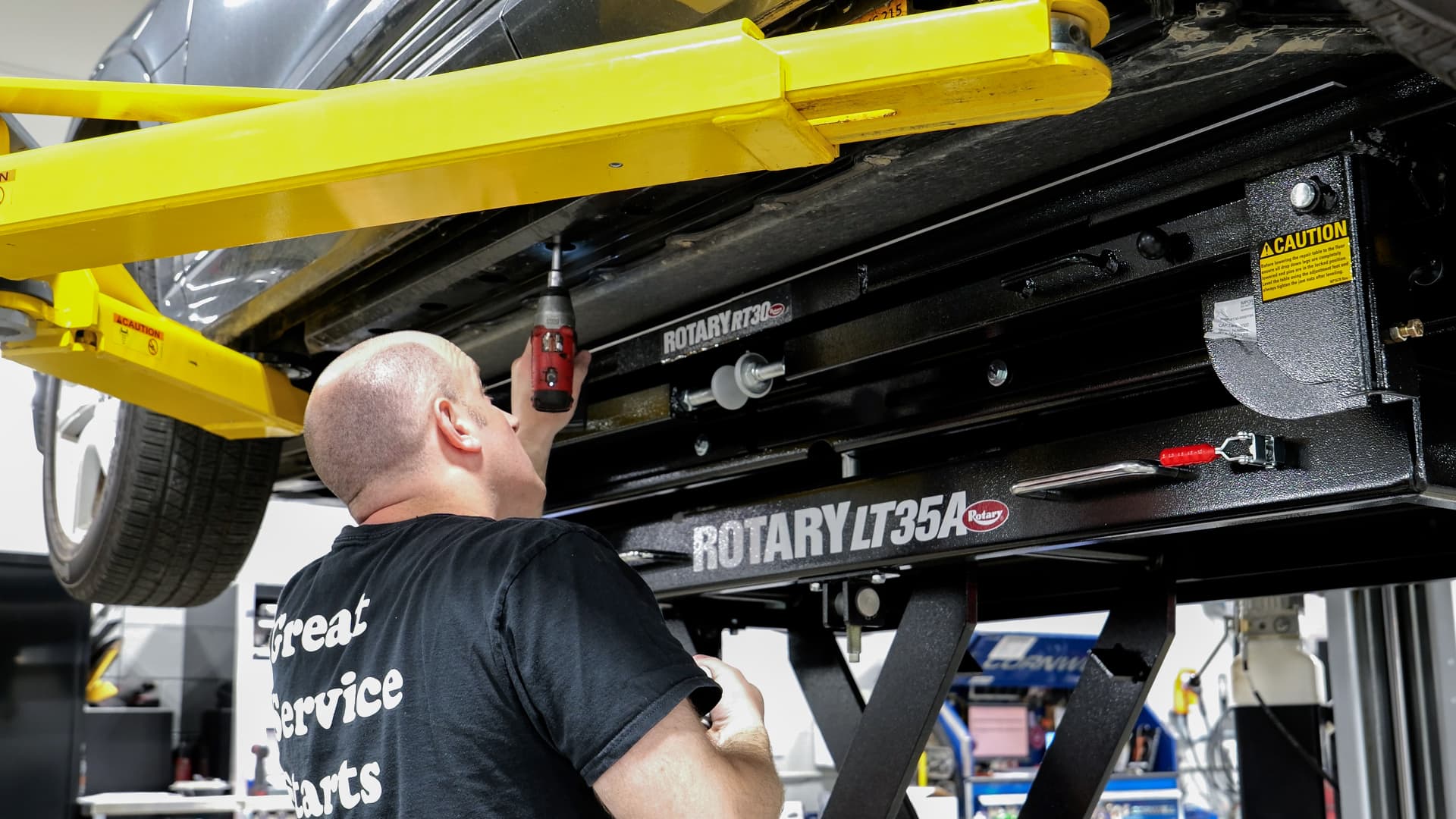
The company also sells equipment for can-making, vehicle repair lifts and specialized printers used for bar codes, serial numbers and textiles, CNBC’s Investing Club noted.
Dover raised its full-year outlook
Dover increased its full-year guidance despite the quarterly revenue miss. The company now expects revenue growth of 6% to 8%, up from its prior range of 5% to 7%, according to CNBC’s Investing Club.
It also lifted expected organic growth to 4% to 6%, from 3% to 5%. Adjusted earnings per share are now projected at $10.55 to $10.75, with a midpoint of $10.65. The prior EPS range was $10.45 to $10.65, with a midpoint of $10.55, according to CNBC’s Investing Club.
This story draws on original reporting from CNBC.