Europe’s drone push is reshaping the defense trade
NATO, the U.K. and Germany are putting fresh money behind drones, creating a broader opening for defense software, AI and communications firms.
By Theo Nakamura · Staff Writer
· 3 min read
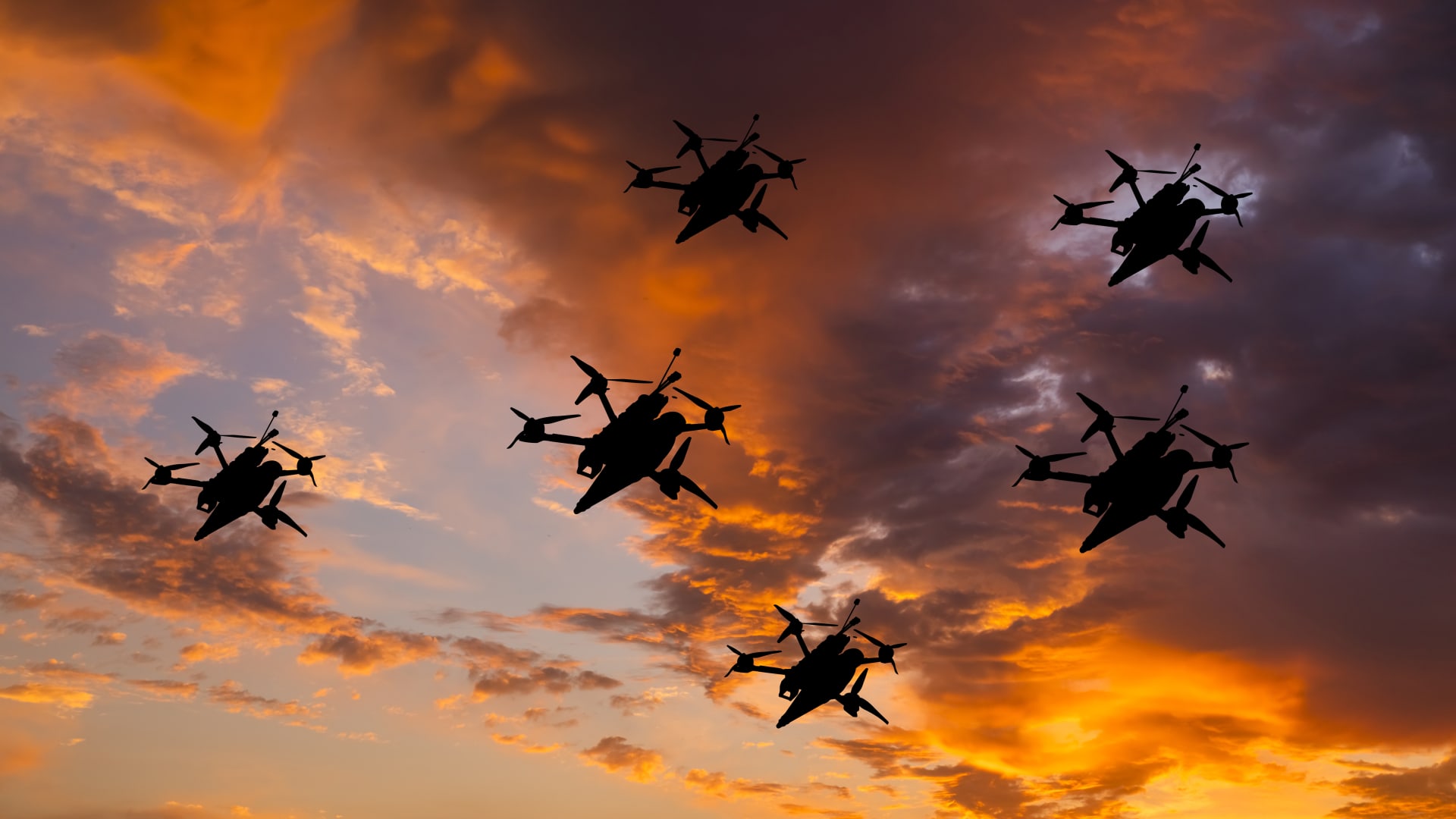
Europe’s defense spending shift is becoming a drone story, and that matters for investors watching where new military budgets may flow. Recent moves by NATO, the U.K. and Germany show drones are moving from a specialist battlefield tool to a core part of European security planning, according to CNBC.
The acceleration follows lessons from Russia’s war in Ukraine, where drones have been used for surveillance, targeting and attacks, as well as Iran’s use of low-cost Shahed drones in the Middle East. CNBC reported that governments are also looking at artificial intelligence, software, electronic warfare and secure communications, because drones need those systems to work in contested combat zones.
NATO Secretary General Mark Rutte said last week that the alliance would become “drone-ready,” CNBC reported. He announced a drone initiative in which allies would put more than $40 billion into counter-drone capabilities over the next five years. Counter-drone systems are tools designed to detect, block or destroy hostile drones.
Rutte said drones have “fundamentally altered” modern warfare and have become a “decisive factor” on the battlefield, citing the Russia-Ukraine war, according to CNBC.
The U.K. is also putting more money into autonomous systems, meaning machines that can operate with limited human control. In its Defence Investment Plan published in late June, the British government committed £5 billion, or $6.7 billion, to a “UK drone transformation” program intended to strengthen its armed forces, CNBC reported.
Germany is expanding support tied to Ukraine. Auterion, a defense software company, and Ukrainian drone maker Skyfall said Monday they received a 90 million euro order for 50,000 drones fitted with Auterion’s operating system from a European NATO member. A person familiar with the matter told CNBC the buyer was Germany.
Auterion CEO Lorenz Meier told CNBC that this is the first war in which drones were common enough to play a meaningful role. He said software is becoming a bigger part of combat performance.
According to Meier, Auterion’s operating system helps drones keep attacking targets despite electronic jamming, which is when an adversary disrupts signals used for control, video or navigation. He told CNBC the software can help drones continue toward a target even after video signal is lost, and can also help strike targets below the radio horizon, such as when a drone drops into a valley.
Meier said the company plans to add software that lets operators control coordinated groups, or swarms, of drones instead of flying each aircraft one by one. He also told CNBC that although the latest order is for Ukraine, the technology has drawn interest from armed forces including Germany, Norway, Britain and France.
The investment case is wider than drone manufacturers. Morningstar analyst Loredana Muharremi told CNBC that future defense is moving toward a “layered battlefield,” where equipment such as tanks can launch drones, receive live targeting data from satellites and unmanned aerial vehicles, and share information across a networked force.
Muharremi said companies exposed to autonomy, air defense, sensors, electronic warfare, software and space could capture part of future defense spending. McKinsey estimates that European core defense spending has doubled since 2019 and, under NATO’s 3.5% target for 2035, could reach about 800 billion euros by 2030, or roughly 2.9% of GDP, CNBC reported.
Private funding is also rising. McKinsey said defense technology deal volumes more than doubled year over year in 2025, while European defense tech funding increased from about 200 million euros in 2021 to 2.6 billion euros in 2025, according to CNBC.
One standout is Munich-based Helsing. The company said Monday that a funding round valued it at $18 billion, CNBC reported. Helsing makes drones and underwater surveillance weapons, and develops AI and autonomous software for military uses, reflecting Europe’s broader bet that future defense spending will be shaped by code as much as hardware.
This story draws on original reporting from CNBC.