Finland sand battery heats a town while tackling renewable storage
Pornainen’s sand battery stores cheap clean power as heat, cutting heating emissions and showing one path for renewable energy storage.
By Jordan Bell · Startups & Deals Reporter
· 4 min read
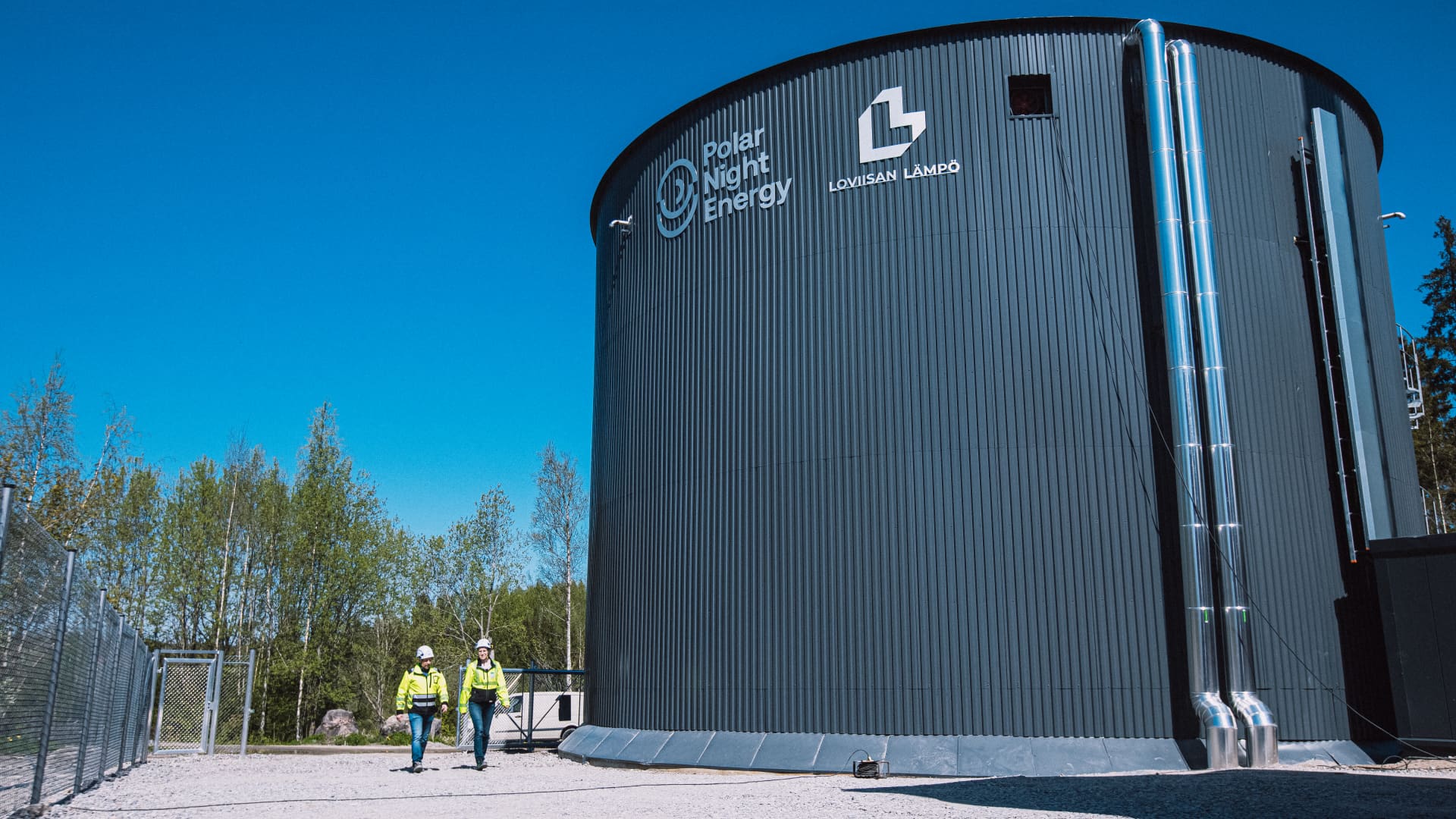
The Finland sand battery in Pornainen is giving investors and energy watchers a clear example of how clean power can be stored without relying on lithium-ion cells. The commercial project stores electricity as heat for the town’s district heating network, addressing a core problem for wind and solar: production rises and falls with the weather.
The facility, developed by Polar Night Energy and commissioned by Finnish district heating company Loviisan Lämpö, stands 13 meters tall and 15 meters wide. According to Polar Night Energy, it uses 2,000 metric tons of crushed soapstone to hold 100 megawatt-hours of thermal energy.
That capacity can cover close to one month of heating demand for Pornainen’s 5,000 residents in summer and about one week in winter, according to CNBC’s reporting on the project. For retail investors tracking the energy transition, the point is straightforward: storage is where renewable energy moves from cheap-but-variable power to something cities and utilities can use on demand.
How does the Finland sand battery work?
A sand battery is a heat storage system, not a battery that sends electricity back to a phone, car or power grid in the usual way. It uses electricity, often when wind or solar supply is plentiful and prices are low, to heat a solid material inside a heavily insulated container.
In Pornainen, that material is crushed soapstone. The stored heat can sit inside the silo for days or weeks before heat exchangers use it to warm water for the local district heating system. District heating means a central plant sends hot water or steam through pipes to heat buildings, rather than every building relying on its own boiler.
Annette Höglund-Dönnes, chief commercial officer at Polar Night Energy, told CNBC that the value comes from separating the time electricity is bought from the time heat is used. She said the system can charge when power is inexpensive and deliver heat when producing it directly from the grid would cost more.
What changed for Pornainen?
Tommi Eronen, CEO of Polar Night Energy, told CNBC that Pornainen previously depended on oil and wood chips for heat. He said the sand battery now allows the town to use combustion-free heating for most of the year.
Polar Night Energy said the project is expected to cut greenhouse gas emissions from the heating network by almost 70% and reduce wood-chip use by about 60%. The existing wood-chip power plant has not disappeared; it remains available for backup and peak demand.
Mikko Paajanen, CEO of Loviisan Lämpö, told CNBC the battery lets the company separate electricity purchasing from heat production. He said one charge can support heating for a week in winter and up to a month in summer, helping the company use low spot prices. Spot prices are market prices for electricity bought for near-term delivery.
Paajanen said Loviisan Lämpö aimed to get 55% to 60% of the municipality’s district heating production from the sand battery in the first months of this year, compared with roughly 30% in 2025.
Why renewable storage is the bigger story
Renewable intermittency means wind and solar do not produce power on command. Storage systems help by absorbing excess power when supply is high and releasing useful energy when supply falls or demand rises.
Jan Rosenow, a professor of energy and climate policy at the University of Oxford, told CNBC that electrothermal storage technologies such as sand batteries are likely to be copied in other countries. He said they do not need rare earths or critical raw materials and can store heat for longer periods than lithium-ion batteries, potentially days or weeks.
The technology still has limits. CNBC noted criticism around the difficulty of efficiently turning stored heat back into electricity and the lower energy density of sand batteries compared with traditional batteries. That makes the Pornainen project more relevant today for heat networks than for replacing grid-scale electric batteries.
Finland’s Climate Minister Sari Multala described the Pornainen project to CNBC as an inspiring example of energy storage innovation. She also said future work on electricity-related uses could be valuable, while Polar Night Energy said it has received interest from teams on every continent, especially communities now dependent on coal and oil.
This story draws on original reporting from CNBC.