France Spain wildfires burn nearly 300,000 acres as heat wave nears
Wildfires have forced nearly 300,000 evacuations in France and Spain, with hotter weather threatening to complicate the fight.
By Dev Ramirez · Crypto Correspondent
· 3 min read
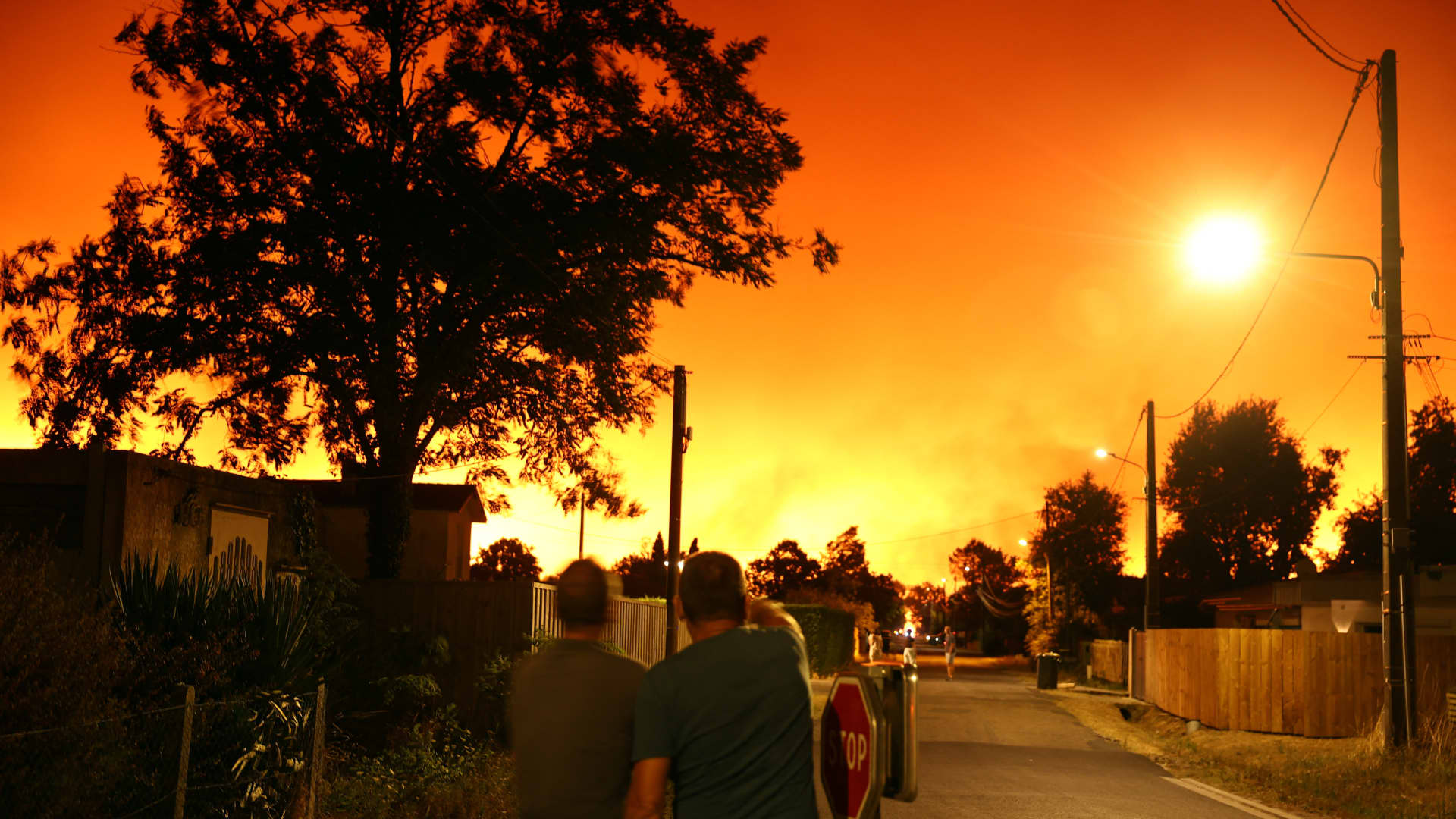
France Spain wildfires have burned nearly 300,000 acres and pushed nearly 300,000 people out of affected areas, adding pressure on emergency services just as another heat wave is forecast. For investors watching Europe, the story is also about cost: evacuations, firefighting and rebuilding can hit regional budgets and local businesses fast.
The fires started last Wednesday in Gironde, in southwestern France, and have since burned nearly 104,000 acres in France and about 190,000 acres in Spain. France 3 Aquitaine reported that Gironde’s prefecture said conditions were stable overnight, while 93 firefighters had been injured.
The prefecture said the night was calm and that the fire remained under control in the morning, according to France 3 Aquitaine. Even with that update, officials and fire experts are watching the weather closely because hotter, drier conditions can make fires spread faster and become harder to contain.
How could the heat wave affect the France Spain wildfires?
Météo-France forecast temperatures of 33 to 35 degrees Celsius in France as a new heat wave affects France and Spain for the rest of the week. Heat waves can dry out vegetation, which turns grass, brush and trees into easier fuel for fires.
Firefighter Captain Nicolas Braz told AFP that the wildfires are a rare and dangerous pyrocumulonimbus event. A pyrocumulonimbus is a fire-generated cloud that can produce its own thunderstorms, winds and whirlwinds, making fire behavior more difficult for crews to predict and control.
Stefan Doerr, a professor of wildland fire science at Swansea University, told CNBC’s “Squawk Box Europe” that wildfires themselves are not unusual, but the region’s three heat waves this summer have been unprecedented. He said the scale of the current events is beyond the ability to handle them effectively.
What are the economic costs?
French Finance Minister Roland Lescure said the crisis has hurt the local economy, telling reporters the area could have done without another blow. The immediate costs include emergency shelter, evacuation logistics and firefighting operations, while the later costs can include repairs to roads, utilities and other infrastructure.
Georg Zachmann, a senior fellow at Bruegel who specializes in energy and climate policy, told CNBC’s “Squawk Box Europe” that fires can be “existential” for regions responsible for evacuations, firefighting and infrastructure recovery. He added that the impact can also show up in national fiscal budgets.
Zachmann pointed to the 2025 fires in California as an example of how large the bill can become, saying direct costs may have reached $40 billion to $60 billion, while indirect costs were estimated at about $300 billion. Those figures were given as a comparison, not as an estimate for the current fires in France and Spain.
For households and businesses near the fires, the immediate focus remains safety and containment. For markets, the durable question is whether repeated heat waves and larger fires make climate-related public spending a more regular part of European budget planning.
This story draws on original reporting from CNBC.