Gold and silver rebound, but analysts question the staying power
Precious metals rose this week after a selloff, though ING, BofA and UBS analysts warned that macro pressure could limit the recovery.
By Maya Okafor · Markets Writer
· 4 min read
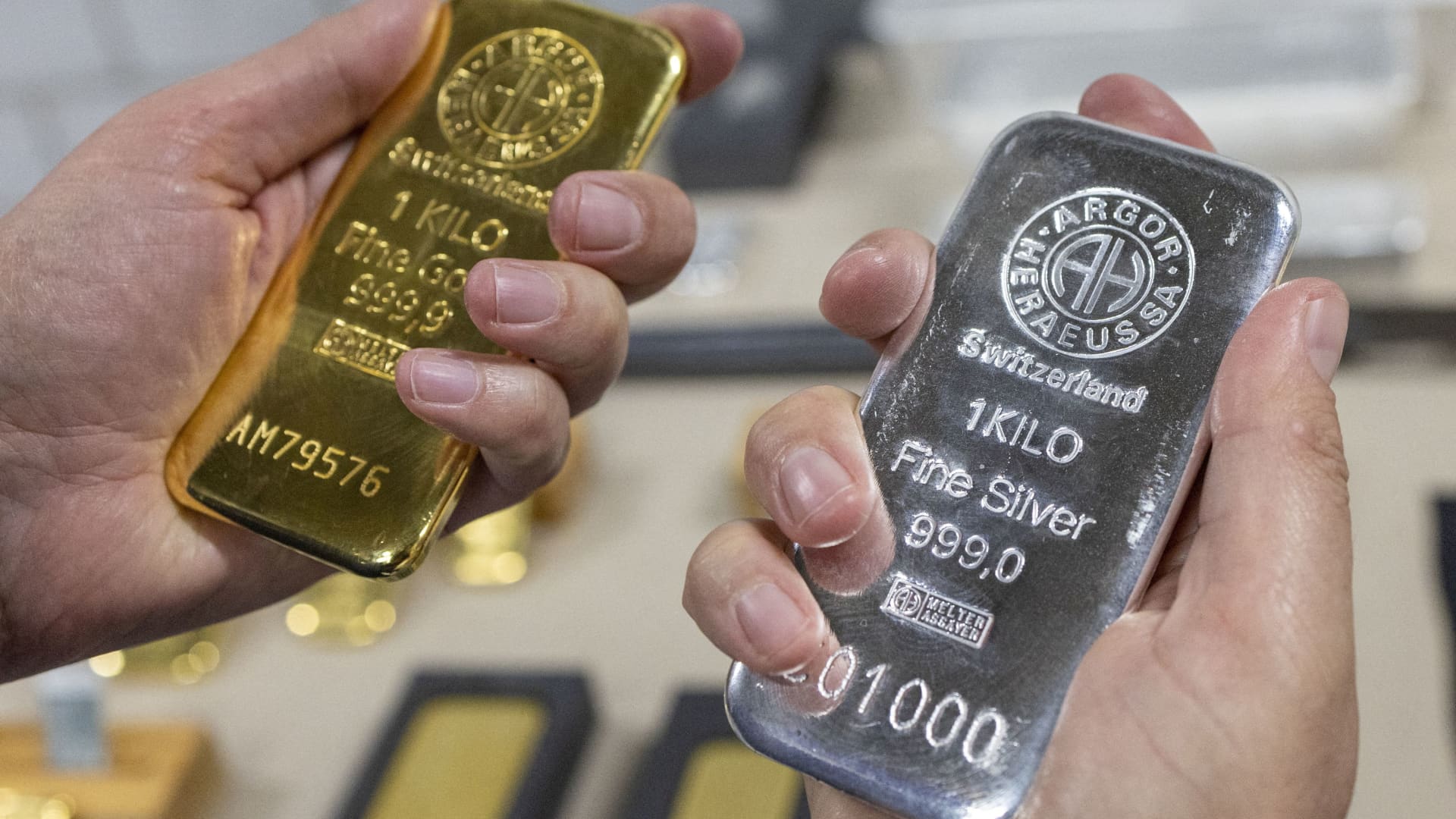
Gold and silver prices bounced this week, giving metals investors a break after a stretch of selling. The move matters for retail portfolios because precious metals often sit at the crossroads of inflation worries, interest-rate expectations, currency moves and demand for safer assets.
Spot silver traded at $59.47 an ounce early Wednesday at 6:33 a.m. ET, according to CNBC, up about 6.3% from $55.90 at the end of last week. Spot gold was around $4,119.04 an ounce, roughly 2.4% higher over the same period.
The rebound still leaves both metals far below their late-January records. CNBC reported that spot gold reached $5,589.38 an ounce then, while silver hit $121.67 an ounce.
Analysts see a rebound, not a reset
ING commodities strategists Warren Patterson and Ewa Manthey said in a Wednesday note that the recent rise looked more like investors buying after a drop than a sign that the larger macro picture had changed. They described the move as “bargain hunting” and said it did not reflect “a material shift in the geopolitical or macroeconomic backdrop.”
Higher interest rates and a stronger U.S. dollar have weighed on precious metals, according to CNBC. That mechanism is straightforward: gold and silver do not pay interest, so when cash or bonds offer higher yields, metals can look less appealing. A stronger dollar can also make dollar-priced commodities more expensive for buyers using other currencies.
Oil prices tied to the Iran war have also changed the setup for markets, CNBC reported. Patterson and Manthey said Middle East tensions continue to support precious metals, but investors are also balancing softer U.S. economic data against the inflation risk that can come from higher energy prices.
ING said gold is likely to stay sensitive to energy-market developments and expectations for U.S. monetary policy. Monetary policy refers to central-bank decisions, such as interest-rate settings, that influence borrowing costs and financial conditions.
Silver has an industrial angle
Silver may have one advantage over gold: it is used by industry as well as investors. Patterson and Manthey said silver could keep doing better than gold if industrial metals remain firm while safe-haven demand holds up. A safe-haven asset is one investors often turn to during market stress.
The ING analysts pointed to better sentiment around industrial metals, especially copper, as another support for silver.
Bank of America analysts took a more cautious view on gold. In a July 16 note cited by CNBC, BofA said gold’s worst quarter in 13 years through the end of June raised the risk of a longer and deeper pullback. The bank cited a “death cross” signal, elevated net-long positioning and similarities to past major peaks.
A death cross is a technical chart pattern that occurs when a shorter-term moving average, often the 50-day average price, falls below a longer-term moving average, often the 200-day average. Net-long positioning means investors, in aggregate, have more bets on rising prices than falling prices.
UBS lowers its preferred silver entry level
UBS also sounded cautious on silver. The Swiss bank cut the silver level it would view as an attractive entry point to a range of $48 to $50 an ounce, down from about $55 an ounce, according to CNBC.
UBS strategist Dominic Schnider wrote in a July 20 note that near-term pressure on silver is likely to continue because of Middle East tensions, higher opportunity costs and a firm dollar. Opportunity cost means the return investors give up by holding one asset instead of another.
Schnider said silver’s broader setup gives investors little reason to add long positions, and that uneven investment demand means prices have not yet found a firm floor.
Some industry executives are more upbeat. Diane Garrett, executive chair and CEO of U.S.-based gold and silver developer Hycroft Mining, told CNBC’s “Squawk Box Europe” on Tuesday that the recent drop was a “normal correction” and said “this is not a broken bull market.”
Garrett said commodity fundamentals remain strong, especially for gold, and pointed to 17 straight months of central-bank buying. She also said silver benefits from being both a monetary metal and an industrial metal used in artificial intelligence and supercomputing applications.
This story draws on original reporting from CNBC.


