Google DeepMind CEO urges U.S.-led AI safety standards body
Demis Hassabis wants a federally overseen public-private group to test advanced AI models for security risks before wider release.
By Dev Ramirez · Crypto Correspondent
· 3 min read
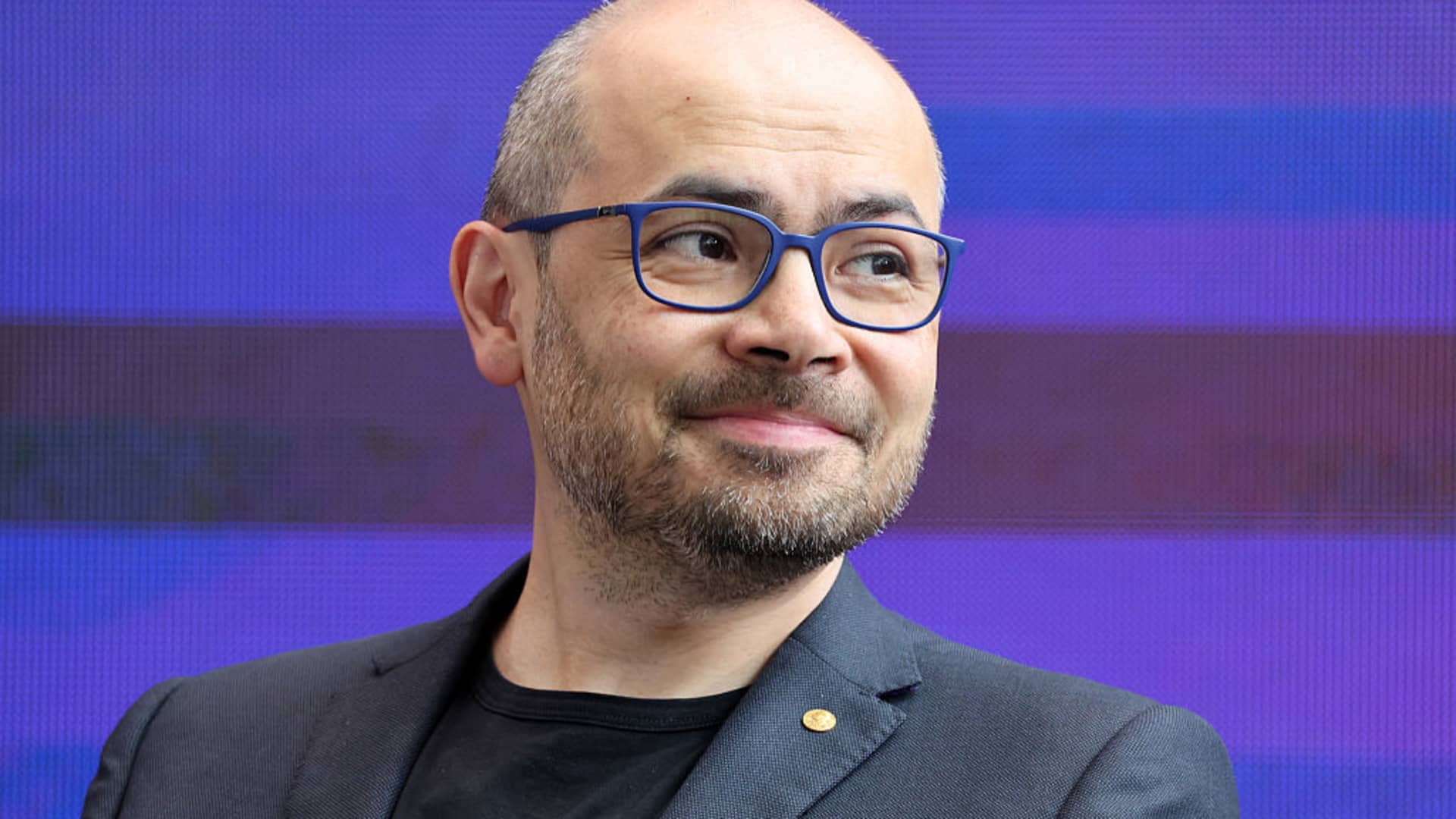
Google DeepMind chief Demis Hassabis is pushing for the U.S. to take the lead on setting rules for the most powerful artificial intelligence systems. For everyday investors, the proposal matters because AI regulation is becoming a bigger part of the business risk around Alphabet, OpenAI, Anthropic and other companies racing to release new models.
Hassabis said Tuesday in a post on X that “urgent action” is needed to address risks tied to artificial general intelligence, or AGI. AGI generally refers to AI that can match or exceed human-level performance across a wide range of tasks.
He said frontier models, a term for the most advanced AI systems being developed, already create cybersecurity challenges. He also warned that nuclear and biological risks could emerge as the technology becomes more capable.
What Hassabis is proposing
Hassabis called for a U.S.-led standards body structured as a federally overseen public-private partnership. He said the group could resemble the Financial Industry Regulatory Authority, or FINRA, the U.S. self-regulatory organization that oversees brokerage firms and exchange markets.
Under his proposal, the body would include independent technical experts and representatives from the open-source AI community. Hassabis said the U.S. is well placed to lead because of its economic and technical position.
The group would need substantial funding, according to Hassabis, to hire top technical talent and secure enough computing power to run large-scale tests. He said that money would likely come from the AI industry.
CNBC reported that the White House, State Department and Commerce Department were contacted for comment.
How model reviews would work
Hassabis said leading AI labs could start by voluntarily submitting models for review as much as 30 days before release. If the system proved effective, he said reviews could later become required for AI models deployed in the U.S. market.
The testing would look for specific risks in agentic AI, a term for systems that can take actions toward goals with less direct human input. Hassabis said checks could include attempts to bypass safety guardrails, signs of deception, and whether companies are following practices such as watermarking AI-generated images.
He also pointed to human-readable output tokens as one possible standard. In plain English, that means designing systems so people can better understand parts of how a model is reasoning or producing an answer.
The comments follow earlier efforts by major AI executives to shape the policy debate. CNBC previously reported that Hassabis and Anthropic CEO Dario Amodei called for a U.S.-led AI coalition at a Group of Seven meeting with technology leaders and heads of state, including President Donald Trump. OpenAI CEO Sam Altman also called for a similar body in a Financial Times article earlier this month.
Regulation meets the AI race
The proposal arrives as tension grows between AI companies and governments over how much control should apply to the newest models. CNBC reported that Anthropic recently negotiated with U.S. officials after the Trump administration temporarily placed export controls on an advanced model. OpenAI also faced restrictions after the U.S. government initially asked it to limit the rollout of a new model, CNBC reported.
The debate is also tied to competition between the U.S. and China. CNBC reported that Chinese AI models from companies including DeepSeek and Z.ai are gaining traction among U.S. companies as AI costs rise. U.S. lawmakers are considering ways to curb adoption of Chinese models by domestic companies, and the State Department told CNBC that the trend raises “serious concerns.”
For investors, the takeaway is that AI companies are no longer competing only on model quality and cost. The rules for testing, releasing and exporting advanced systems are becoming part of the market story too.
This story draws on original reporting from CNBC.