Honda Ridgeline pickup truck gets U.S.-built successor after pause
Honda confirmed a next-generation Ridgeline will be built in Alabama after a temporary production stop, while CR-V sales lead the U.S.
By Maya Okafor · Markets Writer
· 3 min read
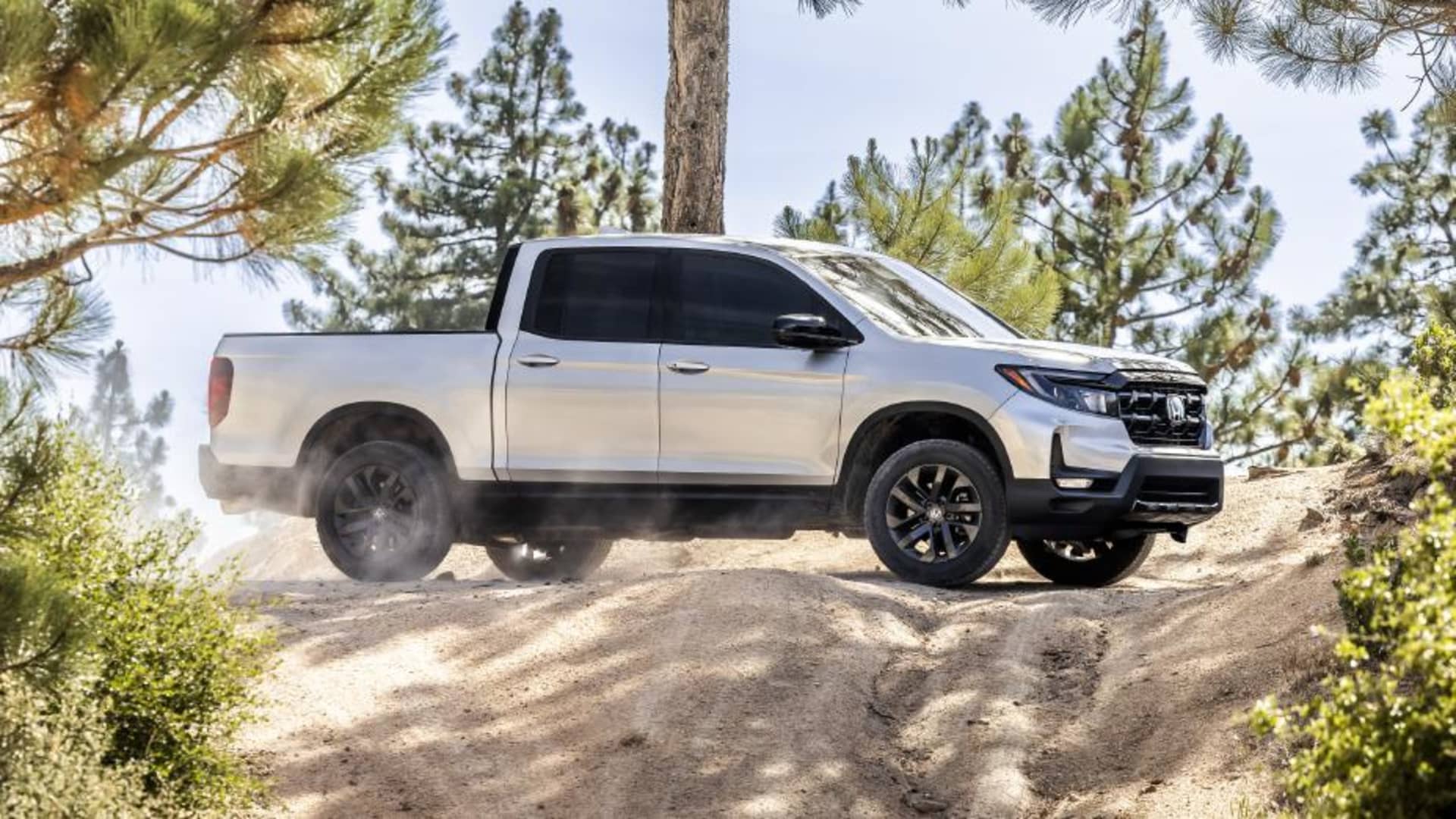
Honda confirmed that a new Honda Ridgeline pickup truck is coming for the U.S. market, giving investors a clearer read on a model whose future had been uncertain. The company said Thursday that production of the current Ridgeline will stop later this year, followed by a temporary pause before assembly resumes at Honda’s Alabama plant.
The update matters for Honda’s U.S. lineup because trucks and crossovers are where American buyers spend heavily. At the same time, Honda’s CR-V compact crossover led U.S. auto sales through the first half of the year for the first time, according to CNBC, putting one of the company’s core models ahead of vehicles that have recently dominated the rankings.
When is the new Honda Ridgeline coming?
Honda said the next-generation Ridgeline will be produced in the United States after the temporary stoppage. Assembly is expected to return to the Alabama facility within two years, likely in 2028, CNBC reported.
The company did not disclose full specifications for the new truck. Honda released a teaser image for the next-generation Ridgeline on July 23, 2026, aimed at the U.S. market.
Lance Woelfer, vice president of auto sales at American Honda Motor, told CNBC that Honda wants to keep serving Ridgeline buyers who have stayed with the model. He said the company also wants the next truck to bring “increased ruggedness” and “even more capability.”
That language points to a key question around the Ridgeline’s identity. The truck has long been known more for a smoother, car-like ride than for the tougher feel associated with many pickups. A more capable version could help Honda reach buyers who want stronger truck credentials, though Honda has not detailed what changes it plans.
What does body-on-frame mean for a pickup?
Body-on-frame is a traditional truck construction method where the vehicle body sits on a separate frame. Many U.S. pickups use that setup because it can support heavier-duty truck use, while car-based designs often focus more on ride comfort and everyday driving.
Woelfer declined to tell CNBC whether the future Ridgeline will shift from its current car-based approach to body-on-frame construction. He said that type of setup has been part of the Ridgeline’s history, but would not say whether it will be part of the model’s future.
How are Honda Ridgeline sales doing?
Ridgeline sales fell about 3% in the first half of the year, according to CNBC. Since 2021, Honda has sold roughly 41,000 to 52,000 Ridgelines a year.
That puts the model well behind the biggest seller in the midsize pickup category. Toyota sold more than 270,000 Tacoma trucks in 2025, CNBC reported.
The Ridgeline’s temporary production stop had been a point of uncertainty after Automotive News reported that a pause could be tied to the vehicle not meeting California emissions rules. Honda’s Thursday confirmation gives the model a future in the U.S., even if there will be a gap before the replacement arrives.
Why the CR-V sales lead matters
Honda’s CR-V sales rose roughly 6% from a year earlier in the first half, CNBC reported. The compact crossover moved to the top of U.S. auto sales as the Ford F-Series pickups and Toyota RAV4, recent sales leaders, dealt with production bottlenecks.
For everyday investors, the takeaway is product mix. Honda is protecting a pickup nameplate with a new U.S.-built Ridgeline while its CR-V is carrying momentum in a high-volume crossover category. The company has confirmed the direction, but the next test will be how much capability Honda adds and how buyers respond when the truck returns.
This story draws on original reporting from CNBC.


