Hormuz tanker traffic drops as Iran attacks raise crew fears
Maritime risk executives say tanker crews are increasingly unwilling to cross Hormuz after a series of attacks, injuries and a U.S. blockade.
By Theo Nakamura · Staff Writer
· 4 min read
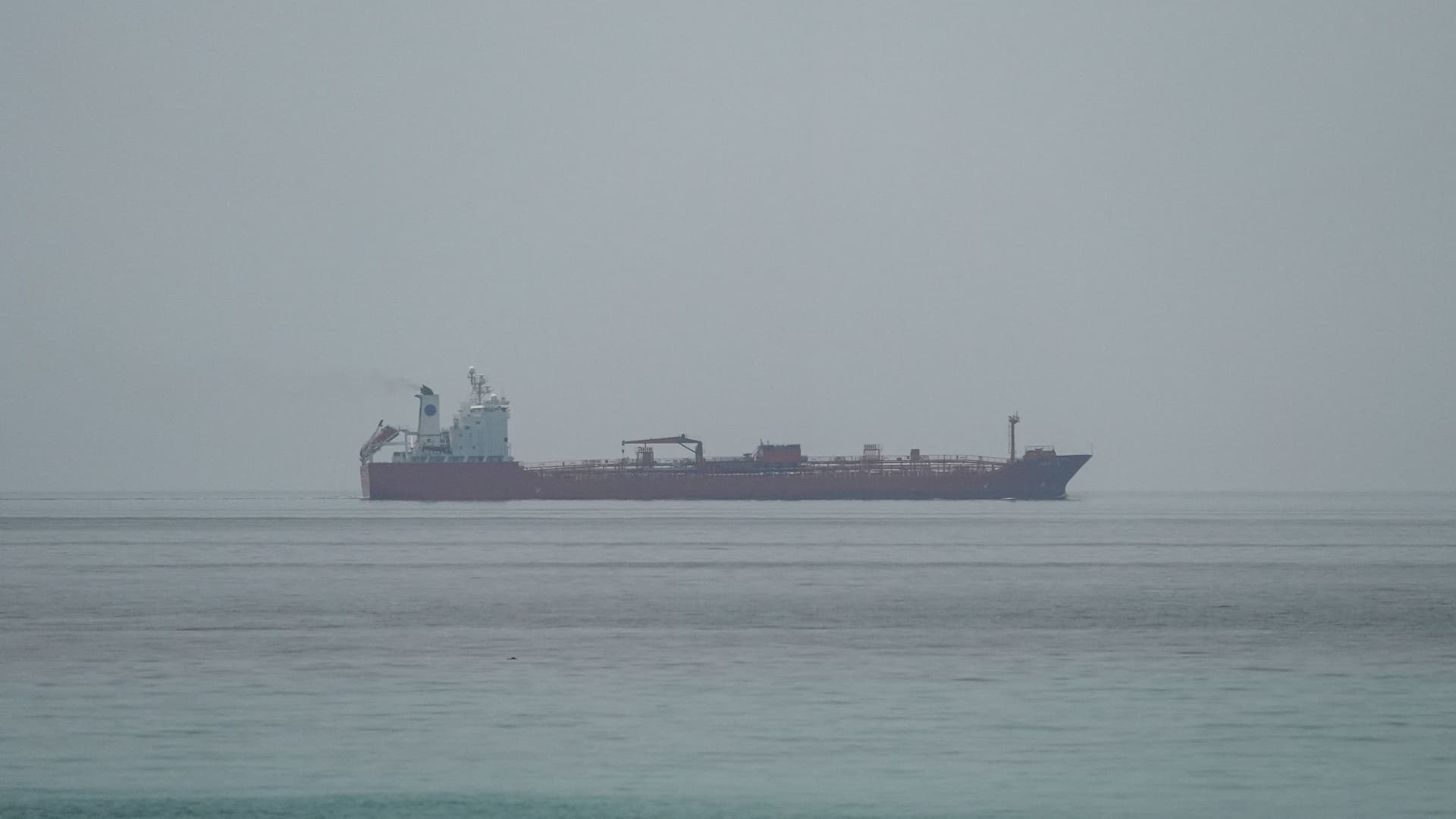
Oil tanker traffic through the Strait of Hormuz has slowed sharply as ship crews weigh whether the crossing is safe, according to maritime risk executives and ship-tracking firms. For everyday investors, the issue is transport risk: crude can be produced and sold, but it still has to move through routes that crews and insurers are willing to accept.
Dimitris Maniatis, chief executive of Athens-based maritime risk service Marisks, told a Lloyd’s List Intelligence briefing this week that the security situation for tankers in Hormuz had returned to a “worst-case scenario.” He said transit volumes had fallen and crews were more worried than before.
“Nobody is willing to move,” Maniatis said, according to CNBC.
At least nine ships have been attacked since July 6, according to the International Maritime Organization, a United Nations agency. The IMO said Iran is trying to push vessels away from a route near Oman that is protected by the U.S. military and toward a route through Iranian territorial waters.
Attacks hit tankers near Oman
The human cost is already visible. The IMO said one seafarer was killed and three others were injured Tuesday in an attack on the crude tanker Al Bahyah off Oman’s coast. The same day, 11 mariners were injured in an attack on the Mombasa B, another crude tanker traveling near Oman.
Jakob Larsen, chief security officer at BIMCO, one of the world’s largest shipping associations, said the Iranian attacks have involved anti-ship missiles. Maniatis said crews are reacting to that risk directly, regardless of financial incentives offered to take the route.
The standard path through the middle of Hormuz, called the traffic separation scheme, remains unsafe because of mine risk, Larsen said. A traffic separation scheme is a marked shipping lane system that works like a road divider at sea, keeping vessels moving in organized directions. Larsen said a mine can explode under a ship and is “extremely dangerous” for vessels entering a minefield.
The U.S. military also added pressure this week. U.S. Central Command said it disabled the Curacao-flagged M/T Belma, an unladen oil tanker, on Wednesday after the vessel ignored multiple warnings while moving through international waters toward Iran’s Kharg Island. Centcom said the action followed the reimposition of a U.S. naval blockade against Iran.
Traffic falls to a three-week low
President Donald Trump told Fox News on Tuesday that Hormuz was open to all ships except Iranian vessels after the blockade returned. “It’s open if people want to go through it,” Trump said, while adding that it was closed for Iran “both in and out.”
Ship-tracking data tells a more cautious story. Lloyd’s List Intelligence analysts monitoring Hormuz said the strait has largely closed again, with only a small number of ships crossing while their transponders, the tracking devices that broadcast a vessel’s position, are switched off.
Trade intelligence firm Kpler said traffic fell to a three-week low. Ship crossings dropped to eight on Thursday from 15 the previous day, according to Kpler. Before the U.S. and Israel attacked Iran on Feb. 28, more than 100 ships crossed Hormuz each day, Kpler data showed.
The wider conflict is also spreading across shipping routes. CNBC reported that the U.S. has carried out six rounds of airstrikes against Iran in response to tanker attacks. Tehran has fired missiles at U.S. allies in the Gulf, while Iran and its Houthi allies in Yemen are threatening ship traffic in the Red Sea, which CNBC described as a key alternative path for Saudi oil exports during the war.
The dispute follows a June 17 memorandum of understanding between the U.S. and Iran. Tehran agreed to safe passage for vessels in Hormuz, but the agreement did not specify which lanes ships should use, CNBC reported.
Larsen said shipping companies need dependable assurances from both Iran and the U.S. that the route is safe. Some firms may still accept the risk, he said, while others are avoiding Hormuz entirely. The final call also depends on crews, not only ship owners.
This story draws on original reporting from CNBC.