Iraq and Syria move to revive Mediterranean oil route
The planned pipeline restoration would give Iraq another export path as Hormuz disruptions have hit crude shipments and production.
By Theo Nakamura · Staff Writer
· 3 min read
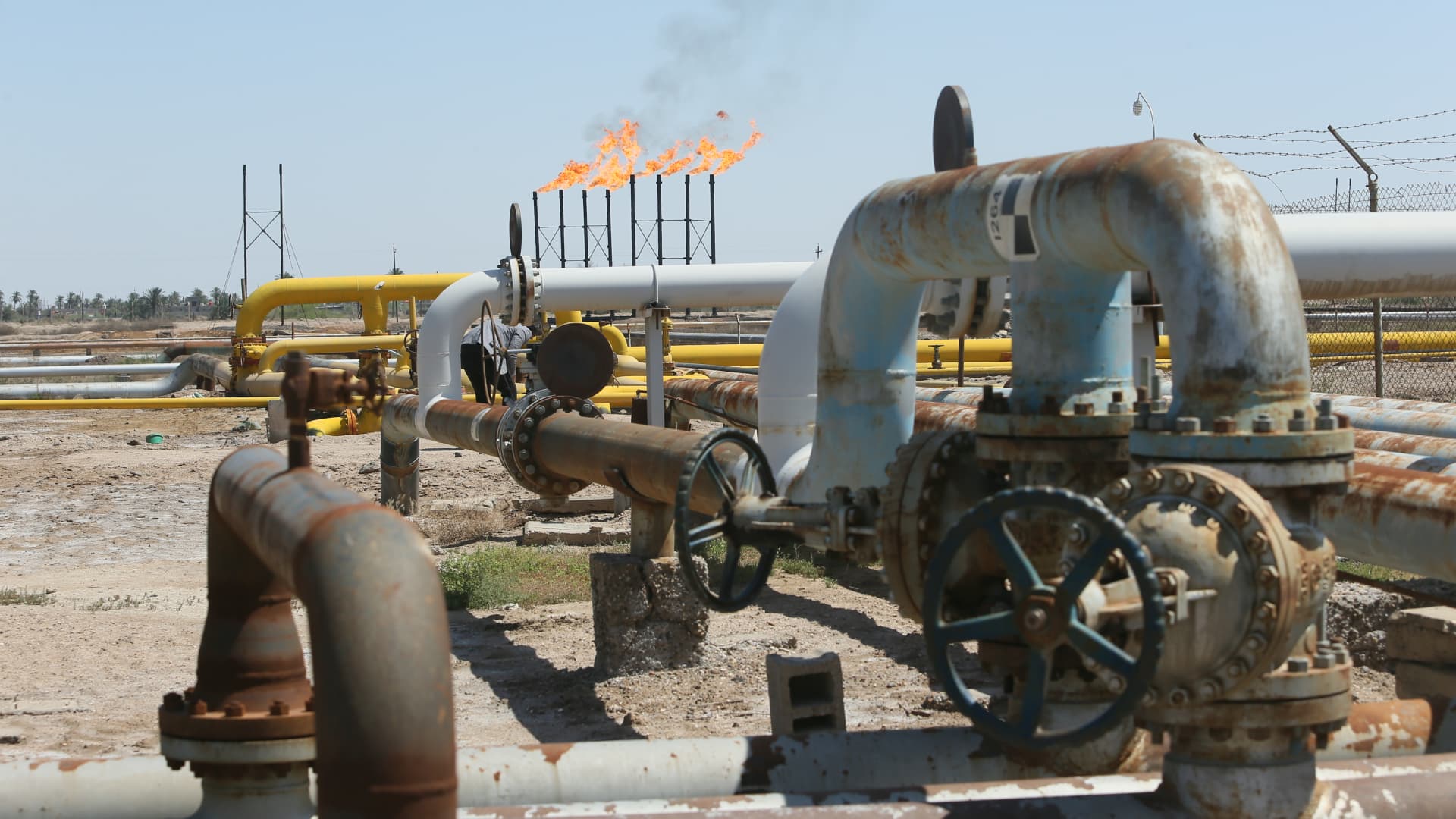
Iraq and Syria signed an agreement Friday to rebuild a long-idled oil pipeline, a move that could give Iraqi crude another route to global buyers while traffic through the Strait of Hormuz remains disrupted. For investors, the deal matters because export routes can affect how much oil reaches the market, and supply concerns often feed directly into crude prices and energy stocks.
The agreement was signed in Washington, D.C., at a Chamber of Commerce summit focused on U.S. investment in Iraq, according to CNBC. U.S. Energy Secretary Chris Wright oversaw the signing by Basra Oil Company CEO Bassem Abdul Karim Nasr and Syrian Petroleum Company CEO Youssef Qablawi.
Wright said before the signing that Iraq had room to improve oil production, reduce dependence on “hostile neighbors” and bring “freedom, prosperity and abundant energy” to the country, CNBC reported.
Iraqi Prime Minister Ali al-Zaidi is in the United States this week and met President Donald Trump at the White House on Tuesday, according to CNBC.
Why the route matters
The pipeline runs from Kirkuk in northern Iraq to Syria’s Mediterranean coast, according to the U.S. Energy Information Administration. Its nameplate capacity, meaning the designed maximum flow under normal operating conditions, is 700,000 barrels per day.
The line has not operated since it was damaged during the U.S. invasion of Iraq in 2003, the EIA said.
Iraq is the second-largest oil producer in the Organization of the Petroleum Exporting Countries, or OPEC. But its export system has been under pressure because the country has limited pipeline options and depends heavily on Basra, its southern port city on the Persian Gulf, to ship crude to global markets.
That dependence has become more costly during the U.S.-Iran war, which has disrupted tanker movement through the Strait of Hormuz. The strait is a narrow waterway connecting the Persian Gulf with the Gulf of Oman, and it is one of the world’s most important oil transit points.
OPEC data showed Iraq’s oil output dropped to about 1.9 million barrels per day in June from roughly 4.2 million barrels per day in February, before the U.S. and Israel attacked Iran, according to CNBC. That is a decline of more than 50%.
Other Gulf producers are looking for workarounds
Iraq is not the only oil producer trying to reduce its exposure to Hormuz. The United Arab Emirates is building a second pipeline to the Port of Fujairah on the Gulf of Oman, a project CNBC said would double the country’s export capacity outside the strait.
Saudi Arabia is also weighing an expansion of its pipeline to the Red Sea by 2 million barrels per day, Reuters reported last week, citing people close to the matter.
Pipelines can lower reliance on a vulnerable shipping lane, but analysts say they do not remove the broader security risk. Bob McNally, founder of Rapidan Energy, told CNBC’s “Power Lunch” on Monday that Iran could still target energy infrastructure connected to pipeline systems.
“The problem isn’t the waterway,” McNally said. “It’s that Iran can use weapons to attack loading facilities, pumping stations, the end stations, these terminals, and the storage units of these pipelines.”
For oil markets, the agreement is a signal that governments in the region are trying to build more redundancy into export networks. The timing and cost of restoring the Iraq-Syria line were not disclosed in the reported agreement.
This story draws on original reporting from CNBC.