India pushes alternative fuels as oil risks collide with car-owner backlash
India is expanding ethanol, biogas and hydrogen fuel plans as oil costs rise, but its E20 petrol mandate is drawing complaints from drivers.
By Maya Okafor · Markets Writer
· 4 min read
India is moving faster on alternative fuels as oil becomes a bigger pressure point for its economy and for companies tied to transport, energy and autos. For retail investors, the shift matters because fuel policy can affect inflation, automaker costs, farm-linked industries and India’s exposure to global crude prices.
The country, the world’s third-largest crude consumer, has made petrol with 20% ethanol mandatory since April, five years earlier than planned, according to CNBC. E20, as it is known, means regular petrol blended with one-fifth ethanol, an alcohol-based fuel commonly made from crops such as corn and sugarcane.
India is also testing compressed biogas, which can replace compressed natural gas and liquefied natural gas in some uses, and last week successfully tested its first hydrogen fuel cell-powered train, according to government information cited by CNBC. Local media reports cited by CNBC said the government is also considering blending up to 15% isobutanol into diesel.
Oil exposure is forcing faster fuel diversification
India imports about 88.5% of the crude oil it needs, according to government data cited by CNBC. That makes the economy sensitive to any jump in oil prices, because higher crude costs can raise the import bill, strain public finances and feed into consumer prices.
CNBC reported that oil prices have risen more than 25% so far this month as hostilities between the U.S. and Iran have escalated. Energy intelligence firm Kpler has warned that crude could move above $100 a barrel if both the Red Sea and the Strait of Hormuz are closed.
India also faces a political risk around its oil supply. Kpler data cited by CNBC showed Russian crude made up more than half of India’s oil imports in June, replacing some Middle Eastern supply. Sumit Ritolia, lead research analyst at Kpler, told CNBC that India bought 2.6 million barrels a day of Russian oil in the first 15 days of this month, also more than half of its crude imports.
That reliance could put India in Washington’s crosshairs. CNBC reported that proposed U.S. sanctions include 100% tariffs on buyers of Russian oil unless peace is reached with Ukraine by September.
Diwakar Murugan, senior automotive analyst at Omdia, told CNBC that with Russia supplying a large share of India’s oil and geopolitical pressure rising, energy diversification is no longer optional. He said Indian automakers are spreading their bets across compressed natural gas, hybrids, flex-fuel platforms and hydrogen for commercial vehicles.
Ethanol is the main substitution tool
Pankaj Srivastava, senior vice president for commodity markets-oil at Rystad Energy, told CNBC that ethanol blending has become one of India’s most effective ways to replace crude oil use. He said higher blending can reduce gasoline imports, cut dependence on crude and save foreign exchange while supporting agriculture and rural incomes.
Srivastava estimated that the 20% ethanol mandate could save India nearly $4 billion a year through 2030, or $6.4 billion in a high oil price scenario. The government has said its ethanol blending program, launched in 2014, has saved 1.97 trillion rupees, about $20 billion, in foreign exchange and replaced 31.6 million metric tons of crude oil, according to CNBC.
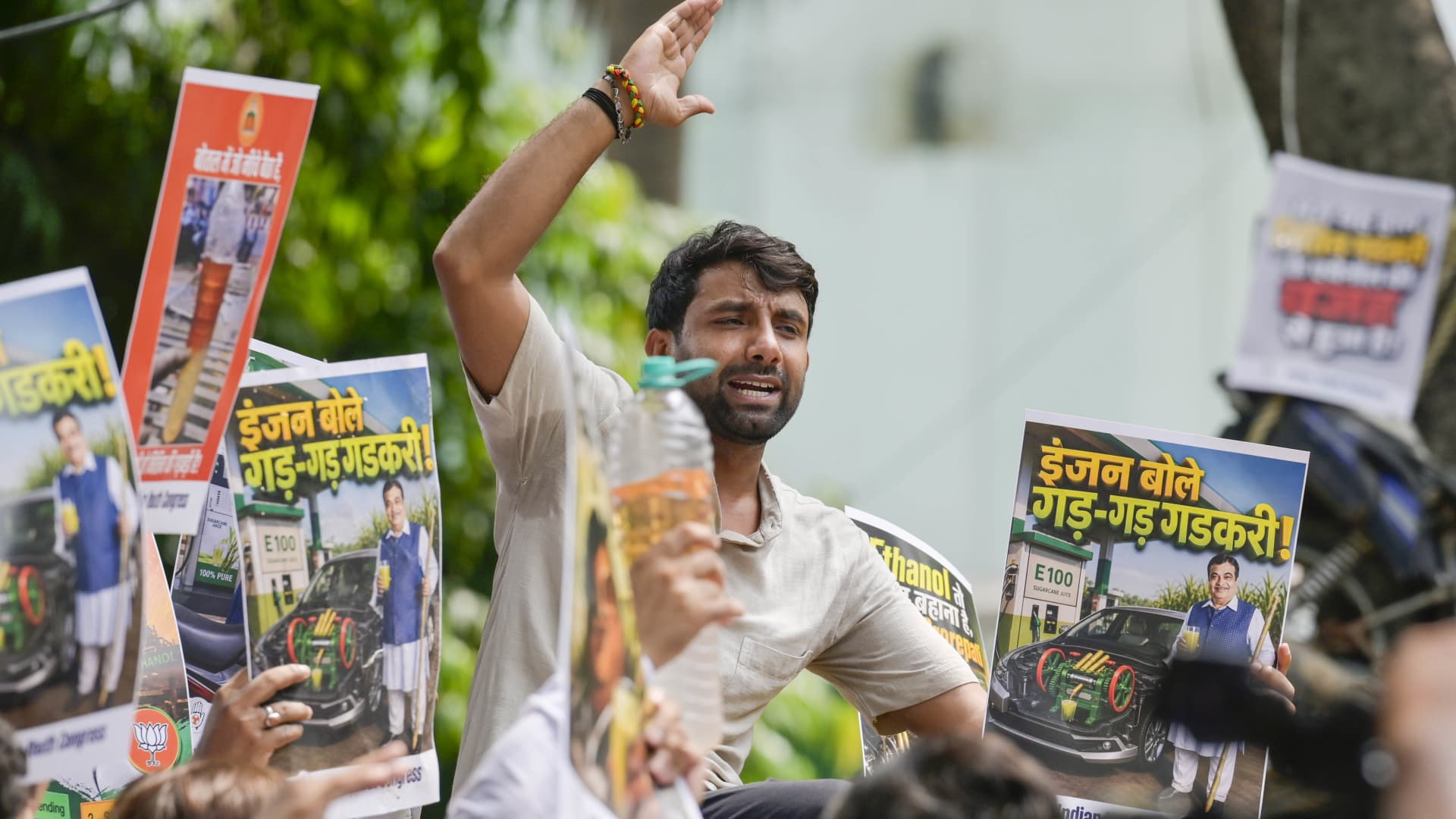
The policy has also created a consumer problem. CNBC reported that India has enough ethanol capacity to raise the blend as high as 25%, but the government has paused further increases after drivers complained about lower mileage and possible vehicle damage.
Murugan told CNBC that Indian automakers started producing E20-compliant vehicles after 2023. Experts cited by CNBC said older vehicles that were not designed or calibrated for E20 can face lower fuel economy, parts compatibility issues and higher maintenance needs.
Automakers have denied reports of widespread vehicle damage from ethanol-blended petrol, according to CNBC. Reuters reported last week that a consumer court ordered Maruti Suzuki, India’s largest carmaker, to replace a vehicle after a customer claimed E20 fuel caused damage.
The debate leaves India balancing two pressures at once: reducing exposure to imported oil while managing the cost of a faster fuel transition for drivers with older cars.
This story draws on original reporting from CNBC.


