India NEET leak protests spotlight pressure on young job seekers
India’s NEET leak and retake sparked protests that widened into concerns over education, job access and accountability.
By Jordan Bell · Startups & Deals Reporter
· 3 min read
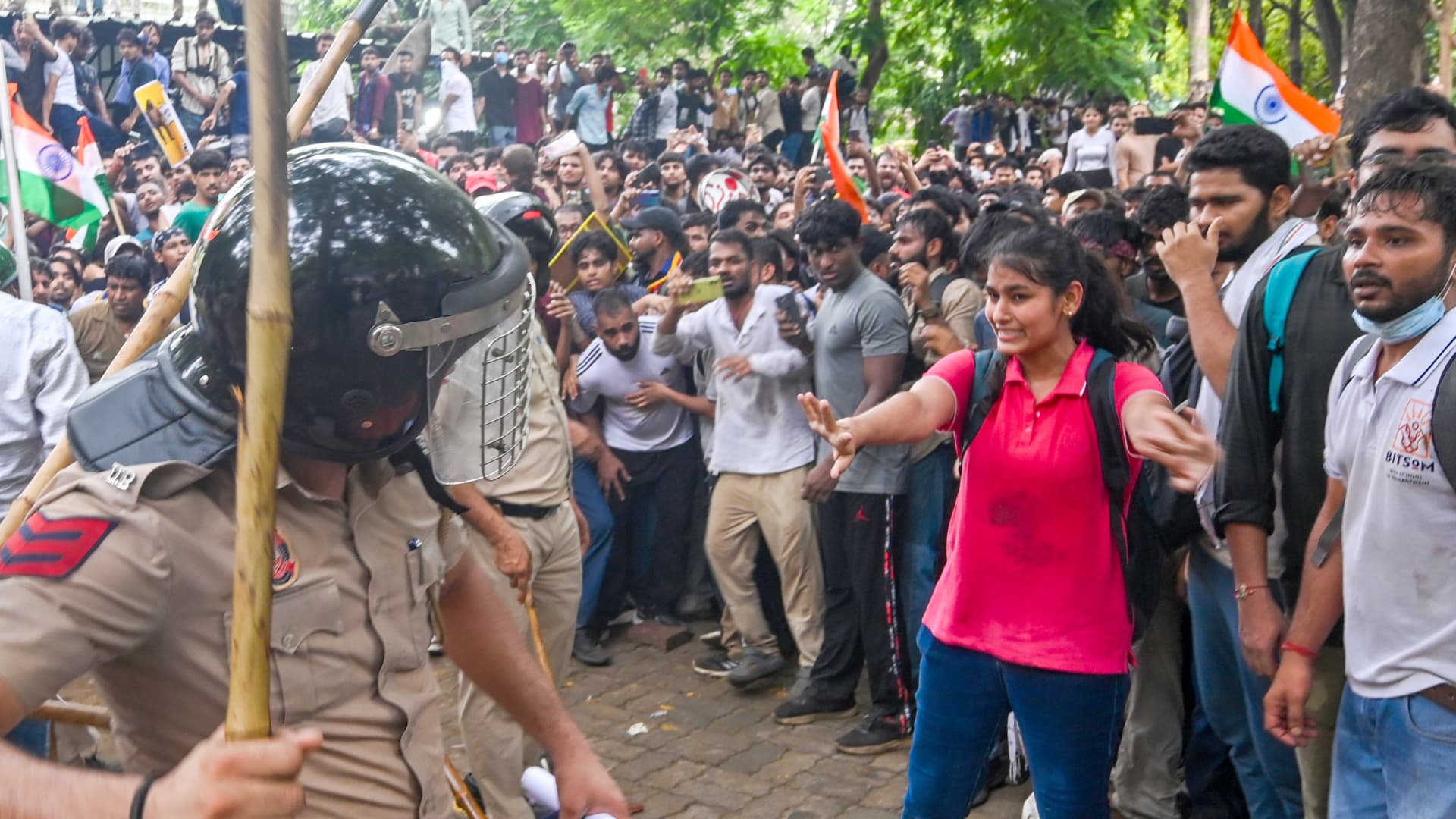
India NEET leak protests began after a high-stakes medical entrance exam was disrupted, but they have widened into a debate over education, work and accountability. For young people and investors following India’s growth story, the episode shows how a strong national employment figure can coexist with far tougher conditions for younger and educated job seekers.
More than 2 million candidates took the National Eligibility-cum-Entrance Test, or NEET, in May, Reuters reported. After a leak emerged, the government opened an investigation, halted the release of results and ordered a retake in June.
NEET is the exam used for medical-college admissions. It is one of several intensely competitive credential routes that many families view as a path toward more stable work and upward mobility. CNBC reported that applications rose 50% between 2019 and 2026, to more than 2.2 million, citing National Testing Agency data.
Why did the India NEET leak protests grow beyond the exam?
Reuters reported that, over about two months, the demonstrations grew from demands for action over the leaked papers into wider frustration about educational opportunity, employment and government accountability. The Cockroach Janta Party, a youth movement leading protests in Delhi, was among the groups calling for action.
The human cost requires care in interpretation. Families of three students told Reuters they believed the cancellation of the initial exam and the uncertainty that followed contributed to the deaths of their children. Police registered the deaths as suicides, did not give a reason, and Reuters said it could not independently establish why they occurred. The CJP’s separate claim that 21 student suicides were linked to the episode was also not independently verified by Reuters.
The labor figures help explain why a disrupted exam can carry such weight. India’s Ministry of Statistics and Programme Implementation put overall unemployment for people 15 and older at 3.1% in 2025 under its usual-status measure. The official rate for people aged 15 to 29 was 9.9%, and urban youth unemployment was 13.6%. The ministry also estimated that 25.0% of people aged 15 to 29 were outside employment, education and training.
Those measures should not be treated as interchangeable with estimates focused on graduates. CNBC, citing the State of Working India 2026 report, said unemployment among graduates aged 15 to 25 was close to 40% and that graduates accounted for two-thirds of unemployed people in 2023. The supplied reporting does not provide enough methodological detail to reconcile that estimate with the official figures.
That distinction matters: a low national unemployment rate does not by itself describe the experience of a graduate seeking a salaried role. CNBC also reported that students compete heavily for the JEE engineering exam, CUET university admissions test and UPSC civil-services exam, alongside NEET.
What has the government done after the NEET leak?
India’s Central Bureau of Investigation said it had arrested 13 suspects, including a doctor and several teachers, in an investigation into an alleged scheme involving leaked papers and private tuition-centre agents, Reuters reported. Prime Minister Narendra Modi said the leaks had caused pain for students and guardians and promised strict action, including fast-track courts. Education Minister Dharmendra Pradhan later resigned amid the protests, Reuters reported.
NDTV reported that the government proposed a task force to overhaul the National Testing Agency and an Anti-Paper Leak Bill. The proposal included possible penalties of up to 10 years in prison and fines of up to ₹50 lakh, along with faster investigations and stronger sanctions for organized exam rackets. Whether those measures address the broader concerns around access to secure, well-paid work remains an open question.
This story draws on original reporting from CNBC.