Intel stock slide puts AI CPUs and foundry progress in focus
Intel is down more than 27% from its June peak as investors look to earnings for proof of AI server demand and factory momentum.
By Jordan Bell · Startups & Deals Reporter
· 3 min read
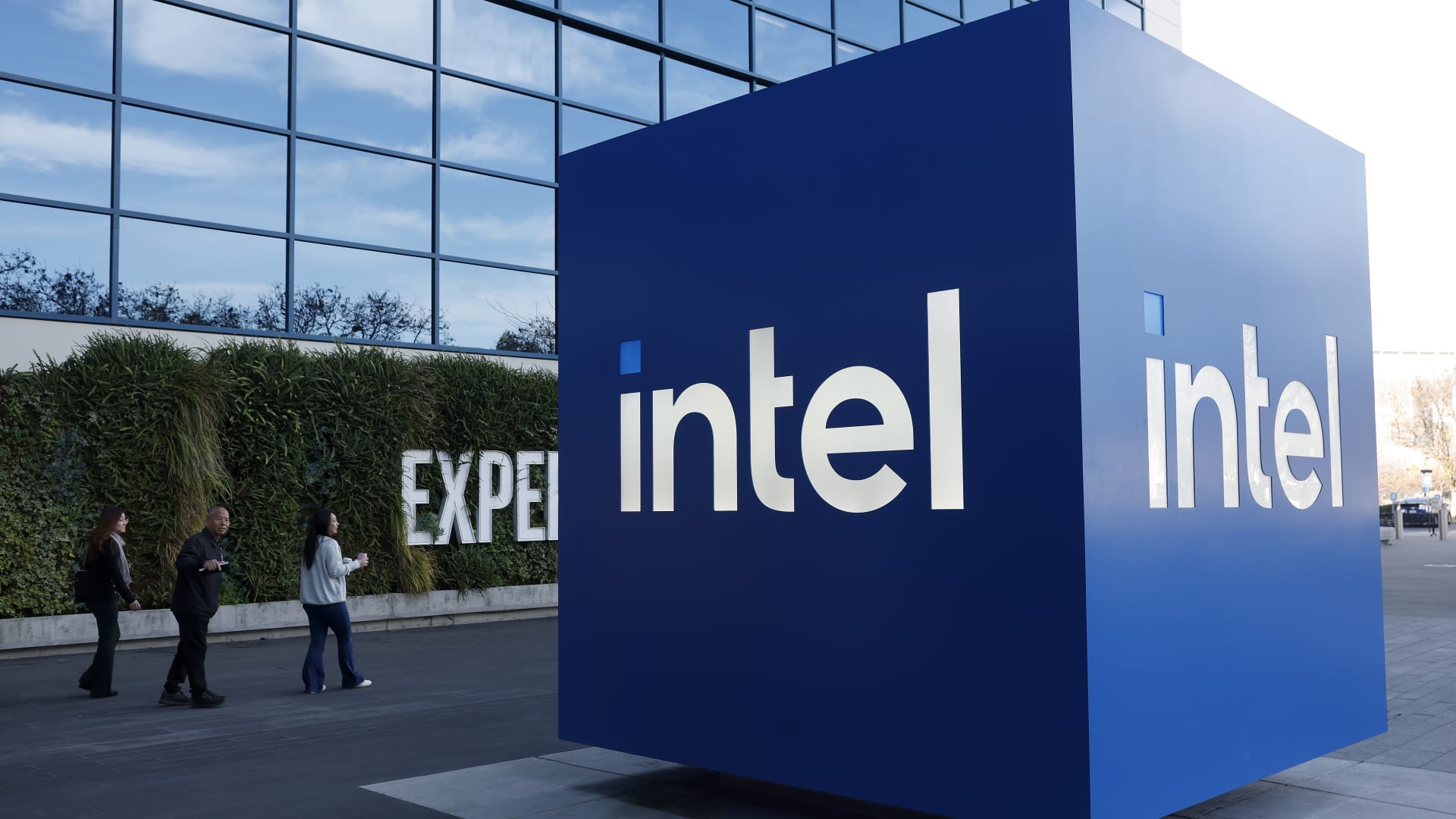
The Intel stock slide has put two questions at the center of the chipmaker’s earnings report after Thursday’s close: can it keep growing AI server CPU sales, and can its foundry business show real progress? For everyday investors, the answer matters because Intel’s sharp rally made the stock more exposed when sentiment cooled across semiconductors.
Intel shares have fallen more than 27% from a record closing high of nearly $141 on June 22, according to CNBC. Before that pullback, the stock had climbed 280% this year through its June peak. CNBC attributed the recent pressure less to a company-specific breakdown and more to a broader chip-sector sell-off as investors reassess whether hyperscale cloud customers can keep spending heavily on artificial intelligence infrastructure.
What are investors watching in Intel earnings?
The first focus is demand for Intel’s central processing units, or CPUs. A CPU is the main processor that handles a computer’s instructions and workloads. In AI servers, CPUs are becoming more important as artificial intelligence shifts toward inference, the stage where trained models answer prompts, run tools and complete tasks for users.
CNBC said more advanced AI systems that can carry out multi-step tasks are helping drive demand for server CPUs. That has brought Intel more attention in a market often centered on AI accelerators, including Nvidia graphics processing units and Google tensor processing units.
Supply is the complication. Intel reported first-quarter revenue of $13.6 billion, which was $1.4 billion above the midpoint of its guidance. On the company’s April earnings call, CFO David Zinser said revenue would have been “meaningfully higher” if available supply had kept up with demand.
Wall Street expects Intel’s second-quarter revenue to rise 12% from a year earlier to $14.42 billion, according to LSEG estimates cited by CNBC. Analysts expect earnings per share of 21 cents, compared with a loss of 10 cents per share a year earlier.
Why Intel’s foundry business matters
A foundry is a factory business that manufactures chips, including designs created by other companies. Intel is unusual among leading chip designers because it still runs its own advanced manufacturing facilities, while rivals and large technology customers often depend on Taiwan Semiconductor Manufacturing Co.
Ben Bajarin, CEO and principal analyst at Creative Strategies, told CNBC that Intel has a major opportunity to expand clean room space, the tightly controlled manufacturing areas where advanced chips are made. Bajarin said he expects Intel to raise capital expenditures, meaning spending on long-term assets such as factories, partly to increase that capacity.
Intel announced last week that it plans to invest about $5.7 billion in its Leixlip, Ireland, site to boost production of Xeon server CPUs and other products. CNBC said the spending is mainly aimed at Intel’s own chip demand, while also supporting its longer-term foundry plans.
The foundry unit also announced a deal Tuesday to make next-generation security chips for Fortinet. CNBC said that was the first such announced customer win under CEO Lip-Bu Tan, who became Intel’s chief executive in March 2025. Other recent foundry-related opportunities cited by CNBC include Apple, MediaTek and Elon Musk’s Terafab project, though CNBC noted that Apple and Intel have not confirmed an agreement that President Donald Trump said exists.
RBC Capital analyst Srini Pajjuri told CNBC that tight supply could help Intel prioritize higher-value server CPUs and gain some pricing power. Pajjuri said Intel does not need to match TSMC exactly on yields, or the share of usable chips from a production batch, as long as it gets close enough to make progress.
Analysts remain cautious overall. FactSet data cited by CNBC show about 58% of analysts covering Intel rate the stock at hold, while 34% rate it buy. Pajjuri has a hold-equivalent rating and said he wants to see more evidence of gross margin expansion and foundry execution.
This story draws on original reporting from CNBC.