International stocks draw interest as Magnificent Seven worries grow
Janus Henderson’s Julian McManus says investors are more open to overseas equities as big U.S. tech concentration raises portfolio risk.
By Jordan Bell · Startups & Deals Reporter
· 4 min read
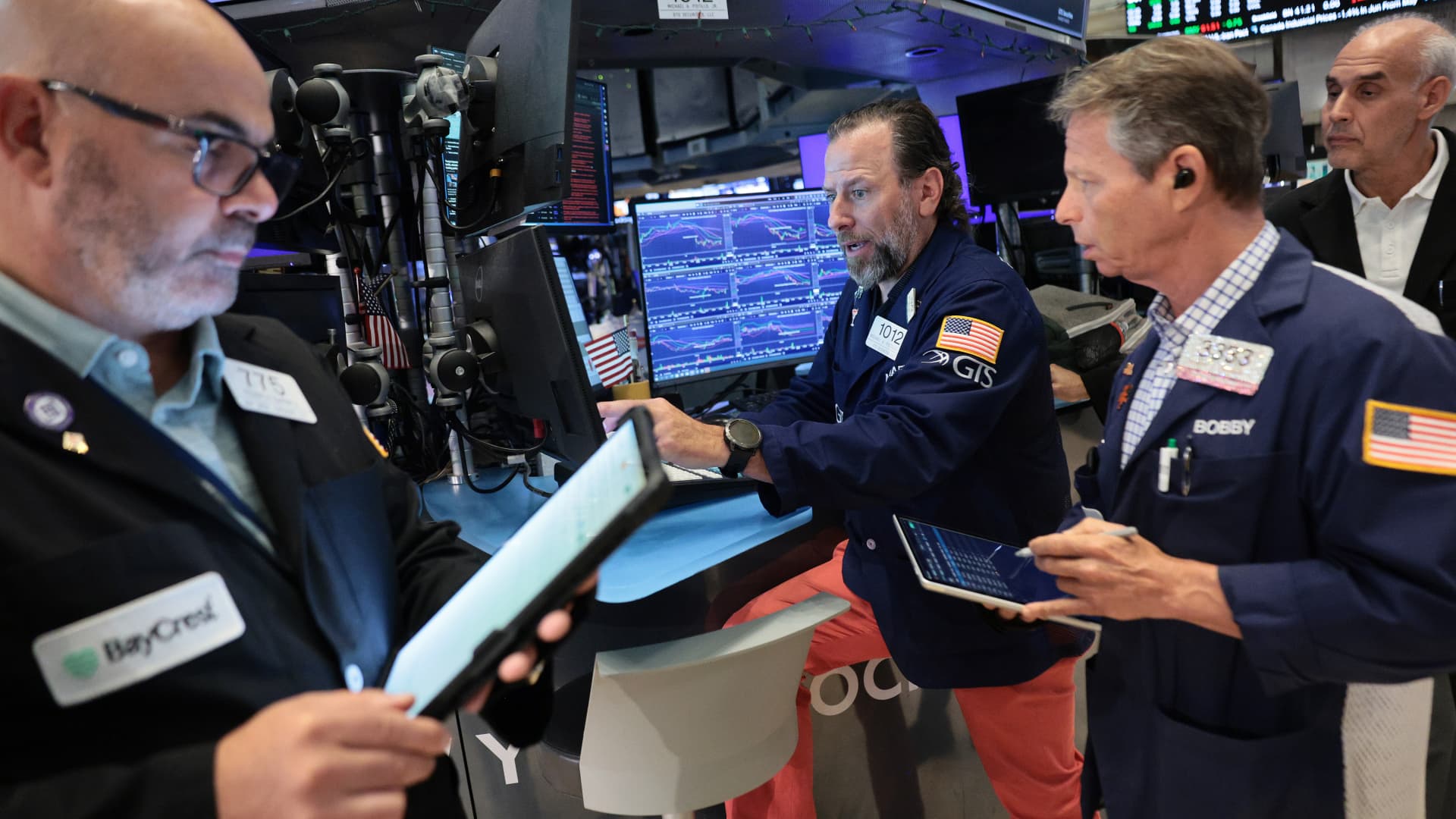
International stocks are getting a closer look as Magnificent Seven concentration makes some U.S.-heavy portfolios feel less balanced. Janus Henderson Investors portfolio manager Julian McManus told CNBC that clients and advisers are more willing to discuss overseas equities after years when U.S. stocks dominated returns.
McManus, who works on Janus Henderson Investors’ Global Alpha Equity Team, said the shift is partly about risk control. The firm reported about $480 billion in assets under management as of March 31.
“There’s definitely a move to explore more outside the U.S.,” McManus told CNBC. He said that marks a change from two years ago, when many U.S. advisers were hesitant to look abroad after a long run of American outperformance.
The recent numbers have helped reopen the conversation. The MSCI ACWI ex-US index, a benchmark for global stocks outside the United States, has gained more than 8% year to date, compared with a 6.8% rise for the S&P 500, according to LSEG data cited by CNBC.
Why are investors looking at international stocks?
McManus said many portfolios have become heavily tied to a small group of large U.S. technology companies known as the Magnificent Seven. That concentration can matter for anyone who owns broad market exposure, including through an index fund, because a few giant companies can drive a large share of returns.
“The Mag Seven is nearly half of your index, and you’re all in,” McManus told CNBC. “If that goes into reverse, you’re going to have a problem.”
He did not describe the shift as investors fleeing U.S. assets. McManus said it was “by no means a panic,” but said investors are more open to reconsidering how much of their portfolios sit outside the United States.
Politics has had a smaller effect on those decisions, according to McManus. He told CNBC that most advisers and investors tend to follow returns and “overlook the politics,” even with geopolitical uncertainty elevated.
Which overseas stocks and sectors did McManus highlight?
McManus pointed to several areas outside the U.S., including European banks, Japanese banks and life insurers, selected South Korean and Chinese companies, defense, health care, U.K. stocks and Canadian resources companies.
In Europe, he said banks have become more profitable and may still have room for higher valuations. In Japan, he said banks and life insurers could benefit as interest rates rise after a long period of very low borrowing costs.
McManus also said South Korea offers value after a recent selloff. He named Samsung Electronics, saying the market is not fully recognizing the long-term potential of its foundry business, according to CNBC.
In China, McManus said some leading companies have been hurt by weak sentiment toward the country’s market. He cited Tencent and CATL as examples where he believes valuations do not fully reflect their competitive positions.
On artificial intelligence, McManus said Janus Henderson prefers semiconductor suppliers over trying to pick the eventual winners among AI application companies. “We can’t have AI without semis,” he told CNBC, adding that the firm focuses on bottom-up stock selection rather than broad sector calls.
McManus also named BAE Systems and Hyundai Rotem in defense, Argenx in health care, AstraZeneca and NatWest in the U.K., and Canadian Natural Resources and Teck Resources in Canada. He said he remains positive on India over the long term and is watching Reliance Industries, though Janus Henderson is currently underweight India on valuation grounds.
Why do some investors still prefer U.S. stocks?
Not all wealth managers are moving away from the U.S. Polka Mishra, chief wealth adviser at Javelin Wealth Management, told CNBC her firm continues to favor U.S. equities because of resilient growth, easing inflation pressure and continued AI leadership.
Ian Horne, investment director at Muzinich & Co., told CNBC that volatility around Federal Reserve decisions and economic data is also pushing investors to diversify globally rather than make aggressive short-term bets.
This story draws on original reporting from CNBC.


