Congress splits in Iran war powers vote as oil tops $100
The Senate blocked a binding Iran war measure, while the House passed a symbolic one as oil and gas prices climbed.
By Jordan Bell · Startups & Deals Reporter
· 3 min read
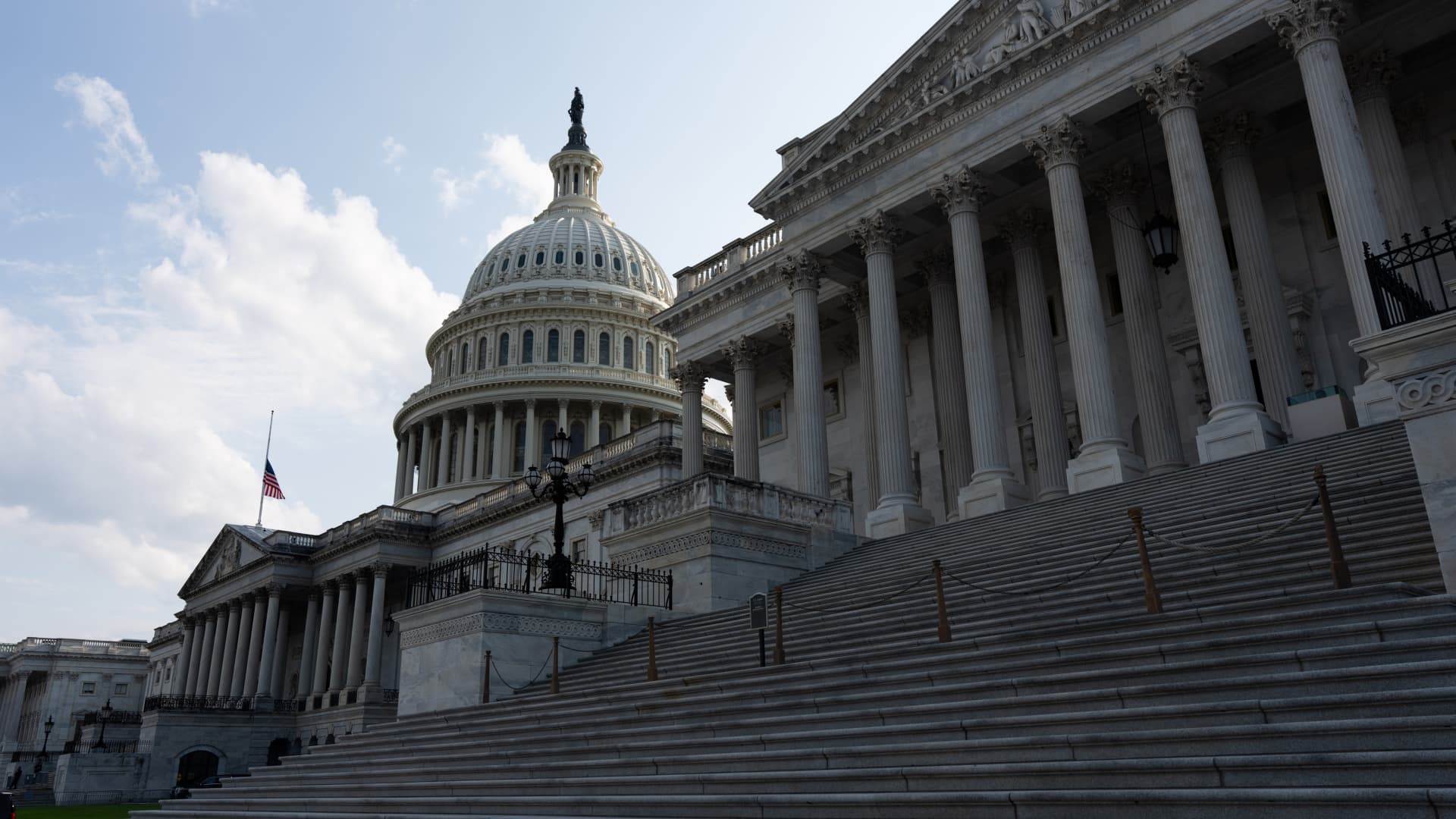
Congress split Thursday in an Iran war powers vote that showed lawmakers are divided over whether to force President Donald Trump to end U.S. hostilities with Iran. For everyday investors, the votes landed as the conflict pushed oil higher, with Brent crude above $100 a barrel and gasoline prices rising across the U.S.
The Senate voted 47-49 to reject a joint resolution under the War Powers Act that would have required Trump to end hostilities in Iran. Earlier Thursday, the House voted 214-208 to approve a separate concurrent resolution under the War Powers Act aimed at pressing Trump to abandon the war.
The votes were the first in Congress since Trump notified lawmakers that he had restarted the war with Iran after peace talks broke down. The renewed conflict followed weeks of a fragile ceasefire and comes ahead of the U.S. midterm elections, where Republicans are trying to protect narrow majorities in Congress.
What happened in the Iran war powers vote?
The Senate measure was the more direct attempt to limit the administration because it was a joint resolution, the kind of measure that can be sent to the president if passed by both chambers. The House measure was a concurrent resolution, which can express Congress’s position but would not go to Trump’s desk or become law.
The War Powers Act is a federal law designed to limit a president’s ability to keep U.S. forces in hostilities without congressional approval. In practice, these fights often become tests of whether Congress can build enough support to challenge a president during an active conflict.
Even if Congress passed a measure forcing a withdrawal, Trump would be highly likely to veto it. That means opponents of the war would need enough votes not only to pass legislation, but also to overcome a presidential veto, a much higher bar.
Sen. Chris Van Hollen, D-Md., who introduced the Senate resolution, argued that Congress needed to assert its role. “There is no good way out of a bad war,” Van Hollen said. “This is an opportunity for this Congress to finally take responsibility.”
Sen. Susan Collins, R-Maine, supported the Senate resolution. Collins is running for reelection in Maine, a state described as reliably blue. Sen. John Fetterman of Pennsylvania was the only Democrat to vote against it.
Republicans who opposed the measure said restricting Trump’s authority during the conflict would weaken the U.S. position. Sen. John Kennedy, R-La., said before the vote that forcing the president to withdraw would be “a huge blow to American credibility.” Kennedy also said he did not think the war would be the central issue in the election, adding that he expected the cost of living to dominate.
Why oil prices are part of the story
The war’s escalation has already shown up in energy markets. Brent crude, the international oil benchmark, traded above $100 a barrel Thursday, while U.S. crude rose above $91 a barrel.
Oil prices matter because crude is a major input for gasoline, diesel, jet fuel and transportation costs across the economy. AAA said the average U.S. gasoline price reached $4.09 per gallon, adding another pressure point for consumers already focused on living costs.
For retail investors, the congressional split leaves two risks in view: a geopolitical conflict that can keep energy prices volatile, and a political fight in Washington that has not yet produced a clear limit on the president’s war authority.
This story draws on original reporting from CNBC.


