Jamie Dimon market leverage warning flags risk of rapid disruption
JPMorgan’s CEO said borrowing across markets is high and could amplify a shock, while stopping short of predicting a systemic crisis.
By Maya Okafor · Markets Writer
· 3 min read
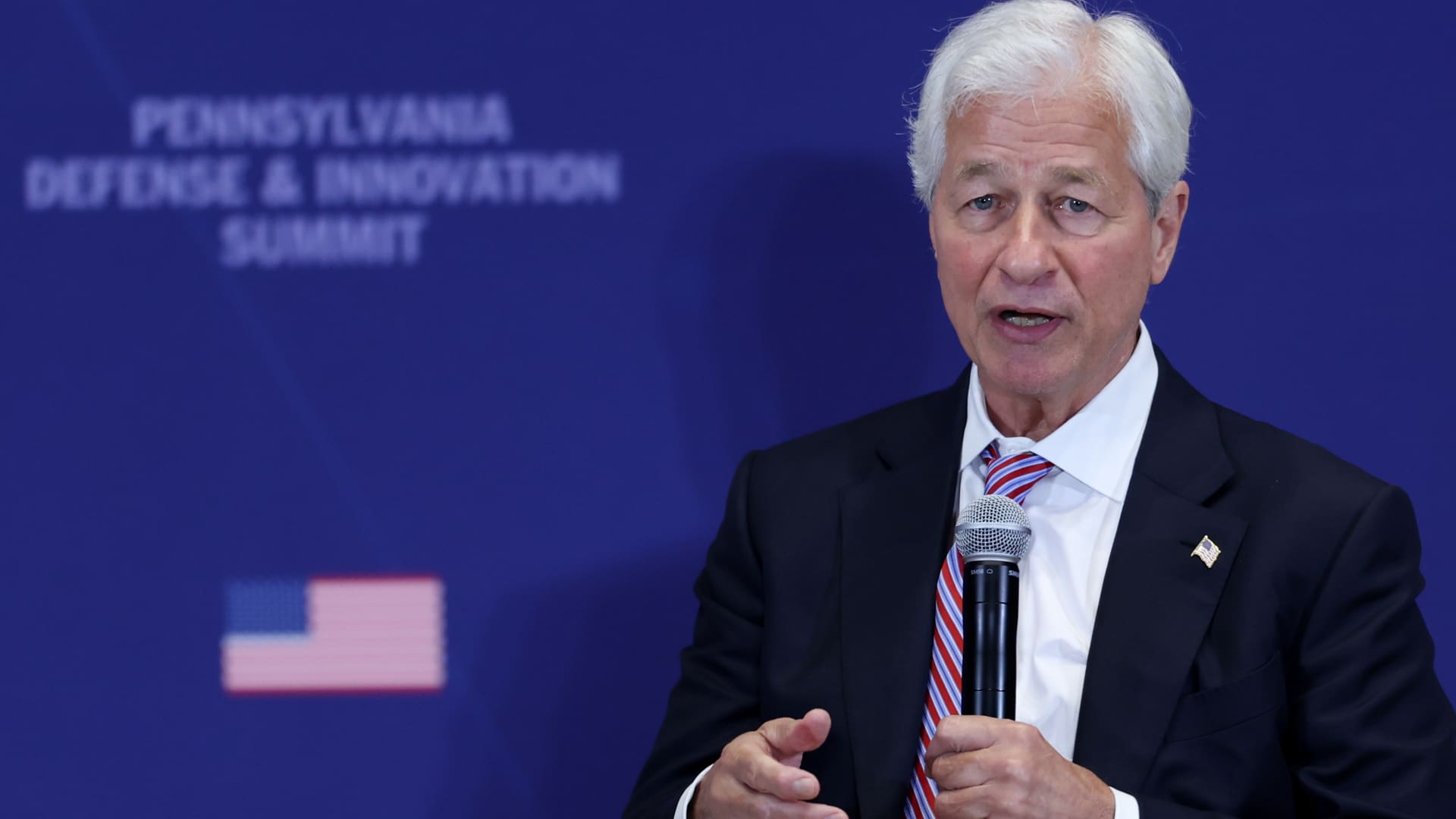
JPMorgan Chase CEO Jamie Dimon’s market leverage warning is a reminder that borrowing can become a pressure point when markets turn volatile. In an interview with CNBC, Dimon said leverage across several parts of the financial system was high enough to raise the odds that a participant could quickly disrupt trading and unsettle investors.
“Margin debt is the highest it has ever been,” Dimon told CNBC’s Leslie Picker, according to CNBC. He said some borrowing is not formally labeled margin debt, describing it as leverage that can be either public or less visible.
Dimon pointed to prime brokerage, hedge funds, exchange-traded funds and Treasury-market arbitrage strategies. “The market leverage is pretty high,” he said.
His central point was conditional, not a forecast of a crash. Dimon said elevated leverage creates a greater chance that “somebody will disrupt the market in a quick way,” leaving people rattled. He also said he was not claiming leverage had reached a systemwide level that would necessarily cause a disaster.
What did Jamie Dimon say about market leverage?
Dimon said market borrowing was elevated, including forms that may not appear under the heading of margin debt. His concern is that a sudden shock could be harder for markets to absorb when heavily borrowed positions are involved, though he said isolated failures have generally been absorbed.
CNBC cited the recent failure of AI-focused hedge fund Situational Awareness as an example. The fund suffered losses on leveraged technology positions, received margin calls and liquidated much of its public-equity portfolio, CNBC reported. JPMorgan was one of its prime brokers. Dimon said the episode showed that markets were able to handle that failure without a broader disruption.
Why are Treasury basis trades part of the discussion?
Dimon included Treasury arbitrage among the areas where he sees high leverage. A Treasury cash-futures basis trade generally involves buying Treasury securities while selling corresponding Treasury futures contracts. The cash Treasury position is commonly financed through short-term repo borrowing, with the Treasury used as collateral, according to a 2021 Office of Financial Research working paper.
The strategy can help connect Treasury-futures demand with the market for cash Treasuries. A January 2026 Chicago Fed analysis said basis trading can support market depth, narrower bid-ask spreads and price discovery. The same structure can bring funding and margin-related vulnerabilities during stress, according to the OFR paper.
Dimon said banks and clearing houses generally ask for more collateral when volatility rises. A 2023 Bank for International Settlements analysis found that higher initial-margin requirements can require traders to provide more cash or close positions, and that disorderly deleveraging exacerbated fixed-income-market stress in 2019 and 2020.
Dimon drew a line between today’s leverage and the 2008 financial crisis. In his view, the decisive problem then was the scale of mortgage losses that were realized, rather than leverage by itself. That distinction frames his latest remarks as a warning about fragility, not a call that a financial crisis is imminent.
This story draws on original reporting from CNBC.


