Jim Cramer says Amazon clarified the payoff from AI spending
Cramer said Andy Jassy gave investors a clearer case for Amazon’s AI outlay, linking new data centers to demand, revenue and long-term use.
By Dev Ramirez · Crypto Correspondent
· 3 min read
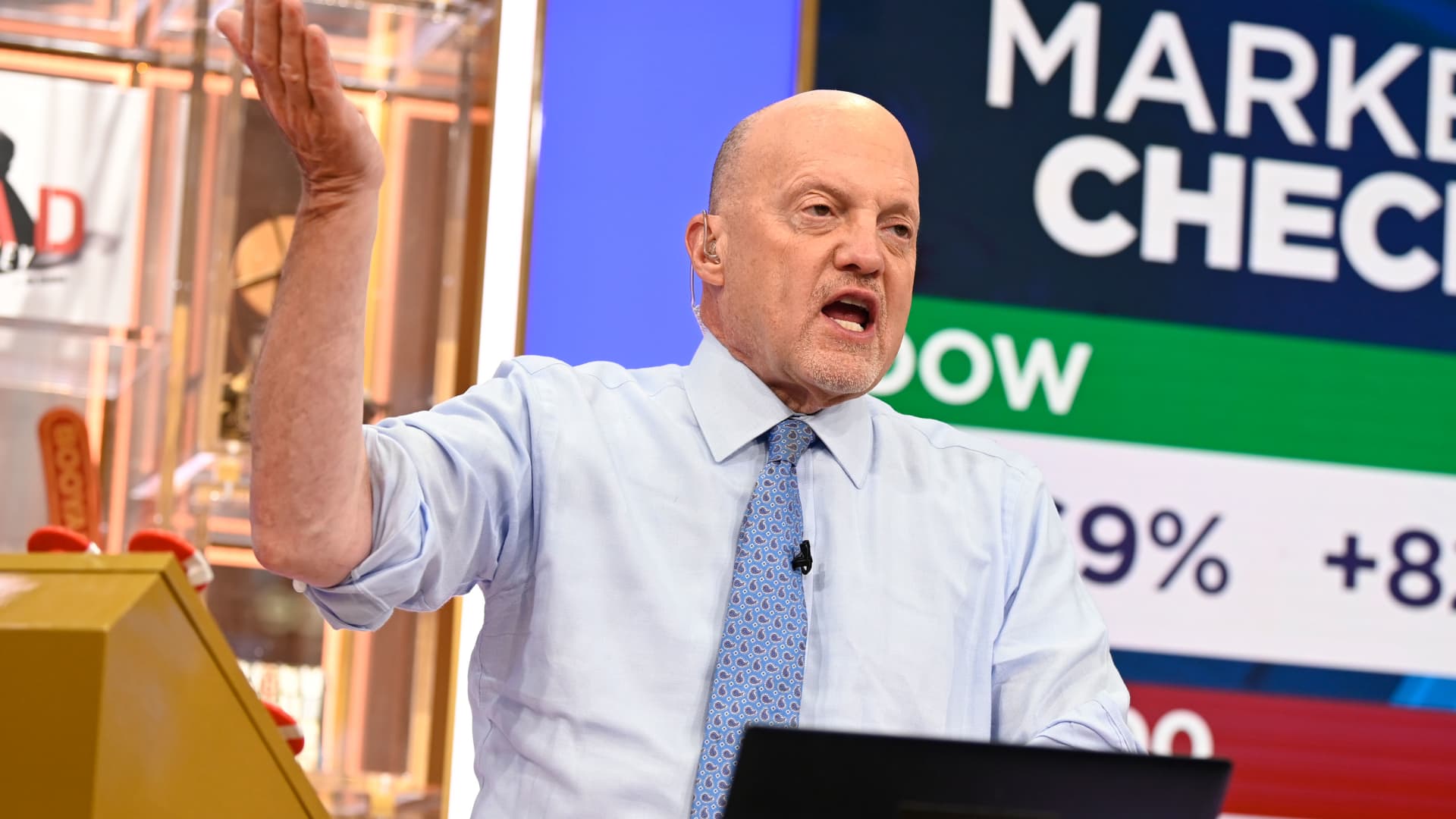
Jim Cramer AI spending commentary has taken a more constructive turn after Amazon’s latest earnings call. Cramer said Andy Jassy’s explanation of how Amazon plans to earn returns from new AI infrastructure helped ease investor concerns about Big Tech’s large capital budgets, according to CNBC. For investors, the point is that the size of a spending plan alone says little about whether it will create value. The path from investment to revenue is the part Cramer says the market wanted to hear.
Amazon raised its expected 2026 capital spending to about $220 billion from roughly $200 billion previously. Jassy said higher memory prices contributed to the increase, while Amazon continues to build AI and cloud capacity, CNBC reported. The company’s shares rose more than 10% in extended trading after its results.
Why did Jim Cramer say investors accepted Amazon’s AI spending?
Cramer’s answer was Amazon’s explanation of the economics behind the buildout. Jassy described spending on data centers, servers and networking equipment as an upfront investment: once a facility is operating and equipment is connected, it can begin producing revenue. He said Amazon can monetize a data center for more than 30 years without repeating that initial startup spending, CNBC reported.
That is a claim about the expected useful life and earning potential of the infrastructure, not proof that every dollar of spending will generate a return. Still, Cramer said it gave Wall Street a clearer view of how the investment could lead to long-term cash flow.
Amazon also supplied evidence of current demand. AWS revenue grew 37% from a year earlier in the second quarter, its fastest pace since 2021, according to CNBC. Jassy said AWS had a $496 billion backlog, meaning contracted work that had not yet come online. He also said Amazon did not have enough capacity to meet all demand in 2026 and expected a similar constraint in 2027.
Amazon’s earnings-call transcript said its AI revenue and chips business each had annual revenue run rates above $25 billion. An annual revenue run rate takes a recent revenue pace and expresses it as a full-year figure; it is not a guarantee of future revenue.
How Cramer separated Big Tech’s AI cases
Cramer said the quality of the explanation matters as much as the capital-spending total. He said Microsoft has faced less skepticism because it remains free-cash-flow positive and is already generating AI-related revenue through Azure and Copilot subscriptions.
By contrast, Cramer said Alphabet raised its spending guidance without giving investors an equally persuasive explanation of its eventual returns. He was also critical of Meta’s account of its AI infrastructure spending, saying management offered limited clarity on how it would generate returns, including whether it might rent excess computing capacity.
The current commentary adds an emphasis on explaining the return path to Cramer’s prior support for aggressive AI investment. In July 2025, he argued that Meta, Amazon, Alphabet and Microsoft were underspending rather than overspending as they planned up to $320 billion combined in AI and data-center investment that year, CNBC reported.
The risks have not disappeared. Amazon reported $54.2 billion in capital expenditures for the June quarter, up from $32.1 billion a year earlier, while trailing-12-month free cash flow was a $7.6 billion outflow, CNBC said. Future returns depend on durable customer demand, costs and Amazon’s execution. Using Cramer’s framework, investors may look for evidence of demand, revenue timing and infrastructure economics when other large technology companies discuss AI budgets.
This story draws on original reporting from CNBC.